Backlit landscape photographers
If you want to expose bright expanses of water and shaded banks deliberately, and possibly edit your images afterwards, check the exposure compensation, RAW and exposure bracketing features on the specific model.


Start by choosing a compact camera based on the framing you want from the locations you can reach. Then check the exposure compensation, RAW or exposure bracketing options for challenging light. Optical zoom can help with distant scenes along the banks; a prime lens calls for more careful choice of shooting position, while stated water resistance matters most when you’re paddling. None of these features alone guarantees a successful backlit photo.
If you want to expose bright expanses of water and shaded banks deliberately, and possibly edit your images afterwards, check the exposure compensation, RAW and exposure bracketing features on the specific model.
If you want to switch between a wide view of the waterways and distant details from an accessible path or boat, compare the actual focal length range available.
If you take photos close to the water, stated water resistance for the specific model may matter more than extra telephoto reach.
When choosing a compact camera for backlit scenes in the Spreewald, different considerations will matter depending on how you plan to use it.
A good fit if: you want to capture both the waterway and more distant details along the banks from the same accessible spot.
The trade-off: A longer telephoto range doesn’t automatically mean a brighter lens. Sony lists a 24–200 mm range and F2.8–4.5 for the RX100 VII, while Canon lists 24–100 mm and F1.8–2.8 for the G7 X Mark III. These are manufacturer specifications, not a backlight performance test.
A good fit if: you want to compose the landscape and capture the mood of the light, and the fixed angle of view suits the locations you can reach.
The trade-off: Fujifilm lists a fixed 23 mm F2 lens for the X100VI, while Ricoh gives the GR IIIx an approximately 40 mm full-frame equivalent focal length. These lenses don’t offer optical zoom.
A good fit if: splashes and wet handling while paddling are among your main buying concerns.
The trade-off: OM Digital Solutions states that the Tough TG-7 is waterproof to 15 m and has a 25–100 mm full-frame equivalent focal length. This doesn’t mean it performs better in backlit conditions.
| What matters when buying | What to look for | Who it matters to most |
|---|---|---|
| Exposure in strong backlight | Check for RAW and exposure compensation. For subjects you can photograph repeatedly, also check for automatic exposure bracketing. | If I want to expose bright reflections and dark banks deliberately, I check these features on the specific model. Around 36% of consumers put exposure first. |
| Framing from an accessible location | Compare the wide-angle and telephoto ends separately. With a prime lens, check that its fixed angle of view suits your location. | If I want to capture both a wide view and distant details along the banks from the same accessible spot, I compare the angle of view in advance. Around 29% of consumers prioritise getting the right framing. |
| Protection when shooting close to the water | Only rely on water resistance that’s explicitly stated for the exact model. Check for local restrictions and navigation signs. | If I take photos from a paddle boat, I want clearly stated protection against water exposure. Around 21% of consumers consider water protection their top priority. |
| Portability and ease of use on the go | Compare the weight, including the battery, with how you plan to carry it. Check the viewfinder or screen controls on the specific model. | If I want to carry my camera comfortably and compose shots accurately in bright light, I check its weight and controls. Around 14% of consumers put portability and ease of use first. |
Exposure bracketing captures the same scene at different exposure settings, but it won’t automatically give you the finished image you want. Adobe describes it as taking several exposure variations of the same scene.
Check the feature on the specific model. If the water is moving, consider which individual shots will work for your subject.
The extra variations give you more to choose from and may mean you need to edit the images afterwards.
Focal length ranges suit different framing needs: Sony lists 24–200 mm for the RX100 VII, while Panasonic lists a 24–360 mm full-frame equivalent range for the TZ300. That doesn’t mean either camera will suit every scene along the banks.
Before buying, decide whether the whole waterway or distant details from an accessible spot matter more to you, then compare both ends of the focal length range.
Canon lists an ND filter for the G7 X Mark III. According to Canon Academy, a polarising filter can affect reflections on water; it serves a different purpose.
First decide whether you want to reduce the amount of light or change reflections. Then check whether you can attach a suitable filter to the specific camera.
Depending on the option you choose, you may need an additional filter that fits the model, which can add another step to using the camera.
The PowerShot G7 X Mark III is an option if you’re looking for a compact zoom with exposure controls.
The RX100 VII is worth considering if you want optical telephoto reach and a viewfinder in a compact camera.
The X100VI is a prime lens option for carefully composed landscape shots.
The Lumix DC-TZ300 is a travel zoom option for subjects at different distances.
The Tough TG-7 is worth considering if protection from water is a priority.
The GR IIIx is a prime lens option if you want a narrower angle of view than you’d get with a wide landscape shot.
The portable digital cameras below offer different zoom and handling features. For backlit scenes and shooting close to water, check the stated features and limitations of each model.
 No image available
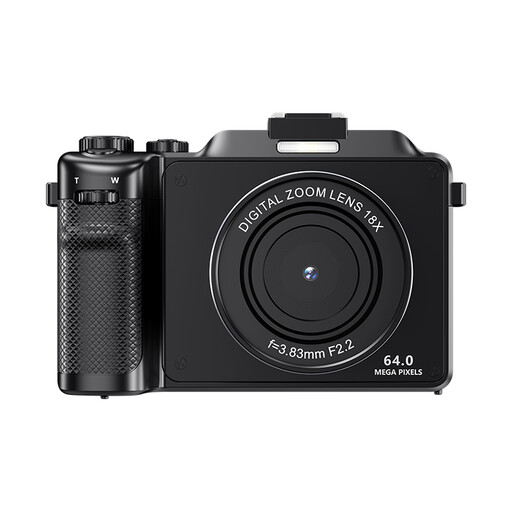
If you’re looking for a portable digital camera with zoom, check which type of zoom the model offers before you buy.
The product title lists 64 MP, autofocus, flash and 18× zoom.
 No image available
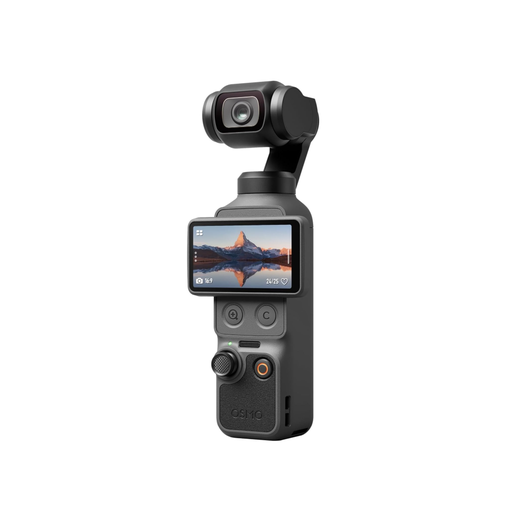
If you’re looking for a handy camera with stabilisation, bear in mind that this model is described as not waterproof, so it isn’t a stated option for wet handling while paddling.
The product title lists a 1-inch CMOS sensor, 3-axis stabilisation, 2× lossless zoom and 107 GB of built-in storage.
 No image available
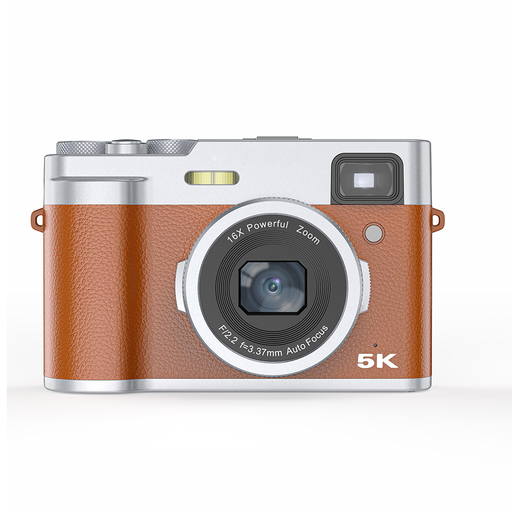
If you prefer composing shots through a viewfinder, the optical viewfinder listed in the product description is worth checking. The description advises against exposing the camera to rain, water or high humidity.
The description also lists a 2.8-inch screen and an interpolated resolution of up to 48 MP.
 No image available
If you want to change your framing, bear in mind that the stated 18× zoom is digital and doesn’t offer optical zoom for distant details.
The product specifications list 64 MP, autofocus and a 32 GB memory card.
 No image available
If you want to change your framing without moving, bear in mind that the stated 18× zoom is digital and doesn’t offer optical zoom for distant subjects. The product description also advises keeping the camera away from liquids and damp environments.
The description lists autofocus and 4K video.
Check the specific model for exposure compensation, RAW and, where available, automatic exposure bracketing. Bracketing takes several shots of the same scene at different exposures, but it can’t guarantee that moving water will look the same in every image.
Not necessarily. A polarising filter can reduce reflections on the water, which may not be what you want if the reflection itself is your subject. Before buying, also check whether you can attach a suitable filter to your specific camera.
No. The Brandenburg State Office for Construction and Transport lists waterways that are closed and navigation signs that you must observe. The restrictions listed on 6 November 2026 depend on the time and route, so check the latest guidance for your planned journey.
Your statutory rights for faulty goods apply against the seller; a voluntary guarantee is separate. Keep your proof of purchase and any written assurances, and contact the seller first if a fault develops.