Which camera suits which photographer

Photographing riverside views

If you want to capture buildings and their surroundings together and can choose where to stand, a wide field of view and controllable exposure are important considerations. Ricoh Imaging Europe and Fujifilm list different fields of view for their fixed-lens cameras: around 28 mm and 35 mm equivalent to 35 mm format, respectively.

Photographing façade details

If you want to capture parts of distant buildings from the riverbank and can’t get any closer, compare the actual optical focal length ranges of the specific models. Panasonic Germany and Sony Germany list different zoom specifications for their cameras.

Photographing in backlit conditions

When a bright sky and a darker façade appear in the same shot, you’ll want to be able to adjust the exposure deliberately. Nikon USA explains exposure bracketing as taking several shots at different exposures; the available settings depend on the camera model.

What to look for when buying

Fixed wide-angle lens

A good fit if: You mainly photograph whole buildings and riverside views, and can choose where to stand to frame your shot. According to their manufacturers, the Ricoh GR IV and Fujifilm X100VI offer fixed fields of view equivalent to around 28 mm and 35 mm in 35 mm format, respectively.

The trade-off: Neither model has optical zoom for distant details. Whether the fixed field of view works for you depends on where you’re standing and the framing you want.

Compact zoom

A good fit if: You want to switch between a riverside view and more distant details without moving from the same spot. Panasonic lists 24–360 mm for the TZ300, while Sony lists 24–200 mm for the RX100 VII, both equivalent to 35 mm format.

The trade-off: A wide focal length range won’t replace a good viewpoint for capturing the whole scene, or exposure control in high-contrast conditions.

Extra-high-range travel zoom

A good fit if: Distant details are your priority: according to the manufacturer, the Panasonic TZ99 offers 24–720 mm equivalent to 35 mm format when taking 4:3 photos.

The trade-off: The TZ99 has a 1/2.3-inch sensor and different lens specifications from the TZ300. A longer telephoto focal length alone doesn’t determine which camera is right for you.

Priority What to look for when buying Who it matters most to
Fit whole buildings in the frame Compare the equivalent 35 mm format wide-end focal length and check whether a fixed field of view will work from the places you usually shoot. If I want to capture buildings and their surroundings from the riverbank, the field of view needs to suit where I’m standing. Around 40% of consumers say capturing the whole scene is their top priority.
Capture distant façade details Compare optical rather than digital zoom, the equivalent 35 mm format telephoto focal length, and the sensor and lens specifications of the specific model. If I’m photographing distant details from the same spot, optical reach is key to getting the framing I want. Around 40% of consumers say façade details are their top priority.
Expose for bright skies and shaded façades Check exposure compensation, RAW support and the exposure bracketing settings available on the model you’re considering. If I want to control light and dark areas in changing conditions, I check the exposure settings and, if necessary, plan to take several shots. Around 20% of consumers say exposure control is their top priority.

Avoiding buying pitfalls

  • Assuming the biggest zoom number automatically makes a camera right for photographing buildings

    According to the manufacturer, the Panasonic TZ99 and TZ300 differ not only in telephoto focal length, but also in sensor size and lens specifications. The biggest number alone therefore doesn’t tell you whether a model suits your subjects.

    First compare the shots you take most often, then check the specifications of the specific model. Digital zoom is not the same as the stated optical focal length range.

  • Buying a fixed-lens camera when distant details are your main subject

    The Ricoh GR IV and Fujifilm X100VI have fixed fields of view and no optical zoom, so you can’t optically bring distant parts of a building closer.

    Before buying, check whether the fixed framing is wide enough from the places you can access.

  • Mistaking exposure bracketing for a guarantee against difficult lighting

    Exposure bracketing produces several shots, and the available settings vary by model. Nikon explains the technique, but notes that the settings depend on the camera.

    Check a single shot first and consult the manual for your chosen camera before planning to use automatic bracketing.

    Taking several shots means more time spent sorting through them and, potentially, editing.

  • Assuming permission for simple photography also covers extensive set-ups

    The City of Dresden distinguishes photographic productions carried out from public roads from special uses, such as those involving larger set-ups or traffic management.

    If you’re planning an extensive set-up or traffic management, check the relevant requirements with the city in advance.

A guide to relevant camera brands

Ricoh

The GR IV combines an APS-C sensor with a fixed focal length equivalent to around 28 mm in 35 mm format. It suits photographers who want to choose their wide-angle framing deliberately.

  • Ricoh Imaging Europe lists around 25.74 effective megapixels and sensor-shift 5-axis stabilisation.
  • The fixed lens has no optical zoom. The manufacturer’s claims about sharpness and stabilisation are not an independent assessment for riverside photography in Dresden.

Fujifilm

The X100VI combines a fixed field of view equivalent to 35 mm in 35 mm format with a hybrid viewfinder and RAW capture.

  • The German specifications list 40.2 million effective pixels, a built-in ND filter and sensor-shift stabilisation.
  • Its 35 mm field of view is narrower than the approximately 28 mm equivalent listed for the Ricoh GR IV. The X100VI has no optical zoom.

Panasonic

The TZ300 and TZ99 have different strengths when it comes to focal length range and sensor format.

  • Panasonic Germany lists 24–360 mm equivalent to 35 mm format and a 1.0-inch-type sensor for the TZ300. For the TZ99, it lists 24–720 mm for 4:3 photos and a 1/2.3-inch sensor.
  • These focal length ranges are manufacturer specifications, not a direct comparison of image quality. On 3 November 2026, Panasonic Germany marked the TZ300 product page as unavailable; check availability with individual retailers separately.

Sony

According to its German specifications, the Sony RX100 VII, model designation DSC-RX100M7, combines a 1.0-inch-type sensor with an electronic viewfinder.

  • Sony Germany lists 24–200 mm equivalent to 35 mm format and an electronic OLED viewfinder.
  • Its telephoto end is shorter than the 360 mm listed for the Panasonic TZ300. This comparison applies to the RX100 VII, not to all RX100 models.

Canon

According to Canon Germany, the PowerShot G7 X Mark III has a 1.0-inch-type sensor and a focal length range equivalent to 24–100 mm in 35 mm format.

  • Canon lists an F1.8–2.8 lens and image stabilisation.
  • Its telephoto range doesn’t extend as far as the ranges listed for the Sony RX100 VII and Panasonic TZ300. This describes the focal length comparison, not overall image quality.

Joybuy camera deals

The Joybuy deals below include compact photo and video cameras, including gimbal and zoom models. For architectural photography, check the specific model’s field of view, whether optical zoom is explicitly stated, and its suitability for still photos.
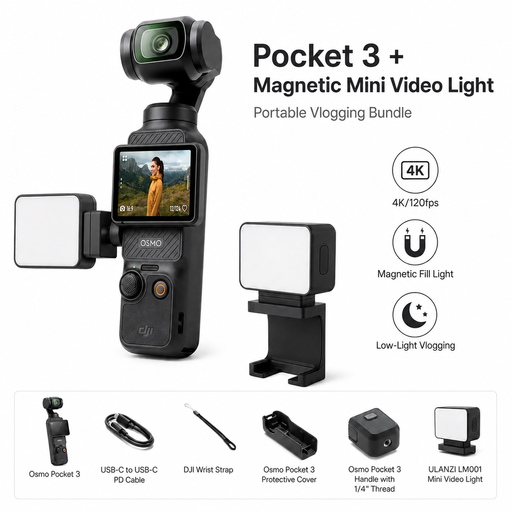
DJI Osmo Pocket 3 Standard Combo with ULANZI LM001 Pocket 3 Magnetic Mini Video Light

DJI Osmo Pocket 3 Standard Combo with ULANZI LM001 Pocket 3 Magnetic Mini Video Light

If you’re considering a gimbal camera for a photography trip, check whether its controls suit the way you take still photos.

The product title lists a 1-inch CMOS camera, a 3-axis gimbal and a magnetic mini video light in the bundle.

The listed video specification is 4K/120fps.

View at Joybuy

DJI Osmo Pocket 4 Standard Combo

DJI Osmo Pocket 4 Standard Combo

This camera is described as a pocket gimbal model for photography and vlogging. Check whether the screen and controls suit your shooting style.

The product title lists a 1-inch CMOS sensor, 3-axis stabilisation and a 2-inch rotatable screen.

The listed video specification is 4K/240fps. The title also mentions 107 GB of built-in storage and 2× zoom.

View at Joybuy

Komery W6 digital camera

Komery W6 digital camera

The explicitly stated optical zoom may be useful if you want to change your framing without moving from the same spot. Check the field of view against the subject you want to photograph.

The product title lists 12× optical zoom, 4K, Wi-Fi and 64 MP.

View at Joybuy
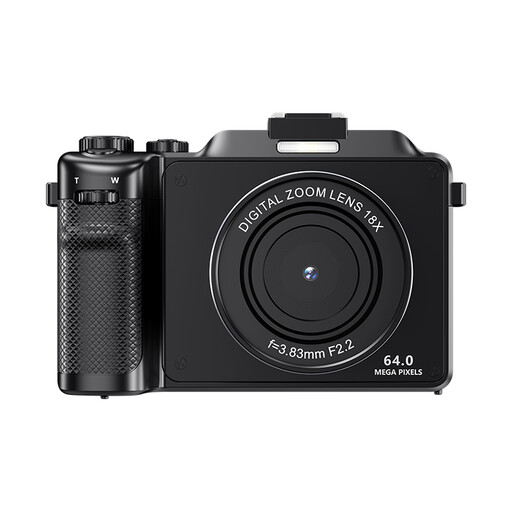
KOMERY X9 4K digital camera, black

KOMERY X9 4K digital camera, black

If you’re looking for a portable digital camera for photography, check whether the zoom and flash offered suit your subject.

The product title lists 64 MP, autofocus, 18× zoom and a built-in flash.

View at Joybuy
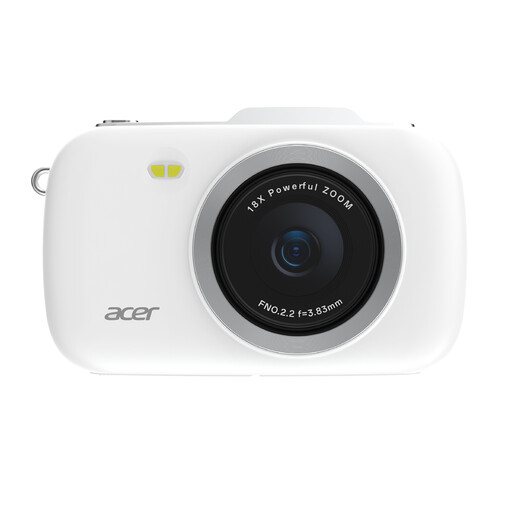
Komery G7-A 4K digital camera, white

Komery G7-A 4K digital camera, white

If you want to photograph distant façade details, note that the zoom on this model is described as digital and shouldn’t be confused with optical zoom.

The product title lists 80 MP and 4K; the description specifies that the 18× zoom is digital.

View at Joybuy

Frequently asked questions

What can I do if the sky is bright and the façade is dark?

First, check a single shot and adjust the exposure compensation. If that doesn’t capture the contrast as you’d like, shots taken at different exposures can help you choose or combine images later. The manual for the specific model explains whether and how automatic exposure bracketing works; Nikon notes that the available settings vary by camera.

Do I always need a filming permit to take photos from public roads in Dresden?

According to the City of Dresden, no general filming permit from the city is required for photographic productions carried out from public roads. Larger set-ups or traffic management measures may be subject to additional requirements. Property and copyright laws must also be respected.

Can I publish photos of buildings afterwards?

Under certain conditions, § 59 UrhG allows works that are permanently located on public roads, streets or squares to be reproduced, distributed and made available to the public. For buildings, this applies only to their exterior appearance. The Federal Ministry of Justice and the Federal Office of Justice include this provision in the legislation. This does not amount to blanket permission for every camera position, property or other rights depicted.

What should I set up before my first photography trip?

Check the memory card, file format and exposure settings for your specific camera model, and test your preferred field of view from a location you can access. If you want to use exposure bracketing, check the manual beforehand to see how to set it up on that model.

What are my rights if I buy online in Germany and need to return or complain about a product?

For newly purchased faulty goods, you can generally make a claim against the seller under statutory warranty rights for up to two years from delivery; this is separate from any voluntary guarantee. Many online purchases are also generally covered by a 14-day withdrawal period from the date you receive the goods. Verbraucherzentrale explains these time limits and rights; check the terms of your specific purchase.