Which camera is right for you?

Photographers shooting into the light

When you capture a bright sky and dark dunes in the same shot, you’ll want to control the exposure and leave yourself room to edit later. Adobe explains that overexposure and underexposure can limit tonal information.

Photographers shooting from fixed locations

If you’re taking photos from permitted paths, you’ll need to choose between a wide view of the dunes and distant details. The Wadden Sea National Park Authority notes that protected areas may only be entered in designated and signposted places or along authorised paths.

Photographers in coastal conditions

If you regularly take your camera out in wet or sandy conditions, it’s important to check the protection features documented for that specific model. OM Digital Solutions lists protection ratings for the Tough TG-7; these don’t automatically apply to other cameras.

What should you look for when buying?

First decide whether exposure, framing, device protection or easy image composition matters most for your photography.

Priority What to look for when buying Who is it important for?
Control backlighting Check RAW and exposure compensation for the specific model; only count on exposure bracketing if it’s documented. When I photograph a bright sky and dark dunes together, I want to control the exposure as I take the picture and leave myself room to edit later. Around 36% of consumers put control over backlighting first.
Angle of view and reach Compare full-frame equivalent focal lengths for stills, and assess the wide and telephoto ends separately. Canon lists around 16–50 mm for the PowerShot V1 without cropping, Sony lists 24–200 mm for the DSC-RX100M7, and Panasonic lists 24–360 mm for the DC-TZ300. When I want to photograph either the whole dune landscape or distant details from a fixed location, I need the right framing for the shot. Around 29% of consumers prioritise framing.
Protection from wet and sandy conditions Check the protection ratings and their conditions for the exact model. OM Digital Solutions lists IPX8 and IP6X for the Tough TG-7; Fujifilm lists a protective filter and adapter ring as accessories for the X100VI. When I’m taking photos in coastal conditions, I don’t want to mistake accessories or an outdoor label for stated device protection. Around 21% of consumers put device protection first.
Image composition and handling Check whether the camera has a built-in viewfinder and whether it suits the way you work. Sony lists an electronic viewfinder for the DSC-RX100M7; Canon does not list a viewfinder for the PowerShot V1. When I prefer to compose through a viewfinder in bright light, I want to know whether the model I’m considering has one built in. Around 14% of consumers prioritise easy image composition.

Buying pitfalls in backlit and coastal conditions

  • Confusing the highest telephoto zoom figure with the best framing for dunes

    A long zoom is useful for distant details, but it won’t give you a wider angle of view at the short end. If you’re restricted to permitted paths, you can’t always make up for unsuitable framing by moving to a different location.

    Compare the full-frame equivalent focal lengths at the wide and telephoto ends separately for stills.

  • Assuming RAW or an ND filter will prevent blown highlights

    RAW and filter features alone don’t guarantee that bright areas of an image will retain detail. Adobe points out that overexposed images contain less tonal information for editing.

    Check the exposure as you take the picture, and see which compensation or bracketing features are documented for the specific model.

  • Confusing protective accessories with stated device protection

    The protection ratings for the Tough TG-7 and the filter accessories described for the Fujifilm X100VI are different claims and aren’t directly comparable.

    Check the level of protection, its conditions and what’s included for the exact model variant on offer.

    Key camera brands at a glance

    Sony

    The DSC-RX100M7 is a compact zoom option for changing your framing, with a built-in viewfinder.

    • Sony UK lists a 24–200 mm full-frame equivalent zoom, an electronic viewfinder and optical image stabilisation for stills for this model.
    • These specifications don’t confirm weather protection or any particular image quality when shooting into the light.

    Canon

    The PowerShot V1 is suited to particularly wide-angle stills, while the G7 X Mark III offers a shorter 24–100 mm zoom.

    • Canon lists a full-frame equivalent of around 16–50 mm for stills on the PowerShot V1 without cropping. For the G7 X Mark III, Canon lists F1.8–2.8, exposure compensation and exposure bracketing.
    • Canon says the PowerShot V1 has no built-in viewfinder; specifications for these two models aren’t interchangeable.

    Fujifilm

    The X100VI is a fixed-lens camera for carefully composed shots, with a 35 mm full-frame equivalent focal length.

    • Fujifilm documents a hybrid viewfinder, RAW and a built-in ND filter for the X100VI.
    • The camera has no optical zoom. Check whether the protective filter and adapter ring are available as accessories.

    Panasonic

    The DC-TZ300 is a travel zoom option if distant details matter when shooting from a fixed location.

    • Panasonic lists a 15x optical zoom with a 24–360 mm full-frame equivalent focal length.
    • An independent review reports that the built-in viewfinder has been dropped compared with the previous model.

    OM SYSTEM

    The Tough TG-7 is an outdoor compact camera for buyers who value stated protection features.

    • OM Digital Solutions lists IPX8, IP6X, around 12 megapixels and a 25–100 mm full-frame equivalent focal length for the TG-7.
    • These protection ratings and specifications don’t apply to other cameras.

    Ricoh

    The GR IV is a compact fixed-lens option with a full-frame equivalent focal length of around 28 mm.

    • RICOH IMAGING documents an APS-C sensor, DNG RAW and five-axis sensor stabilisation for the GR IV.
    • Without optical zoom, you can’t magnify distant details as you would with a telephoto zoom. The GR IV HDF is a separate variant.

Joybuy products for compact photography on the go

This selection features compact cameras with adjustable exposure or zoom. If you’ll be using your camera regularly on the coast, also check whether the specific model is explicitly rated for the conditions you expect.
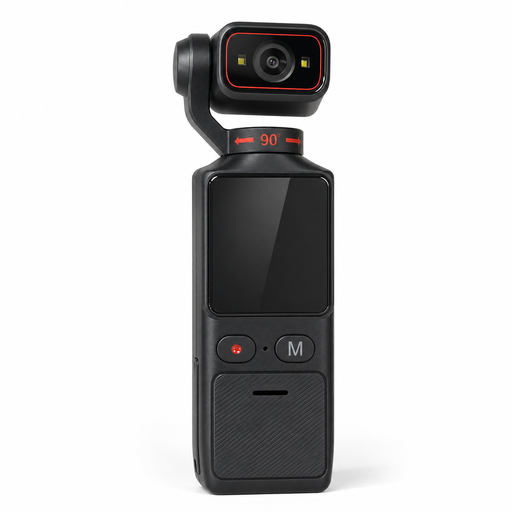
4K pocket camera with electronic image stabilisation and 180° rotating lens

4K pocket camera with electronic image stabilisation, 180° rotating lens, Wi-Fi and 1.69-inch touchscreen

A photo mode and adjustable exposure settings are listed for stills. According to the product description, the camera isn’t designed for use in damp environments.

View at Joybuy

Komery W6 digital camera with 12x optical zoom

Komery W6 digital camera, 12x optical zoom

The 12x optical zoom lets you change your framing without moving from your spot. The model is also listed as offering 4K, 64 MP, Wi-Fi and ±2 EV exposure compensation.

View at Joybuy

Frequently asked questions

What should I set before my first shot into the light?

Check whether the specific model supports RAW, exposure compensation and, where relevant, exposure bracketing. Check bright and dark areas as you take the picture: Adobe points out that overexposure or underexposure leaves less room for editing later.

Can I leave a protected area to get a better photo of the dunes?

Not if you’re in a Wadden Sea National Park: the Wadden Sea National Park Authority explains that protected areas may only be entered in designated, signposted places or along authorised paths, and that wildlife and plants must not be disturbed. Follow the signs on site; this guidance doesn’t apply universally to every North Sea beach outside a national park.

What accessories should I check before buying?

Check what’s included with the exact model variant and whether you’ll need to budget for any additional accessories. If you want to use the protective filter Fujifilm describes for the X100VI, check that you have the right adapter ring too; the camera’s name alone doesn’t mean both are included.

Who is responsible if a product I buy in Germany is faulty?

The seller, not the manufacturer, is generally responsible for statutory consumer rights relating to faulty goods. The Verbraucherzentrale states that you generally have two years from delivery to exercise your rights; a voluntary guarantee is separate. Many online purchases also come with a separate right to cancel, usually within 14 days.