Who takes photos at the maars?

Maar landscape photographers

If you want to compose scenes with sky, water and shaded slopes in changing light, then edit your images later, look for exposure controls and RAW support. The Canon Academy explains how light and weather can change landscape subjects.

Shoreline detail seekers

If you often take photos from a path or viewpoint and want to capture details on a distant shore, optical telephoto reach is an important factor. Focal length specifications from manufacturers can help you compare the framing offered by different models.

Hikers in the rain

If you take your camera on hikes where the weather can change, clearly stated weather protection matters more than making assumptions based on the product name. OM Digital Solutions gives specific water- and dust-resistance ratings for the Tough TG-7.

What should you look for when buying?

Prime lens

A good fit if: You mostly compose wide views from accessible spots and can do without optical zoom. Fujifilm gives the X100VI a 35 mm full-frame equivalent focal length; Ricoh lists around 28 mm for the GR IV.

The trade-off: You won’t have optical zoom to capture details on the opposite shore.

Compact zoom

A good fit if: You want to switch between wide views and distant details without moving from your spot. Sony gives the RX100 VII a 24–200 mm full-frame equivalent range, while Panasonic lists 24–360 mm for the TZ300.

The trade-off: Sony lists the RX100 VII’s maximum aperture as F2.8 at the wide end and F4.5 at the telephoto end. So check the aperture at the zoom setting you usually use.

Rugged outdoor camera

A good fit if: Protection against water and dust is a priority on your hikes. OM Digital Solutions states that the Tough TG-7 is waterproof to 15 m and dustproof to IP6X.

The trade-off: The manufacturer lists around 12 megapixels and a field of view equivalent to 25–100 mm on a full-frame camera. Protection ratings don’t give you permission to enter restricted shore areas.

What you need What to check when buying Who it matters most to
Bright sky, dark shoreline RAW, exposure compensation and the bracketing options documented for the specific model. If you want to capture bright clouds and shaded slopes in a high-contrast maar scene, exposure options are essential. Around 36% of consumers put control over these differences between light and dark first.
Details on a distant shore Full-frame equivalent focal length and maximum aperture at the zoom settings you’ll actually use. If you want to photograph details on the opposite shore from a path without changing position, optical telephoto range matters. Around 29% of consumers prioritise reach for distant subjects.
Low-light photography Maximum aperture at your preferred focal length, available stabilisation and options for keeping the camera steady. If daylight is fading and you want to take photos handheld, consider the lens’s maximum aperture and shutter speed together. Around 21% of consumers prioritise taking photos at dusk.
Rain on hiking trips Explicit protection ratings for the exact model and care instructions after exposure to moisture. If your hikes regularly take you out in wet conditions, look for clear manufacturer information about protection rather than assuming image stabilisation is enough. Around 14% of consumers put weather protection first.

Common buying mistakes

  • Assuming zoom makes a camera suitable for every lighting condition

    According to the manufacturer, the Sony RX100 VII has a smaller maximum aperture at the telephoto end than at the wide end. Telephoto reach and maximum aperture are therefore separate buying considerations.

    Compare the focal length and maximum aperture at the ends of the zoom range you actually plan to use.

  • Choosing an ND filter to deal with reflections or shaded slopes

    An ND filter reduces the amount of light entering the camera. A polarising filter can reduce reflections on water, while exposure bracketing can provide a series of differently exposed images to work with in high-contrast conditions.

    First decide whether you want to reduce the light, change reflections or take several exposures to manage contrast.

  • Confusing image stabilisation with waterproofing

    The Sony RX100 VII’s optical stabilisation is not a water-resistance rating. Waterproofing to 15 m is a manufacturer’s specification for the OM SYSTEM Tough TG-7.

    If you regularly use your camera in the rain, check the weather protection specifically for the exact model.

Key camera brands at a glance

Fujifilm

The X100VI is a prime-lens camera for carefully composed views; Fujifilm lists a 35 mm full-frame equivalent focal length.

  • Fujifilm lists an APS-C sensor, RAW, a built-in ND filter and stabilisation.
  • The fixed focal length doesn’t provide optical zoom for details on a distant shore.

Sony

According to Sony, the RX100 VII combines wide-angle and mid-range telephoto in one model.

  • Sony lists a 24–200 mm full-frame equivalent focal length, optical stabilisation and a viewfinder.
  • The manufacturer lists a maximum aperture of F2.8 at the wide end and F4.5 at the telephoto end.

Panasonic

The TZ300 and TZ99 are travel zoom options with different focal length ranges.

  • Panasonic lists a 1.0-type sensor and a 24–360 mm full-frame equivalent focal length for the TZ300; the TZ99 offers 24–720 mm.
  • The TZ99’s greater telephoto reach doesn’t, by itself, demonstrate better low-light image quality.

Canon

The PowerShot G7 X Mark III is a zoom option if a telephoto range up to 100 mm full-frame equivalent is enough for you.

  • Canon lists F1.8–2.8, a three-stop ND filter and automatic exposure bracketing.
  • Its specified telephoto range is shorter than that of the RX100 VII and TZ300.

OM SYSTEM

According to OM Digital Solutions, the Tough TG-7 is designed for trips where certified ruggedness matters.

  • The manufacturer lists waterproofing to 15 m and dust protection to IP6X.
  • The listed specifications include around 12 megapixels and a 25–100 mm full-frame equivalent focal length; these don’t support broad claims about other models from the brand.

Ricoh

The GR IV is a prime-lens option with a field of view equivalent to around 28 mm on a full-frame camera.

  • Ricoh specifies an APS-C sensor, RAW and sensor-shift stabilisation.
  • The GR IV doesn’t have optical zoom for details on a distant shore.

Joybuy camera deals

These Joybuy camera deals list zoom features that may suit different types of framing. Pay particular attention to the type of zoom and the exposure options you’ll need in changing light.

Komery W6 digital camera with 12x optical zoom

Komery W6 digital camera, 12x optical zoom

The product title lists 12x optical zoom for framing a range of subjects. For high-contrast maar scenes, check which exposure options the model offers.

View at Joybuy

Songdian digital camera with 8x optical zoom

Songdian digital camera, 8x optical zoom, 5K, 64MP, dual lens

The product title lists 8x optical zoom, which may be useful for both wide views and more distant subjects. For high-contrast shots, check the model’s exposure features separately.

View at Joybuy
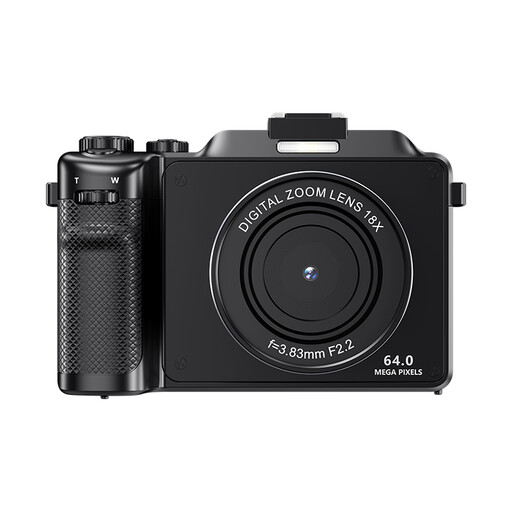
KOMERY X9 digital camera with 18x zoom

KOMERY X9 digital camera, 4K, 64MP, 18x zoom

If you want to frame subjects in different ways, the product title lists 18x zoom; check whether it’s optical or digital. The safety instructions advise against exposing the camera to damp environments.

View at Joybuy

KOMERY G7-A digital camera with 18x digital zoom

KOMERY G7-A 4K digital camera, 18x digital zoom

The product description lists 18x digital zoom; don’t treat it as optical telephoto reach for details on a distant shore. The safety instructions advise against using the camera in damp conditions.

View at Joybuy
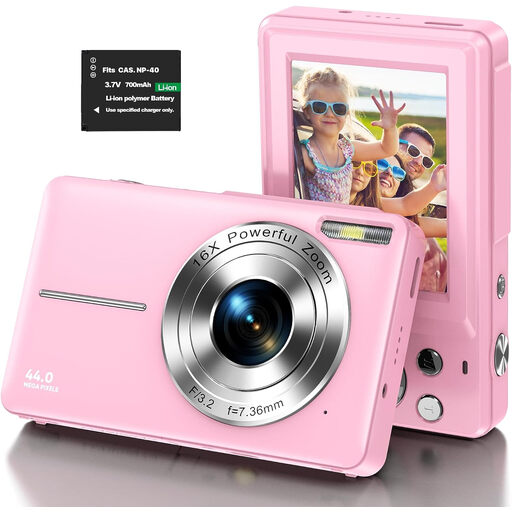
Songdian pocket camera with 16x digital zoom

Songdian pocket camera, 4K, 64MP, 16x zoom, pink

The product description specifies digital zoom, so it isn’t the same as optical telephoto reach. The safety instructions advise against exposing the camera to damp environments.

View at Joybuy

Frequently asked questions

How do I photograph a bright sky above a dark maar?

First, make sure the bright areas of the image aren’t overexposed. If the scene is mostly still, a series of differently exposed shots may help when combining images later. Check whether the specific model supports exposure bracketing and how to set it up.

Should I use a polarising filter to reduce reflections on the water?

A polarising filter can reduce reflections on the water, but it will also affect any reflection of the sky that you want to keep. Before buying, check whether you can attach a filter to your particular compact camera.

What should I check after a wet hike?

Follow the care and sealing instructions for the specific model. Waterproofing to 15 m is a manufacturer’s specification for the OM SYSTEM Tough TG-7 and doesn’t apply to other cameras.

What rights do I have when shopping online in Germany?

According to the Verbraucherzentrale, online orders generally come with a 14-day right to cancel, starting from the date you receive your order. The statutory guarantee against the seller is separate from a voluntary warranty; check the retailer’s information and warranty terms before ordering.

Can I leave the shore or a path to take a photo at any maar?

You can’t assume that you’re allowed to leave marked paths at every maar. The Rhineland-Palatinate nature conservation authority notes that nature reserves are designated under their own legal ordinances; the Daun maars are designated as a nature reserve. Check the boundary, applicable regulations and local notices for your location.