Which camera is right for you?

Photographing entire façades

If you want to capture as much of a gable and the building’s edges as possible, compare the wide-angle setting with the shooting position available to you. The way you hold and point the camera also affects how lines appear in the image.

Photographing distant architectural details

If you want to make brick patterns or decorative features appear larger from a fixed position, the optical telephoto range matters. A prime lens doesn’t offer optical zoom for distant details.

Photographing in changing light

If you’re shooting in shaded areas without a tripod, check the maximum aperture and stabilisation of the specific model. Also consider how the maximum aperture changes at your chosen zoom setting.

What should you look for when buying?

Compact zoom

A good fit if: You want to capture both wider views and distant decorative details from the same accessible spot. Sony Germany lists a 24–200 mm range for the RX100 VII, Canon Germany gives 24–100 mm for the PowerShot G7 X Mark III, and Panasonic Germany lists 24–360 mm for the TZ300. All figures are full-frame equivalent.

The trade-off: A longer telephoto range won’t give you a suitable position for a wider view. Sony states that the RX100 VII’s maximum aperture ranges from F2.8 at the wide end to F4.5 at the telephoto end.

Compact prime lens

A good fit if: You can choose a suitable shooting position and are happy with a fixed angle of view. Ricoh Imaging Europe lists the GR IV at approximately 28 mm full-frame equivalent; Fujifilm X Series Germany gives the X100VI as 35 mm full-frame equivalent.

The trade-off: Neither fixed angle of view offers optical zoom to bring distant façade details closer. Whether the whole façade fits in the frame also depends on how far away you can stand.

Buying priority What to check Who is it important to?
Entire façade and straight lines Wide-angle view from an accessible position; camera angle for the lines you want. If I want to photograph as much of the building as possible with the right perspective, I compare the angle of view with my shooting position. Around 31% of consumers prioritise the whole façade.
Distant brickwork details Compare the optical zoom range and maximum aperture at the telephoto end you need. If I want brick patterns or decorations to appear larger from my position, I look for optical reach. Around 25% of consumers prioritise distant details.
Handheld shots in changing light Check the maximum aperture at your preferred focal length and the type of image stabilisation. If I also want to shoot in shaded areas without a tripod, I compare the maximum aperture and stabilisation of the specific model. Around 25% of consumers focus primarily on handheld shooting in changing light.
Lightweight kit for getting around Compare the body and controls; consider whether a fixed angle of view or built-in zoom is a better fit. If I want to carry as little kit as possible on a city walk, I also consider how much flexibility I need when framing a shot. Around 19% of consumers prioritise keeping their kit as compact as possible.

Pitfalls when buying for façade photography

  • Assuming the longest zoom gives you the best wide view

    To photograph an entire façade, your available shooting position and the angle of view at the wide end matter. A longer telephoto range doesn’t change either of these.

    Think about a typical place you might shoot from. Compare the wide-angle view first, then the telephoto range you need.

  • Expecting optical zoom from a prime lens

    Ricoh Imaging Europe and Fujifilm X Series Germany specify fixed angles of view for the GR IV and X100VI respectively. Without changing position, you can’t use optical zoom to bring distant details closer.

    Choose a fixed angle of view only if it suits the positions you can reach and the subjects you want to photograph.

  • Confusing your statutory rights with a voluntary guarantee

    If you buy from a business seller, your statutory rights are against the seller. A voluntary guarantee is an additional promise with its own terms and conditions; the German consumer advice centre highlights this distinction.

    Before you buy, check who the seller is and what terms and conditions apply to any voluntary guarantee.

Camera brands to consider

Sony

The RX100 VII is a compact camera for switching between wider façade views and detail shots handheld.

  • Sony Germany specifies a 24–200 mm full-frame equivalent range, an electronic viewfinder and optical SteadyShot for stills.
  • Sony states that the maximum aperture ranges from F2.8 at the wide end to F4.5 at the telephoto end. This doesn’t support a blanket claim about shooting in low light.

Canon

The PowerShot G7 X Mark III combines a shorter zoom range with a high maximum aperture specified for this model.

  • Canon Germany lists a 24–100 mm full-frame equivalent range, F1.8–2.8 and lens-shift stabilisation.
  • Its specified optical telephoto range is shorter than that of the Sony RX100 VII and Panasonic TZ300. This isn’t a general judgement on Canon cameras.

Ricoh

The GR IV is worth considering if you want to work with a fixed angle of view of approximately 28 mm full-frame equivalent.

  • Ricoh Imaging Europe specifies an APS-C sensor and built-in 5-axis sensor-shift stabilisation.
  • The prime lens has no optical zoom for distant façade details. Claims of improved image quality over a predecessor come from the manufacturer.

Panasonic

The TZ300 is aimed at photographers who want to choose different optical framing options with one camera while out exploring a city.

  • Panasonic Germany lists a 24–360 mm full-frame equivalent range, a 1.0-type sensor and image stabilisation.
  • Marketing claims about exceptional image quality or clear night shots aren’t independent test results.

Fujifilm

The X100VI suits a considered 35 mm perspective and photographers who can choose a shooting position to match.

  • Fujifilm X Series Germany specifies an APS-C sensor, 40.2 million effective pixels, F2 and built-in 5-axis image stabilisation.
  • The fixed focal length offers no optical zoom and won’t suit every shooting position for capturing an entire façade.

Camera deals at Joybuy

The Joybuy offers below include zoom features or a stabilised pocket camera. Before buying, check that the product specifications suit the façades you want to photograph and your needs for still photography.

Komery W6 digital camera with 12x optical zoom

Komery W6 digital camera, 12x optical zoom

The optical zoom stated in the listing title could be useful if you want to change your framing from the same position.

The title also lists 4K, Wi-Fi and 64 MP; these product specifications aren’t independent performance test results.

View at Joybuy
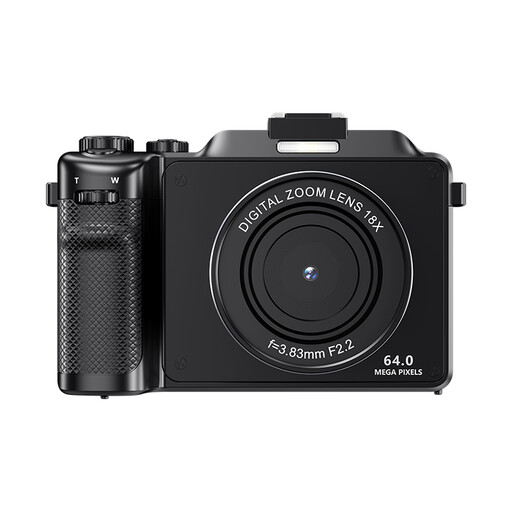
KOMERY X9 digital camera with 18x zoom, black

KOMERY X9, 4K digital camera, 18x zoom, black

This model could suit you if you want to change your framing and the zoom feature listed in the title meets your needs.

The title lists 64 MP, autofocus, flash and anti-shake as well. The zoom isn’t specified as optical zoom.

View at Joybuy
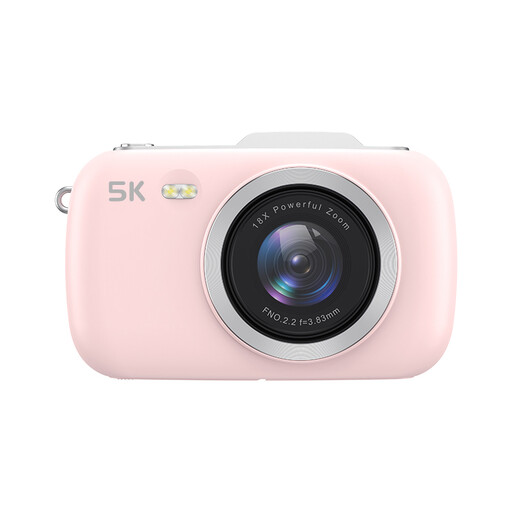
KOMERY G7 5K digital camera with 18x zoom, pink

KOMERY G7, 5K digital camera, 80 MP, 18x zoom, pink

The zoom listed in the title gives you a way to change your framing. Check that the product specification and controls suit your subjects.

The title also lists 5K and 80 MP. The zoom isn’t specified as optical zoom.

View at Joybuy
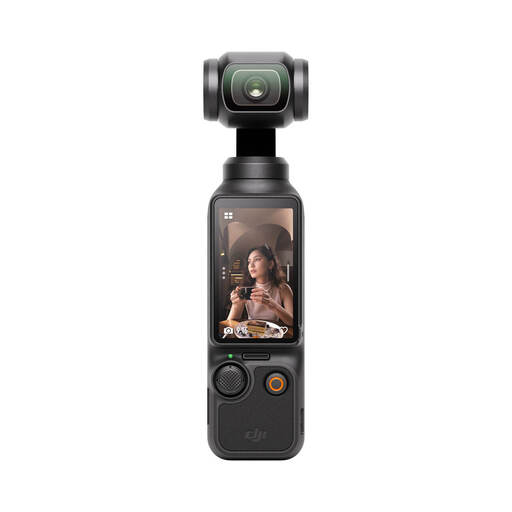
DJI Osmo Pocket 3 with 3-axis stabilisation

DJI Osmo Pocket 3, pocket camera

The listing mentions stills and 3-axis stabilisation. Check that the photo settings and angle of view suit your façade photography.

It also lists a 1-inch CMOS sensor, 4K/120fps video and a rotating 2-inch touchscreen.

View at Joybuy

Songdian digital camera with 8x optical zoom, white

Songdian digital camera, 8x optical zoom, white

The optical zoom listed in the title could be useful for changing your framing from an accessible position.

The title and description also list 5K, 64 MP, two lenses and electronic image stabilisation (EIS).

View at Joybuy

Frequently asked questions

How can you avoid converging verticals when photographing tall brick façades?

Check whether a different accessible position and pointing the camera less steeply upwards will give you the framing you want. The fotocommunity Photography School explains that tilting the camera sharply upwards can make buildings appear to lean backwards in the image; correcting the perspective afterwards is another option.

How should you prepare for a handheld photography trip?

Get to know the exposure and stabilisation settings on your specific model, and check the memory card and power supply against the manual. Sony provides a German-language manual and model-specific support information for the RX100 VII; this doesn’t tell you what’s included with other cameras.

Is a manufacturer’s guarantee the same as your statutory rights?

No. If you buy from a business seller, your statutory rights are against the seller. A guarantee is an additional voluntary promise with its own terms and conditions. EU consumer information states that goods have a minimum two-year legal guarantee. For online purchases from a business seller, you generally have 14 days from delivery to cancel; check the terms and any return costs for your specific purchase.

Can you publish photos of Hanseatic façades in Germany?

Under certain conditions, § 59 UrhG permits the photographic reproduction, distribution and public communication of works permanently located on public paths, roads or squares. For buildings, this applies only to their exterior. This isn’t blanket permission for every shooting position or every other subject in an image. Separate rules apply to recognisable people.