Key buying considerations
First decide on your preferred framing and reach, then consider exposure controls and portability.
| Buying consideration |
What to check |
Who is it most important to? |
| Capturing the whole square |
Compare the full-frame equivalent focal length at the wide end with the spot you can shoot from; Canon lists 16 mm for the PowerShot V1, while Ricoh gives 28 mm for the GR IV. |
If you’re close to the façades and want to capture the rows of buildings alongside the square, a wide-angle view matters. Around 29% of consumers are likely to put this view of the whole square first. |
| Bright façades and shadows |
Check how easy it is to access exposure compensation and whether the specific model supports RAW. |
If you want to control the exposure yourself in changing light and may edit your photos afterwards, these features are a priority. Around 24% of consumers are likely to prioritise control over exposure. |
| Distant architectural details |
Compare the maximum optical focal length and the maximum aperture at the telephoto end; Sony lists f/2,8–4,5 for the RX100 VII. |
If you want to make rooftop figures or clocks look larger from a distance, telephoto reach is key. Around 18% of consumers are likely to put this need first. |
| Carrying your camera on a walk |
Compare weight on a like-for-like basis, along with dimensions; Canon lists around 304 g for the G7 X Mark III, while Fujifilm gives around 521 g for the X100VI. |
If you’ll be out for a long time and want your camera close to hand, weight and handling matter. Around 17% of consumers are likely to put portability first. |
| Market scenes in motion |
Check the model’s autofocus tracking and how easily you can access the shutter speed; Sony documents subject tracking for the RX100 VII. |
If you want to capture moving scenes rather than mainly architecture, check the focus and shutter speed controls carefully. Around 12% of consumers are likely to prioritise action in market scenes. |
Joybuy products
The following Joybuy products are described as compact cameras for photography or taking pictures on the go.
 No image available
KOMERY G7-A 4K, 80 MP, 18X zoom, pink
Described as a compact point-and-shoot camera for a city walk.
The product title lists 80 MP, 4K video and 18X zoom.
View at Joybuy
 No image available
KOMERY G7 5K, 80 MP, 18X zoom, white
Described as a portable point-and-shoot camera for travel and city walks.
The product title lists 80 MP, 5K and 18X zoom.
View at Joybuy
 No image available
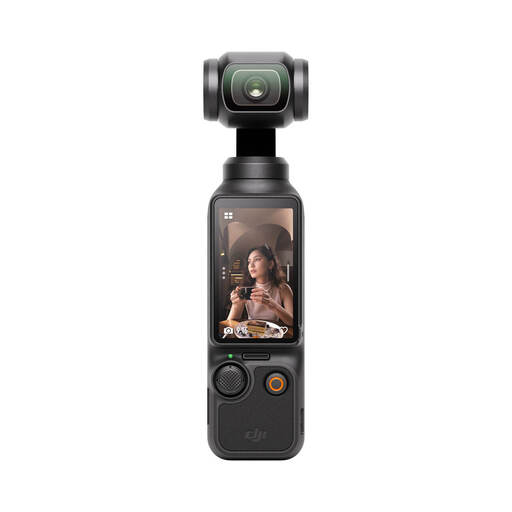
DJI Osmo Pocket 3, 1-inch CMOS, 4K/120fps
Described as a compact camera for taking pictures on the go, including stills.
The description lists a 1-inch CMOS sensor, 3-axis stabilisation and a rotating 2-inch screen. The product title lists 4K/120fps and tracking.
View at Joybuy
Frequently asked questions
What should I do if a bright façade is next to a dark arcade?
Check the image brightness and use exposure compensation if needed. Canon Germany explains why automatic metering may not give you the result you want with unusually bright or dark subjects. If you want to edit your photos afterwards, also check whether the specific model supports RAW.
Do I need as much zoom as possible for a market square?
Not necessarily. In a tight spot, the angle of view at the wide end matters first; telephoto reach helps when you want to make distant details look larger. The zoom ranges documented by Canon, Sony and Panasonic all start at 24 mm full-frame equivalent, but extend to 100, 200 and 360 mm respectively.
What should I check before a longer photography walk?
Make sure you have a battery and a compatible memory card, and get to know the file formats and controls you want to use. RAW files need editing software and may take up more storage than more heavily compressed formats; requirements vary by model and settings.
Can I photograph historic buildings in a public square and publish the pictures?
Section 59 of the German Copyright Act (UrhG) allows works that are permanently located on public paths, streets or squares to be reproduced photographically and made available to the public, subject to the conditions set out there. For buildings, this applies only to their exterior. The Federal Ministry of Justice and the Federal Office of Justice list the provision on “Laws on the Internet”; it isn’t blanket permission for every photography or publication situation.
Can I freely publish a picture showing recognisable market visitors?
Not in every case. Section 22 of the German Art Copyright Act (KunstUrhG) generally requires consent to distribute or publicly display portraits. Section 23 sets out limited exceptions, such as people appearing as incidental details alongside a location, and takes the legitimate interests of those depicted into account. Whether a particular image qualifies depends on the picture and how it is used; the provisions are listed by the Federal Ministry of Justice and the Federal Office of Justice on “Laws on the Internet”.


