Photographers capturing distant subjects
If you want to capture wide landscapes and distant huts or animals from the same spot, compare the optical zoom range. Sony and Panasonic list different focal-length ranges for the models mentioned here.


If you want to photograph both the meadow and distant huts or animals from the same spot, an optical travel zoom is a versatile choice. A stabilised prime lens may suit carefully composed wide-angle shots. Also check the viewfinder, weight and weather protection of the specific model: a longer telephoto reach alone does not guarantee better image quality in low light.
If you want to capture wide landscapes and distant huts or animals from the same spot, compare the optical zoom range. Sony and Panasonic list different focal-length ranges for the models mentioned here.
If you prefer to frame your shots deliberately and can manage without an optical telephoto zoom, a prime lens may be worth considering. Ricoh and Fujifilm list fixed wide-angle focal lengths for their respective models.
If you regularly take your camera on walks, weigh up its weight and the specific protective features listed for that model. OM SYSTEM lists protective features for the TG-7; the manufacturer's specifications apply to this model.
A good fit if: you want to switch between the whole meadow and more distant subjects while shooting handheld. Sony lists a 24–200 mm full-frame equivalent range, an electronic viewfinder and optical image stabilisation for stills on the RX100 VII.
The trade-off: its telephoto reach is shorter than that of the Panasonic travel zooms mentioned here. The specifications do not guarantee blur-free shots in every situation.
A good fit if: distant huts or animals are your priority. Panasonic lists a 24–360 mm range and a 1.0-inch sensor for the TZ300, and a 24–720 mm full-frame equivalent range for the TZ99.
The trade-off: greater reach is no substitute for comparing the other features. On 26 June 2026, F.A.Z. Kaufkompass noted that the TZ300 does not have a viewfinder.
A good fit if: you mainly want to compose wide landscape shots and do not need an optical telephoto zoom. Ricoh lists an approximately 28 mm full-frame equivalent focal length for the GR IV; Fujifilm lists 35 mm, a hybrid viewfinder and sensor stabilisation for the X100VI.
The trade-off: you cannot optically zoom in on distant subjects. The adapter ring and protective filter are relevant to the weather protection for the X100VI lens described by Fujifilm.
A good fit if: protection in harsh conditions matters more to you than a long telephoto reach. OM SYSTEM lists water, shock, freeze and dust protection for the TG-7.
The trade-off: OM SYSTEM lists a 25–100 mm full-frame equivalent lens range, which offers less telephoto reach than the travel zooms mentioned here.
| Priority | What to look for when buying | Who should pay particular attention |
|---|---|---|
| Framing and reach | Compare the wide and telephoto ends of the focal-length range in full-frame equivalent; check that the zoom is explicitly described as optical. | If I want to photograph the meadow and distant huts or animals from the same spot, the framing I can actually achieve matters. Around 37% of consumers are likely to see optical reach as their top buying priority. |
| Composing shots in changing light | Check the lens's maximum aperture across the focal-length range you use, exposure compensation and the stabilisation specified for stills. | If creative control in changing light matters more to me than maximum telephoto zoom, I should consider a prime lens too. Around 27% of consumers are likely to prioritise light and composition. |
| Portability and control over your shots | Check the weight, including the battery and card, as well as the viewfinder and ease of use on the specific model. | If I want my camera close to hand on walks and easy to use on the move, I look for a lightweight model with a viewfinder. Around 18% of consumers are likely to consider portability and control over their shots their top priority. |
| Weather protection | Compare the protection specified for the exact model and any accessories required. | If I take photos outdoors in changeable weather, I want to know which protective features apply to the specific model. Around 18% of consumers are likely to make weather protection their top priority. |
Travel zooms vary not only in reach but also in their sensors and viewfinders. Greater telephoto reach alone tells you nothing about results in low light.
First decide how far away your subjects will be, then compare the other features of the specific model.
A small body is not automatically protected against rain or dust. OM SYSTEM lists protective features for the TG-7; Fujifilm describes the X100VI lens's weather protection in conjunction with an adapter ring and filter.
Check the protection specifications and what is included for the exact version on offer.
Extra accessories may be needed for the X100VI lens weather protection described by Fujifilm.
A tripod compatible with a camera is not a camera itself. Joybuy lists the Ulanzi MT-08 as a travel tripod.
First check the product category, full model name and what's included on the product page.
The RX100 VII is an option for handheld landscape and detail shots, with zoom and an electronic viewfinder.
The TZ300 and TZ99 offer different travel zoom focal-length ranges for more distant subjects.
The GR IV is aimed at photographers looking for a compact model with a fixed, wide-angle lens.
The X100VI is a prime-lens option for carefully composed landscape shots, with a hybrid viewfinder.
The TG-7 prioritises ruggedness over long telephoto reach.
The PowerShot SX740 HS Lite Edition is a travel zoom option for subjects at a distance.
The Joybuy options below range from compact point-and-shoot models to a mirrorless system camera. In particular, check whether any zoom listed is optical or digital.
 No image available
For days out when you want a compact point-and-shoot camera with a stated zoom. The product title lists 80 MP and 18× zoom; it does not specify the type of zoom.
 No image available
For switching between different framings on the move when optical zoom is a must. The product title lists 12× optical zoom, 4K, 64 MP and Wi-Fi.
 No image available
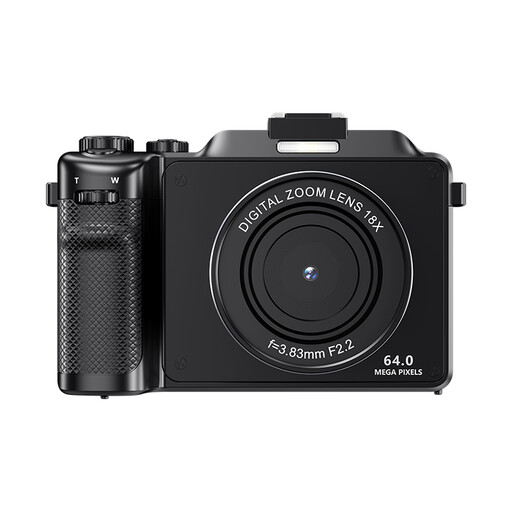
For spontaneous handheld shots when you want a portable digital camera with autofocus and flash. The title lists 64 MP, anti-shake and 18× zoom; it does not specify the type of zoom.
 No image available
For landscape photography if you are considering a mirrorless APS-C system camera with a viewfinder and interchangeable lens. The product description lists 24.2 MP, a weight of 396 g and autofocus with eye and animal detection; the stated 16–50 mm focal-length range is limited for framing distant subjects.
 No image available
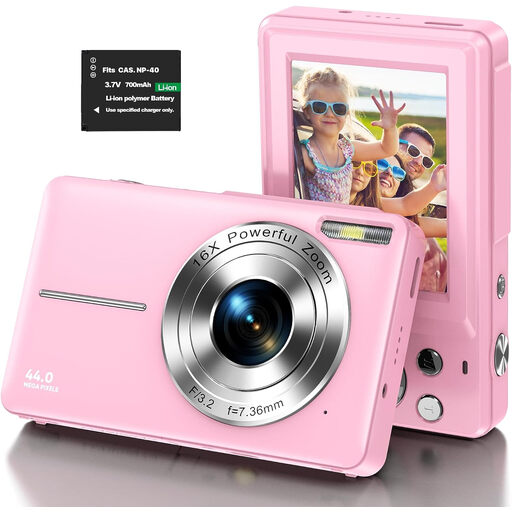
For compact photo and video capture on the move. The product details list 4K, 44 MP, autofocus and 16× digital zoom; this is no substitute for optical zoom when photographing distant subjects. The specifications advise against exposing the camera to liquids or damp conditions.
Compare focal lengths that are explicitly specified as optical. The prime lenses on the Ricoh GR IV and Fujifilm X100VI do not offer an optical telephoto zoom; Sony, Panasonic and Canon list optical focal-length ranges for the zoom models mentioned here.
Charge the battery, check that your memory card is compatible and take some test shots using your preferred stabilisation and exposure settings. If you choose the Fujifilm X100VI for the lens weather protection described by Fujifilm, also check whether the adapter ring and protective filter are included with the version on offer.
For online orders in Germany, you generally have 14 days from receiving the goods to cancel, as explained by the Verbraucherzentrale. If a product is faulty, statutory consumer rights should be distinguished from a voluntary guarantee. Check the specific returns and guarantee terms before placing your order.
Under § 22 KunstUrhG, consent is generally required to distribute or publicly display portraits. § 23 sets out exceptions, including for people who appear only incidentally alongside a landscape; the legitimate interests of the person depicted must still be respected. Whether a particular photograph falls under an exception depends on the image.