Landscape photographers
If you want to capture the whole river bend from a viewpoint, first check the wide-angle coverage and how much room you have to take your shot.


Choose a compact camera based on the type of shot you’ll need most often along the Moselle: a wide angle to capture the whole bend, an optical telephoto zoom for distant details, or a fast lens for shots in fading light. A wide zoom range doesn’t guarantee good low-light performance, while a prime lens limits your framing if you can’t change your position.
If you want to capture the whole river bend from a viewpoint, first check the wide-angle coverage and how much room you have to take your shot.
When the cloud cover changes or the light fades, key things to consider include the lens speed across the zoom range you need, exposure settings and how steadily you can hold the camera.
If you want to capture distant places or features on the opposite hillside, check the optical zoom range that’s actually available.
A good fit if: You want to photograph both the whole bend and distant subjects from the same viewpoint. Panasonic Germany gives the LUMIX TZ99 a 24–720 mm range and the TZ300 a 24–360 mm range, in full-frame equivalent terms.
The trade-off: The TZ99’s greater telephoto reach doesn’t prove that it performs better in low light; focal-length figures alone don’t tell you what conditions will be like on location.
A good fit if: You want to balance lens speed with zoom range. Canon Germany lists a 24–100 mm range and F1.8–2.8 for the PowerShot G7 X Mark III; Sony Germany lists 24–200 mm and F2.8–4.5 for the RX100 VII.
The trade-off: The Canon has less telephoto reach; on the Sony, the maximum aperture narrows to F4.5 at the telephoto end.
A good fit if: You can choose your position and framing freely, and don’t need optical zoom. Fujifilm lists a 23 mm F2 lens for the X100VI, while Ricoh gives the GR IV a full-frame equivalent of around 28 mm.
The trade-off: From a fixed viewpoint, you can’t zoom in optically on a distant subject; check the angle of view before you buy.
| Buying priority | What to check | Who it matters to most |
|---|---|---|
| Whole river bend | Compare the full-frame equivalent focal length at the wide end and check that the angle of view suits your viewpoint. | If I want to capture the whole bend from the same spot, a wide enough angle of view is essential. Around 31% of consumers put panoramic views first. |
| Changing light | Check the lens speed across the zoom range you’ll use, as well as exposure compensation or bracketing; plan to use a stable support for longer exposures. | When the clouds break or the light fades, I want to be able to control bright and dark areas in the image. Around 31% of consumers prioritise changing light conditions. |
| Distant details | Compare the optical telephoto focal length at the long end and the lens speed there; don’t rely on the zoom ratio alone. | If I can’t reach the opposite hillside from my viewpoint, I need the right optical framing. Around 23% of consumers prioritise distant details. |
| Light travel kit | Check the weight and dimensions of the specific version, as well as whether it has a viewfinder and what charging equipment you’ll need. | On longer walks, I want to be able to take the camera with me without having to settle for an unsuitable angle of view. Around 15% of consumers prioritise travelling light. |
For the whole river bend, the wide angle at the short end matters; for distant details, it’s the telephoto focal length at the long end. One zoom-ratio figure doesn’t tell you which angles of view the camera covers.
Compare the focal lengths at both ends using the same full-frame equivalent basis.
According to Sony Germany, the maximum aperture of the Sony RX100 VII changes from F2.8 to F4.5 across the zoom range. Greater telephoto reach therefore doesn’t prove that the camera is better suited to low light.
Check the lens speed at the telephoto end you’ll actually use, and plan for a stable camera position when taking longer exposures.
According to their manufacturers, the Fujifilm X100VI and Ricoh GR IV have fixed lenses with different angles of view. You can’t zoom in optically on distant subjects with either camera.
Before you buy, consider whether you’re more likely to photograph the whole bend or details on the opposite bank from your viewpoint.
The LUMIX TZ99 and TZ300 combine wide-angle coverage with a travel zoom. Panasonic Germany lists a 24–720 mm range for the TZ99 and 24–360 mm for the TZ300, in full-frame equivalent terms; the TZ300 is also specified with a 1.0-inch-type sensor.
Sony Germany lists a 24–200 mm full-frame equivalent range, a 1.0-inch-type sensor and an electronic viewfinder for the RX100 VII.
Canon Germany lists a 24–100 mm full-frame equivalent range, F1.8–2.8 and a 1.0-inch-type sensor for the PowerShot G7 X Mark III.
Fujifilm lists a fixed 23 mm F2 lens, a 40.2 MP sensor and a hybrid viewfinder for the X100VI.
Ricoh Imaging Europe describes the GR IV as a compact APS-C camera with a prime lens, a full-frame equivalent of around 28 mm and 5-axis sensor stabilisation.
Joybuy camera options with different zoom specifications for framing shots on the go.
 No image available
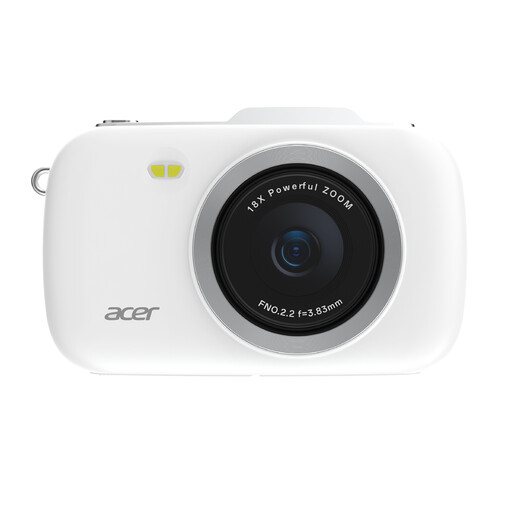
The product name mentions a zoom function for flexible framing. Before you buy, check whether the type of zoom and focal lengths listed will suit distant subjects along the Moselle.
Listed in the product name: 4K, 80MP and 18X zoom.
 No image available
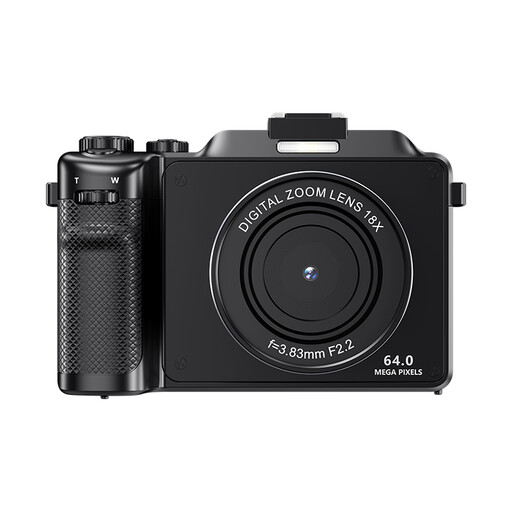
The product name mentions autofocus and a zoom function. If you want to photograph distant subjects, check the type of zoom and the actual focal-length range of this version.
Listed in the product name: 4K, 64 MP, autofocus, 18x zoom and flash.
 No image available
The product name specifies optical zoom, which may be useful for framing distant subjects from the same spot; also check the focal lengths at both ends.
Listed in the product name: 8X optical zoom, 5K, 64MP and two lenses.
 No image available
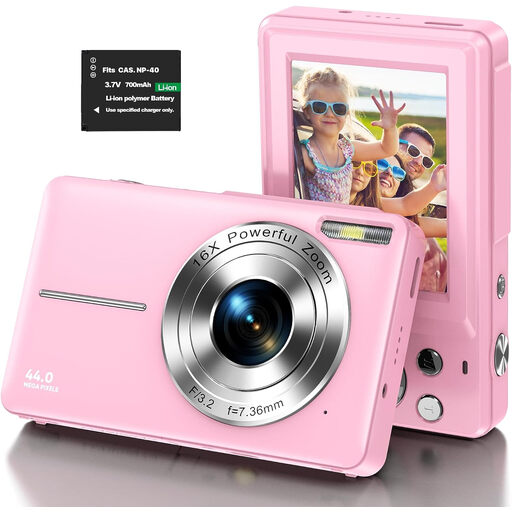
The product name describes a pocket camera with zoom. If you’re choosing it for distant details, check which type of zoom is meant and which focal lengths are available.
Listed in the product name: 4K, 64MP and 16X zoom.
Check the exposure for both the sky and the valley, and use exposure bracketing if your camera offers it. Nikon explains that this creates several shots at different exposures, which can then be combined to capture a wider tonal range. If your subject is moving, check the result carefully.
For deliberately long exposures, Nikon’s landscape photography guide recommends using a tripod and remote release. Image stabilisation alone is no substitute for a stable camera position.
Check what comes with your chosen model, including the battery, charging equipment and memory card, as well as the connections you’ll need. For longer exposures, also make sure you can use your planned stable support or tripod on location.
Under certain conditions, Section 59 of the German Copyright Act (UrhG) permits the photographic reproduction and public display of works permanently located on public paths, roads or squares; for buildings, this applies only to their exterior. Gesetze im Internet does not provide blanket permission for every shooting location or every other image right.
Section 22 of the German Art Copyright Act (KunstUrhG) generally requires consent before portraits are distributed or publicly displayed. This alone doesn’t establish whether an exception applies in a particular case. If in doubt, compose landscape shots without identifiable people or check the rights before publishing.