Photographers who want wide views of concourses
If you want to capture the roof, platforms and sense of space from an accessible position, the right angle of view matters more than extra telephoto reach.


For handheld photos in Munich station concourses, first choose an angle of view that captures the composition you want from an accessible position. Then decide whether a wide aperture or telephoto reach matters more. A prime lens requires you to find a suitable position, while a zoom lets you change the framing. Check the aperture at the focal length you actually plan to use, and bear in mind the rules set by the relevant operator and the purpose of your photography.
If you want to capture the roof, platforms and sense of space from an accessible position, the right angle of view matters more than extra telephoto reach.
For static scenes in a concourse when shooting without a tripod, a wide aperture and image stabilisation are useful features to consider. For moving people, choosing a sufficiently fast shutter speed is a separate consideration.
If you want to make architectural details appear larger from a permitted position, check the optical zoom range and the aperture at the telephoto end.
For handheld photos in Munich station concourses, the framing you can achieve from an accessible position comes first. Then weigh up aperture, zoom range and portability to suit your subjects.
A good fit if: You mainly take carefully composed shots and a fixed angle of view suits your position. FUJIFILM X Series Germany lists the X100VI as having a 35 mm full-frame equivalent focal length and an F2 aperture; Ricoh Imaging Europe lists the GR IV at around 28 mm and F2.8.
Trade-off: Neither model has optical zoom. You can’t adjust the fixed angle of view if you’re unable to change position.
A good fit if: You want to switch between wide views of a concourse and closer details. Canon Deutschland lists the PowerShot G7 X Mark III as having a 24–100 mm full-frame equivalent focal length and an F1.8–2.8 aperture.
Trade-off: Its stated telephoto reach tops out at 100 mm, shorter than the Sony RX100 VII’s 200 mm. Image stabilisation won’t compensate for people moving.
A good fit if: You also want to make distant details appear larger from a permitted position. Sony Germany lists the RX100 VII as having a 24–200 mm full-frame equivalent focal length; Panasonic Deutschland lists the TZ300 at 24–360 mm.
Trade-off: According to Sony Germany, the Sony’s maximum aperture ranges from F2.8 at the wide-angle end to F4.5 at the telephoto end. Greater telephoto reach alone doesn’t tell you how well a camera performs in low light.
| What you need | What to look for when buying | Who is this important for? |
|---|---|---|
| A suitable angle of view for the concourse | Canon Deutschland, Sony Germany and Panasonic Deutschland list 24 mm as the wide-angle end; Ricoh Imaging Europe lists around 28 mm and FUJIFILM X Series Germany 35 mm, all in full-frame equivalent terms. Check the framing from the position you’ll actually be shooting from. | I want to capture as much of the concourse as possible from an accessible position. Around 36% of consumers would put this type of framing first. |
| Static subjects in low light | Canon Deutschland lists an F1.8–2.8 aperture for the PowerShot G7 X Mark III, FUJIFILM X Series Germany lists F2 for the X100VI, and Sony Germany lists F2.8–4.5 for the RX100 VII. Image stabilisation is no substitute for a fast shutter speed when there’s movement. | When I photograph static architecture without a tripod, the available aperture matters to me. Around 29% of consumers would prioritise this. |
| Distant details | Canon Deutschland lists 24–100 mm, Sony Germany 24–200 mm and Panasonic Deutschland 24–360 mm, all in full-frame equivalent terms. Compare the optical zoom range and maximum aperture at the focal length you plan to use. | If I want to make distant details appear larger from a permitted position, I need optical zoom. Around 21% of consumers would put this need first. |
| Easy to carry | Compare dimensions and weights on a like-for-like basis, including the battery and memory card, and check whether the camera has a viewfinder or screen. Canon Deutschland lists the PowerShot G7 X Mark III at around 304 g including the battery and memory card. | For regular journeys, I want a camera I can carry without compromising on the angle of view I need. Around 14% of consumers would make portability their top priority. |
For a wide view of a concourse, the wide-angle end is what matters first. On the Sony RX100 VII, Sony Germany states that the maximum aperture drops from F2.8 at 24 mm to F4.5 at 200 mm.
First compare the view of the concourse you can get from an accessible position. Then consider the optical telephoto reach and aperture at the focal length you plan to use.
The stabilisation on the models mentioned is designed to compensate for camera movement; it doesn’t guarantee sharp shots of travellers on the move.
Consider whether you’ll be photographing static architecture or movement, and check the shutter speed in the image you’ve taken.
Deutsche Bahn and the Munich Transport Company (MVG) publish different guidance. The MVG says photography is not permitted in particularly busy areas or during peak times of 6 to 9 am and 4 to 8 pm.
Check which operator is responsible for the location and read its guidance before taking photos.
The PowerShot G7 X Mark III is an option if you’re looking for a short zoom with a 24–100 mm full-frame equivalent focal length.
According to Sony Germany, the RX100 VII combines a 24–200 mm zoom with an electronic viewfinder.
The X100VI is a prime-lens camera for carefully composed shots, with a 35 mm full-frame equivalent focal length.
According to Ricoh Imaging Europe, the GR IV has a fixed angle of view equivalent to around 28 mm on a full-frame camera.
The Lumix TZ300 is a travel zoom option with a 24–360 mm full-frame equivalent focal length.
The following Joybuy offers include pocket cameras and compact digital cameras. For handheld shots in concourses, check the usable angle of view and don’t confuse digital zoom with optical zoom.
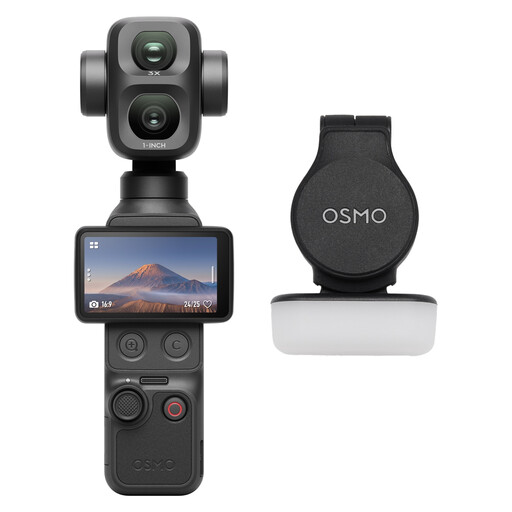 No image available
If you want to capture a wide view of a concourse handheld, check whether this version’s angle of view works from your accessible position.
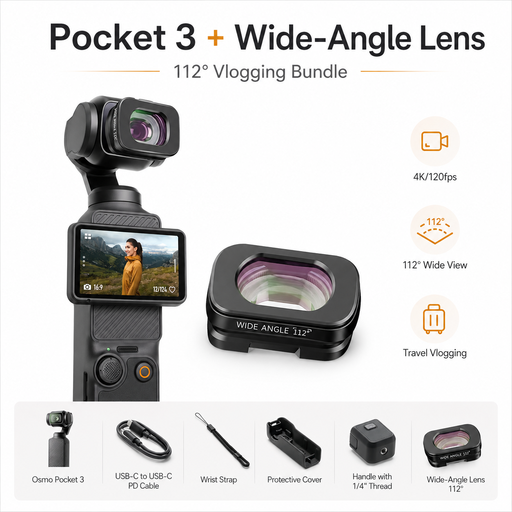 No image available
The bundle includes a 112° wide-angle lens. Check whether its angle of view captures the part of the concourse you want from your position.
The product name also lists 1-inch CMOS, 4K/120fps and a 3-axis gimbal.
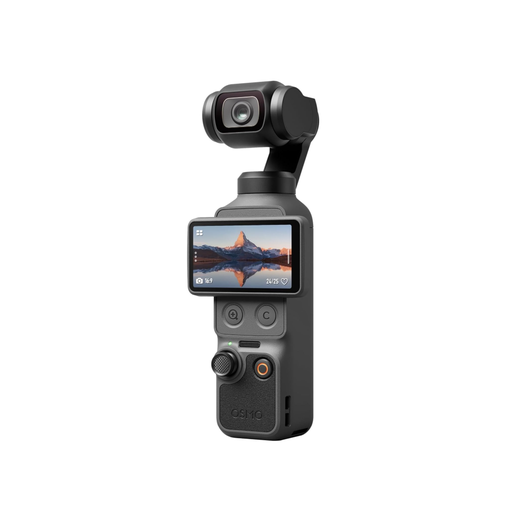 No image available
For adjustable framing, the product name lists 2× lossless zoom. Still check that the wide-angle view covers your position and subject.
Specifications listed include 1-inch CMOS, 4K/240fps, 3-axis stabilisation, 107 GB of built-in storage and a rotating 2-inch screen. According to the product description, 4K/240fps is available only in slow-motion mode.
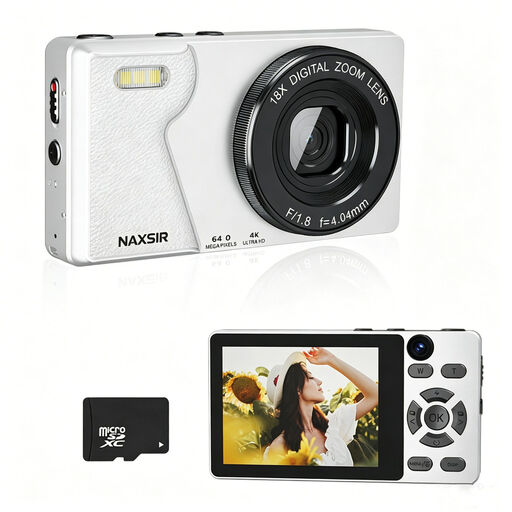 No image available
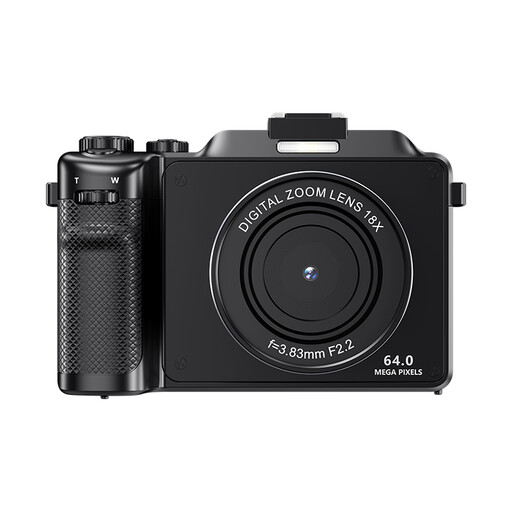
If you want to make distant architectural details appear larger, note that the stated 18× zoom is digital, not an optical zoom range.
The product name lists autofocus and a 32 GB memory card.
 No image available
The stated 18× zoom is digital; no optical zoom range is specified. So check carefully whether you can get the shot you want without optical zoom.
The product name also lists an anti-shake function and a flash. Stabilisation won’t freeze people’s movement.
According to Deutsche Bahn, you don’t need permission for private, non-commercial photography in areas that are freely accessible to the public and operated by Deutsche Bahn. The MVG says the same applies in publicly accessible MVG areas for photography that is exclusively private and doesn’t involve a tripod, lighting or other equipment. However, the MVG restricts photography in particularly busy areas and during peak times of 6 to 9 am and 4 to 8 pm. Check which operator is responsible for your location; journalism and commercial photography are subject to different rules.
It depends on the operator and the purpose of the photography. Deutsche Bahn’s guidance for private hobby photography restricts the use of equipment such as tripods and artificial lighting. For private photography involving a tripod, lighting or other equipment in MVG areas, the MVG says you must carry a signed form. Check the guidance for the specific location rather than assuming one operator’s rules apply elsewhere.
Check whether the model you’re considering offers stabilisation for still photos, and review your shots. Stabilisation compensates for camera movement, not travellers on the move; the shutter speed you choose is what matters for that.
Follow the guidance of the operator responsible for the location and consider the purpose of your photography. Deutsche Bahn says you must respect people’s rights and obtain consent in advance for close-up photos of individuals. In its guidance for private photography without equipment, the MVG prohibits deliberately photographing passengers and staff; anyone captured incidentally must be unrecognisable or have their identity obscured. Check the rules for your specific publication purpose.