What should you look for when buying?
Start by deciding what matters most for your subject: exposure control, fitting the whole concourse into the frame, capturing distant details or comfortable handheld use.
| Priority |
What to check when buying |
Who is it important to? |
| Exposure in backlit conditions |
Exposure compensation, exposure bracketing and explicitly listed photo formats such as RAW. |
If I want to expose deliberately for bright windows and darker parts of the concourse, I’m willing to put in extra time adjusting settings or editing afterwards. Around 36% of consumers are likely to consider exposure control their top priority. |
| Capturing the whole concourse |
Full-frame-equivalent focal length or an angle of view explicitly specified for photos; assess the framing from the location you plan to use. |
If I want to capture as much architecture as possible and can’t move much further back, a wide angle is essential; a prime lens limits other framing options. Around 29% of consumers are likely to prioritise an overall view of the concourse. |
| Capturing distant details |
Compare the optical zoom range in full-frame-equivalent terms and check the maximum aperture at the focal length you need. |
If I want to make distant features look larger without moving from my position, I need an adjustable optical zoom; telephoto reach alone says nothing about performance in backlit conditions. Around 21% of consumers are likely to put distant details first. |
| Ease of handheld use |
Look for image stabilisation for photos, a viewfinder or screen, and a clearly stated weight; take the conditions at your location into account. |
If I want to take my camera with me often and shoot without a tripod, I look for easy handling and stabilisation. Around 14% of consumers are likely to consider ease of use their top priority. |
Joybuy products for photographing concourses
This selection from Joybuy includes digital cameras with different zoom specifications for changing your framing and capturing distant details. Check each camera’s exact lens specifications and whether its exposure features suit your subject.
 No image available
KOMERY G7-A 4K digital camera – pink
The product title lists 18× zoom for changing your framing; check whether this is optical zoom before buying.
The product title also lists 4K, 80 MP and a portable camera. The device is described as pink.
For private amateur photography on Deutsche Bahn premises, the built-in flash must not be used under the conditions set out by Deutsche Bahn.
Joybuy
 No image available
KOMERY W6 digital camera
The stated optical zoom may be useful for changing your framing and capturing distant details; it doesn’t prove any particular level of backlit performance.
The product title lists 12× optical zoom, 4K video, Wi-Fi and 64 MP.
Joybuy
 No image available
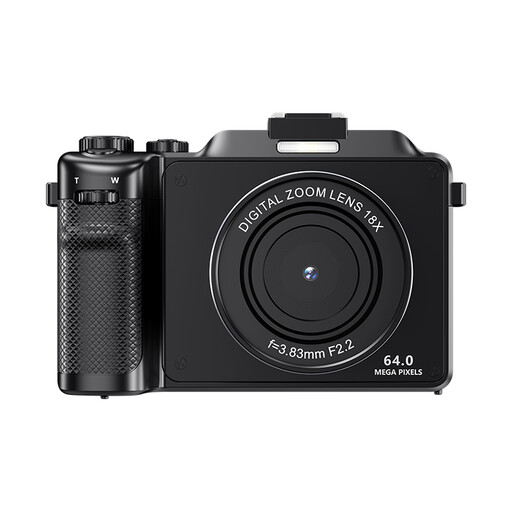
KOMERY X9 4K digital camera – black
The camera lists autofocus and 18× zoom for changing your framing; the zoom specification alone doesn’t describe its performance in backlit conditions.
The product title lists 4K, 64 MP and a built-in flash. For private amateur photography on Deutsche Bahn premises, artificial light must not be used under the conditions set out by Deutsche Bahn.
Joybuy
 No image available
Songdian digital camera, 8× optical zoom – white
The product title lists 8× optical zoom, which may be useful for changing your framing and capturing distant details.
Other specifications listed in the product title include 5K, 64 MP and two lenses.
Joybuy
 No image available
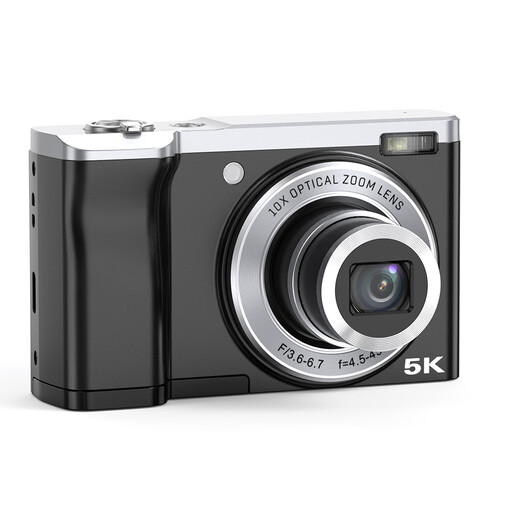
Songdian 5K digital camera, 10× optical zoom – black
The stated 10× optical zoom may be useful for distant details and variable framing; on its own, it says nothing about backlit performance.
The product title lists 56 MP and a front and rear camera.
Joybuy
Frequently asked questions
Can I take photos for personal use in a Deutsche Bahn station concourse in Munich?
Deutsche Bahn allows private photography in generally publicly accessible areas without prior permission, subject to its published conditions. Among other things, you must not obstruct passengers or railway operations, or block escape routes. Check the current station rules, any local additions and instructions given on site; different requirements apply to non-private projects.
Can I use a tripod or extra lighting for private amateur photography?
Not under Deutsche Bahn’s general permission for private amateur photography: this prohibits tripods, artificial light and reflectors, among other things. So don’t choose a camera on the assumption that you’ll be able to use these accessories in the concourse.
What if I want to take photos for journalistic or commercial purposes?
The general permission for private photography does not cover journalistic or commercial projects. Deutsche Bahn requires advance notification for journalistic work and early notification with written permission for commercial productions. The requirements depend on the purpose and scope of your project.
How should I approach my first photo in strong backlighting?
Check the camera menu for exposure compensation and, if available, AEB. Take a test shot from a safe location. If the contrast is challenging, take several shots at different exposures. Exposure bracketing is a shooting technique, not a guarantee that a single image will retain detail throughout.
What should I bear in mind if people appear in my photos?
For close-up photos of people, Deutsche Bahn requires you to obtain their consent beforehand. Also follow the published photography conditions and any local notices at the station.


