Photographers dealing with changing light
When bright rocks sit beside shaded slopes, you’ll want to adjust the exposure quickly or take several exposures.


If you want to capture both the valley and distant rocks from the same spot, a camera with optical zoom gives you more flexibility when framing your shot. A prime lens can work well if you can make deliberate use of its fixed field of view from the paths you can access. In changing light, also check how easy it is to use exposure compensation and bracketing on the model you’re considering: a wide zoom range or RAW support alone won’t guarantee better photos.
When bright rocks sit beside shaded slopes, you’ll want to adjust the exposure quickly or take several exposures.
You want to frame both valley views and distant details at different levels of magnification from the path, without changing lenses.
You want to compose using a fixed field of view and check in advance whether the accessible viewpoints will work for you.
First, decide whether you’d prefer the flexibility to zoom from one spot or to compose with a fixed field of view. The table matches people choosing a compact camera for valley photography with their main buying priority.
| Buying consideration | What to check | Who is it important to? |
|---|---|---|
| Exposure in changing light | Check how to use exposure compensation and whether the specific model offers auto exposure bracketing (AEB). If you’re planning to edit your photos, the supported file formats matter too. Canon Europe describes exposure compensation as a way to adjust the camera settings for unusually bright or dark scenes. | When bright rocks and a shaded slope are in the same shot, I want to be able to adjust the exposure precisely. Around 34% of consumers give controlling changing brightness their top priority. |
| Wide valleys and distant details | Compare the full-frame equivalent focal lengths at both ends of the zoom range, not just the zoom factor: Sony Germany lists 24–200 mm for the RX100 VII, Canon Germany lists 24–100 mm for the G7 X Mark III, and Panasonic Germany lists 24–360 mm for the TZ300. | From the same path, I want to frame both the broad valley view and distant rocks just right. Around 33% of consumers put flexible framing first. |
| Easy to carry on walking trails | Compare weight and dimensions on a like-for-like basis. Canon Germany gives the G7 X Mark III’s weight as 304 g, including the battery and memory card; Sony Germany lists an electronic viewfinder for the RX100 VII. | On longer walks, I want the camera and battery to be easy to reach without adding unnecessary weight. Around 20% of consumers prioritise keeping their hiking kit light. |
| A fixed perspective instead of zoom | Check that the fixed field of view suits the viewpoints you can reach: Ricoh lists around 28 mm for the GR IV, while Fujifilm lists a 35 mm full-frame equivalent for the X100VI. Neither prime lens offers optical zoom. | I want to compose deliberately with a fixed field of view and can choose a suitable spot to do so. Around 13% of consumers prioritise this style of photography. |
A long telephoto range won’t necessarily help you fit the whole valley into the frame from where you’re standing. According to Sony Germany, Canon Germany and Panasonic Germany, the zoom cameras considered here all start at 24 mm full-frame equivalent, while their maximum focal lengths vary by model: 100, 200 or 360 mm.
Compare the wide and telephoto ends separately against the subjects you plan to photograph.
The Ricoh GR IV and Fujifilm X100VI have fixed focal lengths, according to their respective manufacturers. You can’t zoom in optically on distant rocks with either camera. In protected areas, the viewpoints you can access may also be limited.
Choose a prime lens only if you’re happy with its fixed field of view from the permitted viewpoints you can reach.
RAW files give you room to make adjustments later, while bracketing takes several shots at different exposures. These features serve different purposes and can’t guarantee a particular result.
Check the exposure and highlights as you take the photo. Then decide whether bracketing would suit the subject.
Editing RAW files and, where necessary, working with several shots takes extra time.
According to Sony Germany, the Sony RX100 VII combines a variable field of view with an electronic viewfinder, making it worth considering if you want to change your framing on a walk.
According to Canon Germany, the Canon PowerShot G7 X Mark III has a shorter zoom range than the RX100 VII and offers exposure adjustment features.
According to Panasonic Germany, the Panasonic Lumix DC-TZ300 is a travel zoom camera with a wide optical focal length range, making it an option if distant details matter to you.
The Ricoh GR IV suits a deliberately chosen, relatively wide perspective, provided its fixed field of view works from the viewpoints you can reach.
According to Fujifilm X Series Germany, the Fujifilm X100VI pairs an APS-C sensor with a fixed perspective equivalent to 35 mm on a full-frame camera.
The Joybuy products below include pocket gimbals, action cameras and digital cameras. Compare their designs and explicitly listed features with how you plan to use them; these models are not directly comparable with the zoom and prime-lens compact cameras described above.
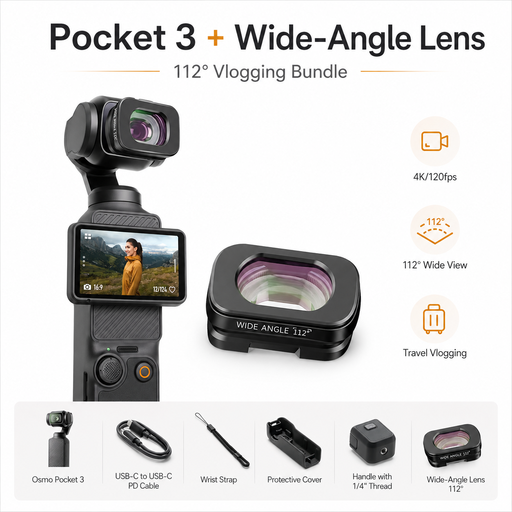 No image available
This bundle includes a wide-angle lens for capturing landscapes on the go.
1-inch CMOS sensor; 3-axis gimbal; 4K/120 fps; ULANZI F35 112° wide-angle lens.
 No image available
A pocket gimbal camera for capturing footage on the go. Check whether this design suits the framing you have in mind.
1-inch CMOS sensor; 2× lossless zoom; 107 GB built-in storage; 4K/240 fps; 3-axis stabilisation; rotating 2-inch screen.
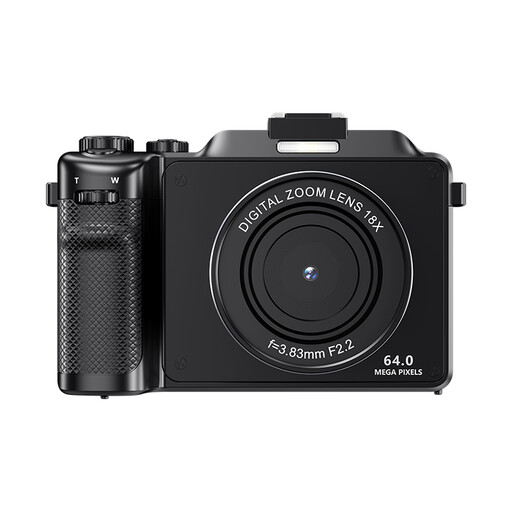 No image available
The product title mentions zoom for different framing options on the go. Compare the zoom specification with the subjects you need to capture.
64 MP photos; autofocus; 18× zoom; flash.
 No image available
Optical zoom is a listed feature for choosing your framing. Check that the wide and telephoto ends suit the subjects you want to photograph.
8× optical zoom; dual lens; 64 MP photos; 5K video; colour: white.
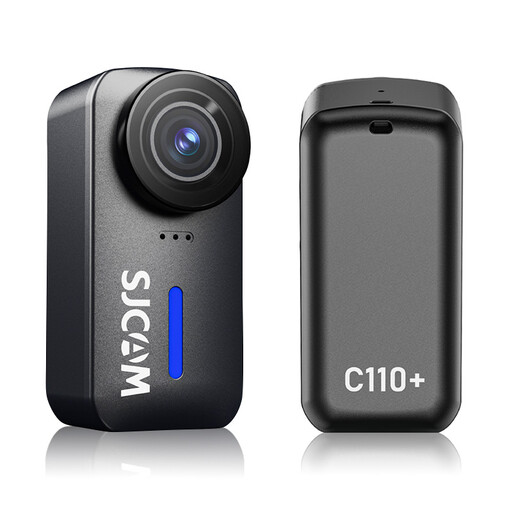 No image available
If an action camera suits the way you plan to use it, check that its stated wide-angle view matches the landscape framing you want.
170° wide-angle lens; F1.8; 20 MP photos; electronic stabilisation; exposure compensation; up to 120 minutes of recording; waterproof to 30 m with housing; dimensions 6.4 × 3.1 × 3.3 cm.
First, check the exposure and use exposure compensation if needed. For high-contrast subjects that are still enough, taking several shots at different exposures may help; check whether the specific model offers AEB. Canon Europe describes exposure compensation as a way to adjust camera settings for unusually bright or dark scenes.
Before you set off, check that the memory card and battery are compatible with your model. After walking dusty trails, gently remove dirt from the camera body. Sony Germany’s general care guide recommends using a brush and warns against touching delicate sensor surfaces with your finger. For other cameras, follow the relevant manufacturer’s instructions.
Your statutory consumer rights apply against the seller and are separate from any voluntary manufacturer or retailer’s guarantee. If a product is faulty, you can initially ask for it to be repaired or replaced. The Verbraucherzentrale says that, as a general rule, the statutory period for newly purchased goods is two years from receipt; the type of purchase and the individual circumstances matter.
No. You shouldn’t assume that you’re allowed to go to every location. Baden-Württemberg’s nature conservation authority refers visitors to the relevant protected-area regulations and local guidance. If you have a question about a specific place, contact the responsible lower nature conservation authority. This does not mean there is a general ban on photographing landscapes.