What to look for when buying
At a fixed viewpoint, the main question is whether you want to change your framing or can work with a set perspective.
Compact camera with optical zoom
A good fit if: you want to switch between a wide skyline view and distant details from the same spot.
The trade-off: A longer telephoto range alone says nothing about backlit performance; also consider the sensor, aperture and file format.
Compact camera with a prime lens
A good fit if: you can choose your angle of view in advance and compose the scene from an accessible position.
The trade-off: Without optical zoom, you can’t bring distant headframes closer by adjusting the lens.
| Buying priority |
What to check before buying |
Who is it important to? |
| Detail in backlit scenes |
Check for RAW format, manual exposure controls and the option to take an exposure bracket. |
If I want to capture or edit the bright sky and dark structures with control, exposure is my main criterion. Around 36% of consumers prioritise handling backlight. |
| Distant industrial details |
Compare optical focal lengths and check which photo format the figures apply to. |
If I want to bring headframes closer from an accessible viewpoint, the optical zoom range matters to me. Around 29% of consumers prioritise being able to change the framing for distant details. |
| Fixed angle of view |
Match the lens’s full-frame equivalent focal length to your subjects and the viewpoints you can access. |
If I can deliberately compose a wide perspective on location, a suitable fixed angle of view matters more to me than telephoto flexibility. Around 21% of consumers prioritise choosing their perspective. |
| Portability and ease of use |
Check the weight with the battery, how easy the screen or viewfinder is to use, and which memory card you’ll need. |
If I’m visiting several viewpoints on foot, I want a camera that’s comfortable to carry and easy to operate with confidence. Around 14% of consumers prioritise portability and ease of use. |
Joybuy products
Joybuy picks for compact cameras to photograph industrial settings in backlit conditions. In particular, check whether a quoted zoom range refers to optical or digital zoom.
 No image available
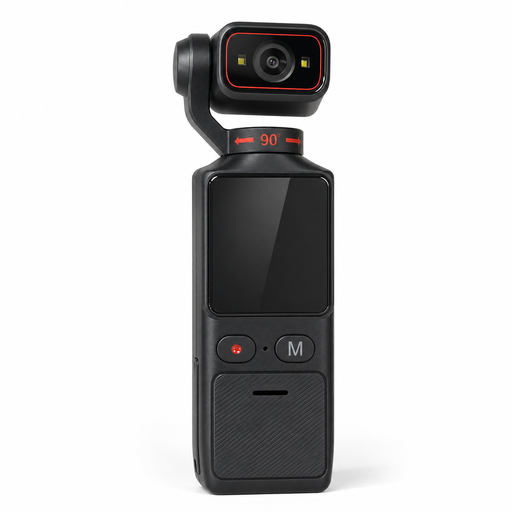
4K pocket camera with 180° swivel lens
If you want to adjust the exposure for a bright sky and dark structures, the product description lists adjustable exposure settings.
Listed features include 4K, electronic image stabilisation, a 180° swivel lens, Wi-Fi and a 1.69-inch touchscreen.
View at Joybuy
 No image available
KOMERY G7-A 4K digital camera, pink
If you’re looking for a compact camera with a stated zoom range, the product name lists 18X zoom.
The name also lists 4K and 80MP. It doesn’t say whether the zoom is optical or digital, so check which it is if you want to photograph distant headframes.
View at Joybuy
 No image available
KOMERY W6 digital camera with 12X optical zoom
If you want to change your framing from an accessible viewpoint, the product name lists 12X optical zoom.
Other listed features include 4K, Wi-Fi and 64MP.
View at Joybuy
 No image available
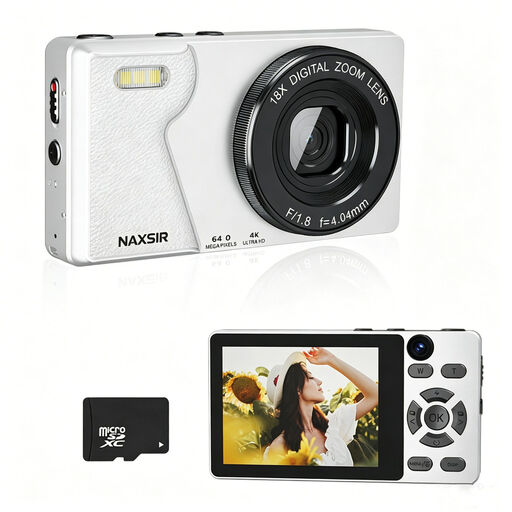
NAXSIR 4K digital camera with 18X digital zoom
If you want to change your framing using zoom, the product name lists 18X digital zoom.
Other listed features include 4K, 64 MP and a 32 GB memory card. Digital zoom isn’t the same as optical zoom, so don’t assume it will bring distant details closer in the same way.
View at Joybuy
 No image available
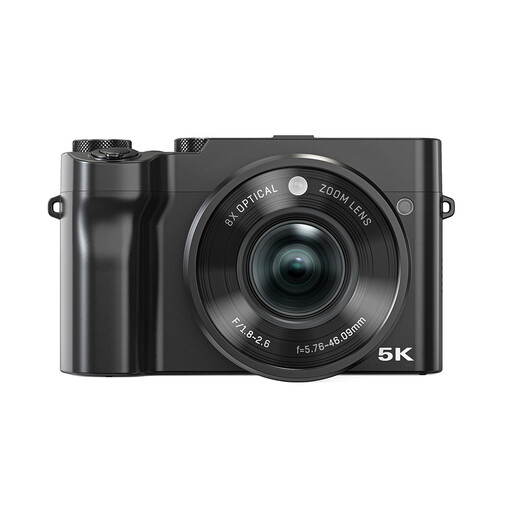
Songdian 5K digital camera with 8X optical zoom, black
If you want to switch between different framings, the product description lists 8X optical zoom.
Other listed features include 5K, 64MP and two lenses. The product description warns against pointing the camera directly at strong light sources for long periods, to protect the sensor.
View at Joybuy
Frequently asked questions
How do I photograph a bright sky above dark industrial structures?
Choose your exposure carefully for the part of the image that matters most, and check whether your camera can take a suitable exposure bracket. Adobe explains how differently exposed shots can be combined into an HDR image. This is an editing option, not a guarantee of good results in every scene with movement.
Do I need permission to take private photos at Zollverein?
The Zollverein Foundation generally allows private photography in its open areas without permission or a fee. Exceptions apply to certain shoots, such as wedding photography or more elaborate productions, and you must not enter cordoned-off areas. The Foundation requires permission for images intended for commercial publication. These rules apply to the Zollverein site and not automatically to every industrial site in the Ruhr region.
Can I photograph and publish images of industrial architecture visible from public places?
Under certain conditions, § 59 UrhG permits the photographic reproduction and public display of works permanently situated on public roads, streets or squares. For buildings, the provision covers only their exterior; it doesn’t override the access rules or site policies of a particular location. The relevant wording is set out in § 59 UrhG on the Federal Ministry of Justice’s online legislation service.
What if people are recognisable in a published skyline photo?
§ 22 KunstUrhG generally requires consent before portraits are distributed or displayed publicly. § 23 KunstUrhG sets out exceptions, including for people who appear only incidentally alongside a landscape or location; the exception is limited by the legitimate interests of the people shown. Whether it applies to a particular image can’t be decided as a general rule.
What should I check after buying, before taking photos or arranging repairs?
Check your model’s manual to see which memory cards and file formats it supports, and get familiar with the exposure controls before taking important photos. For faults, Germany’s consumer advice centre distinguishes between your statutory rights against the seller and a voluntary guarantee; read the terms for each separately.


