Which camera suits whom

Façade photographers

If you want to capture whole gables and their lines, start by checking the angle of view from a position you can actually access. Canon lists a 24 mm full-frame equivalent at the wide end of the PowerShot G7 X Mark III; Ricoh gives around 28 mm for the GR IV, and Fujifilm lists 35 mm for the X100VI. (Canon Germany, Ricoh Imaging Europe and Fujifilm)

Light-conscious city walkers

If you photograph the same houses in sunshine, cloud and later in the day, you can factor exposure settings and available file formats into your choice. Canon Academy explains why choosing the right shutter speed matters when shooting handheld; Leica lists DNG and JPEG capture for the D-Lux 8.

Detail seekers

If you can’t get closer to the details, optical zoom is useful for choosing your framing. Sony lists a 24–200 mm full-frame equivalent for the RX100 VII, while Panasonic gives 24–720 mm for the TZ99. (Sony Germany and Panasonic Germany)

What to consider when choosing

Compact camera with a standard zoom

A good fit if: You want to photograph façades and nearby details with one lens, and control exposure or shoot RAW yourself. Canon lists a 24–100 mm full-frame equivalent and an F1.8–2.8 aperture for the PowerShot G7 X Mark III.

The trade-off: Its zoom range doesn’t reach as far as those of the travel zoom cameras considered here; 24 mm doesn’t guarantee that you can fit an entire façade into the frame from a narrow alley.

Compact travel zoom camera

A good fit if: You often want to photograph distant details or vary your framing from the same position. Sony lists a 24–200 mm full-frame equivalent for the RX100 VII, while Panasonic gives 24–720 mm for the TZ99.

The trade-off: More telephoto reach doesn’t automatically make a camera better in low light: Sony says the RX100 VII’s maximum aperture narrows to F4.5 at the telephoto end. Panasonic’s claims about night photography are from the manufacturer, not an independent comparison.

Compact camera with a prime lens

A good fit if: You can deliberately choose a fixed angle of view and don’t need optical zoom for distant details. Ricoh lists around 28 mm for the GR IV, and Fujifilm gives a 35 mm full-frame equivalent for the X100VI.

The trade-off: You can’t make the angle of view wider by zooming out. So check whether you can get far enough away to capture an entire façade.

What you want to photograph What to check before buying Who it matters most to
Entire gabled façade Full-frame equivalent focal length at the wide end; check the framing from an accessible position. If I want to photograph an entire façade from a limited distance, a wide angle of view is the first thing I check. Around 36% of consumers put framing the whole façade first.
Exposure in changing light Compare exposure compensation, manual modes, RAW and the maximum aperture at the focal lengths you’ll use. If you photograph the same houses in changing light and want to adjust exposure deliberately, these features are particularly important. Around 29% of consumers prioritise control over light.
Distant gable details Compare the optical telephoto focal length; don’t confuse digital zoom with optical zoom. If I can’t get closer to roof edges or decorative details from where I’m standing, the optical zoom range matters. Around 21% of consumers put distant details first.
Carrying it on a city walk Check the dimensions and weight of the exact version, including the battery; consider whether you need a viewfinder or a tilting screen. If you want to take your camera with you regularly on a walk, handling and weight are particularly important. Around 14% of consumers prioritise portability.

Common buying mistakes

  • Confusing telephoto reach with a wide view of a façade

    A long telephoto range is useful for distant details, but it doesn’t give you a wider angle of view at the wide end.

    Compare both ends of the optical focal length range with the subjects you photograph most often.

  • Choosing a prime lens without enough room to shoot

    You can’t widen the fixed angle of view optically if the façade is too large to fit in the frame from where you’re standing.

    Check the framing from a position you can actually use to take the photo.

  • Assuming stabilisation guarantees sharp photos

    Even with stabilisation, handheld shots depend on factors including shutter speed, focal length and shooting conditions.

    In lower light, check a shot and adjust the exposure rather than relying solely on a claimed stabilisation feature.

Key camera brands at a glance

Canon

The PowerShot G7 X Mark III combines a standard zoom with manual exposure controls.

  • Canon lists a 24–100 mm full-frame equivalent and an F1.8–2.8 aperture.
  • Its telephoto range doesn’t reach as far as those of the travel zoom models considered here; 24 mm doesn’t guarantee you can fit the whole façade into the frame from close by.

Sony

According to Sony, the RX100 VII covers a range of framing options, from wide-angle to telephoto.

  • Sony lists a 24–200 mm full-frame equivalent, a viewfinder, an adjustable screen and optical image stabilisation for stills.
  • According to the specifications, the maximum aperture ranges from F2.8 at the wide end to F4.5 at the telephoto end.

Panasonic

The Lumix TZ99 is a travel zoom option for distant architectural details.

  • Panasonic lists a 24–720 mm full-frame equivalent and 30x optical zoom.
  • The manufacturer’s claims about night photography aren’t an independent performance comparison.

Ricoh

The GR IV is designed for a deliberately chosen fixed wide-angle composition.

  • Ricoh lists an APS-C sensor, around 28 mm full-frame equivalent and 5-axis stabilisation.
  • The fixed focal length offers no optical zoom for distant details or when you can’t get far enough away from the façade.

Fujifilm

The X100VI is aimed at photographers who want to compose deliberately using a fixed angle of view.

  • Fujifilm specifies APS-C, 40.2 million effective pixels, RAW and sensor-based stabilisation.
  • The fixed 35 mm full-frame equivalent angle of view may be too narrow to capture an entire façade from a confined position.

Leica

The D-Lux 8 combines a short zoom with automatic or manual operation.

  • Leica lists a 24–75 mm full-frame equivalent, F1.7–2.8, and DNG and JPEG capture.
  • Its telephoto range is shorter than those of the travel zoom models considered here; the manufacturer’s claims about challenging lighting aren’t independent comparison results.

Related products at Joybuy

The products below range from compact gimbal and digital cameras to a model advertised as a travel zoom. Compare the angle of view and photo features of each specific version with the façades you want to photograph.
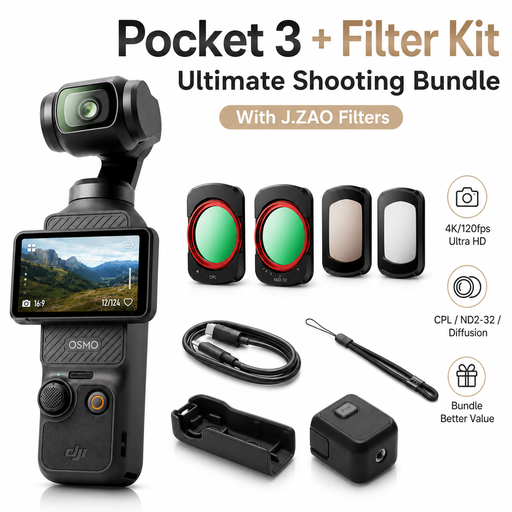
DJI Osmo Pocket 3 Standard Combo with J.ZAO Pocket 3 camera filter set

DJI Osmo Pocket 3 Standard Combo with J.ZAO Filter Set

This bundle is described as a compact gimbal camera for travel and content creation. Before buying, check that the angle of view and controls suit the architecture you want to photograph.

Features listed in the title: 1-inch CMOS, 3-axis gimbal, 4K/120fps video and a rotating 2-inch touchscreen.

View at Joybuy
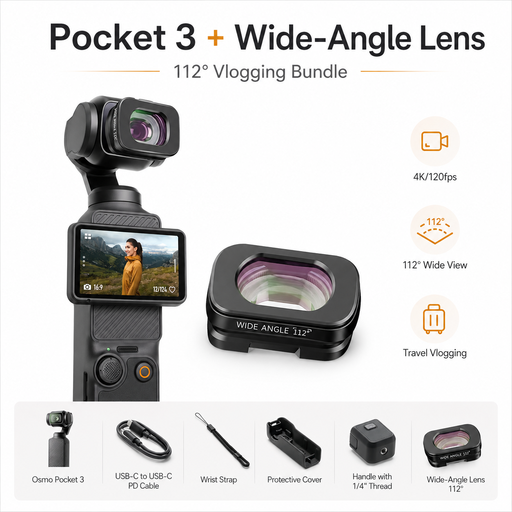
DJI Osmo Pocket 3 Standard Combo with ULANZI F35 112° wide-angle lens

DJI Osmo Pocket 3 Standard Combo with ULANZI F35 112° wide-angle lens

This bundle adds a wide-angle lens to the compact gimbal camera. Check that the stated angle of view suits the façade framing you have in mind.

Features listed in the title: 1-inch CMOS, 3-axis gimbal, 4K/120fps and a magnetic 112° wide-angle lens.

View at Joybuy
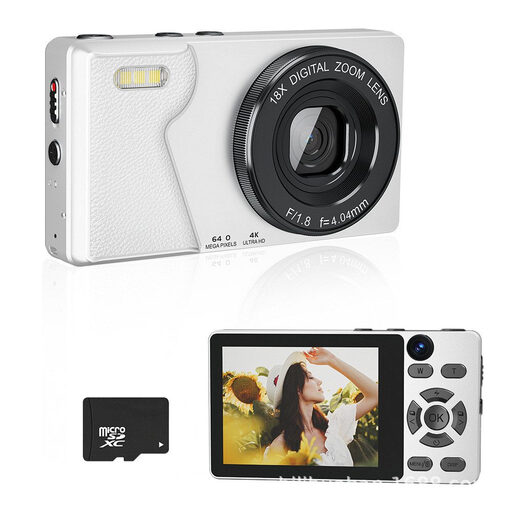
KINSI retro digital camera, 4K UHD 64 MP, with dual cameras

KINSI retro digital camera, 4K UHD 64 MP

The description presents this as a compact camera for photography and travel. Before choosing, compare its angle of view and the features you need for your subjects.

Features listed in the title: front and rear cameras, autofocus, 2.8-inch screen, 20 filters, image stabilisation and a 2000-mAh battery.

View at Joybuy

DJI Osmo Pocket 4 Standard Combo with 1-inch CMOS and rotating screen

DJI Osmo Pocket 4 Standard Combo

The title describes this model as a pocket gimbal camera for vlogging and photography. Compare the listed features with your needs for architectural photography.

Features listed in the title: 1-inch CMOS, 4K/240fps, 3-axis stabilisation, 2× lossless zoom, 107 GB of built-in storage and a rotating 2-inch screen.

View at Joybuy

KOMERY G7-A 4K digital camera in pink

KOMERY G7-A 4K digital camera, pink

The product title describes a portable camera for travel and photography. If distant architectural details matter to you, check the zoom specifications for the exact version before buying.

Features listed in the title: 4K, 80 MP and pink finish.

View at Joybuy

Frequently asked questions

What should I check before buying a camera for an entire gabled façade?

Check the framing from a position you can actually use, and compare the full-frame equivalent focal length at the wide end. 24 mm on a zoom and 35 mm on a prime lens give you different angles of view; no specification sheet can guarantee that a particular building in Bremen will fit entirely into the frame.

What should I do as the daylight fades?

Check a shot for exposure and camera shake. For static architecture, a suitable shutter speed and available stabilisation can help; RAW is useful for adjustments later, if the model supports it. Results also depend on focal length and how steadily you hold the camera.

What costs and rights should I consider when buying online?

Check what’s included in the box, including the battery, charging options and memory card, as well as any accessories you’ll need to buy separately. The Verbraucherzentrale distinguishes between statutory warranty rights and a voluntary guarantee. Online contracts generally come with a 14-day right to cancel; when the period starts and what exceptions apply depend on the specific circumstances.

Can I publish photos of house façades in Bremen?

Under certain conditions, § 59 UrhG permits the creation and public display of permanent works located on public paths, streets or squares; for buildings, this applies only to their exterior. If identifiable people appear in the photos, publication must be considered separately: § 22 KunstUrhG generally requires consent, while § 23 sets out exceptions and a limit to protect legitimate interests. This does not amount to blanket permission to photograph interiors or to take photos in every commercial setting.