What should you look for when buying?
Choose a camera based on the subject you photograph most often: wide-angle is important for entire façades, telephoto reach for distant details, and a combination of aperture and image stabilisation for handheld shots in low light.
| What to consider |
What to check before buying |
Who is this especially important for? |
| Capturing an entire façade from close range |
Check the angle of view specified for photos and the wide-angle end in 35 mm equivalent. |
If I want to photograph the whole house, roof included, in a narrow street, I need a suitably wide field of view. Around 36% of consumers put capturing the overall view from a limited distance first. |
| Handheld shots in the shade |
Compare image stabilisation for photos and the maximum aperture at the focal lengths you need. |
If I’m taking photos under a roof overhang or at dusk without a tripod, I look for stabilisation for photos and check the maximum aperture at the zoom setting I’ve chosen. Around 29% of consumers prioritise handheld photography in low light. |
| Distant architectural details |
Check the optical zoom rather than digital zoom, and the telephoto end in 35 mm equivalent. |
If I can’t leave my position and want to capture carvings or roof ornaments up close, optical reach matters more than the widest overall view. Around 21% of consumers put distant details first. |
| Keeping your camera light on a day out |
Compare the weight including the battery, the body shape and how easy it is to use the viewfinder or screen. |
If I’m carrying the camera for a long time and often using it handheld, how comfortable it is to carry matters too. Around 14% of consumers prioritise a light weight and easy portability. |
Compact cameras at Joybuy
This selection includes compact pocket, action and digital cameras for handheld photography. For half-timbered façades, pay particular attention to the angle of view in photo mode and how well you can control building lines on the model you’re considering.
 No image available
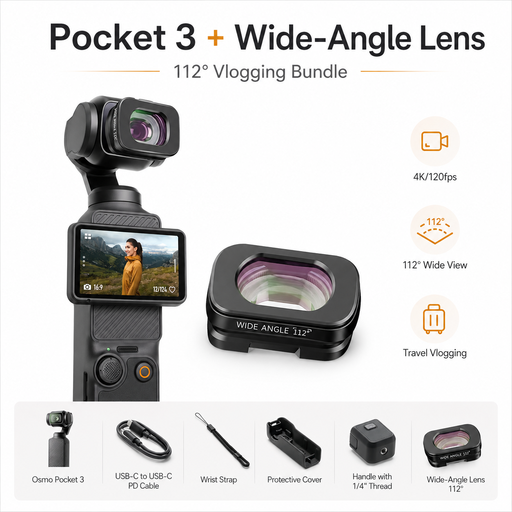
DJI Osmo Pocket 3 Standard Combo with ULANZI F35 112° wide-angle lens
This bundle is an option if you’re after a compact handheld set-up; check whether the included wide-angle lens suits the framing you want for your photos.
The product name lists a 1-inch CMOS sensor and 4K/120fps. The 112° figure refers to the included lens.
View at Joybuy
 No image available
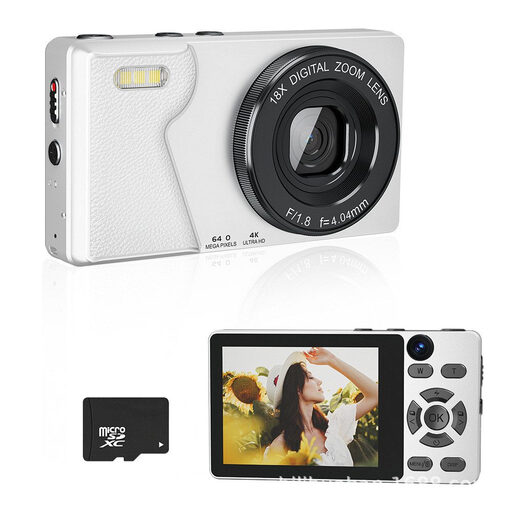
KINSI retro digital camera, 64 MP, front and rear cameras, 2.8-inch screen
This compact digital camera could be a good choice if a front and rear camera are important to you; before buying, check that its angle of view is wide enough for an entire façade.
The product name lists 64 MP and a 2.8-inch screen.
View at Joybuy
 No image available
DJI Osmo Pocket 4 Standard Combo, 1-inch CMOS, 2× zoom, 107 GB storage
This compact set-up could suit you if you’re looking for a pocket camera with zoom for changing your framing; check that the stated zoom covers the framing you want for your photos.
The product name lists a 1-inch CMOS sensor, 2× lossless zoom, 107 GB of built-in storage and a rotating 2-inch screen.
View at Joybuy
 No image available
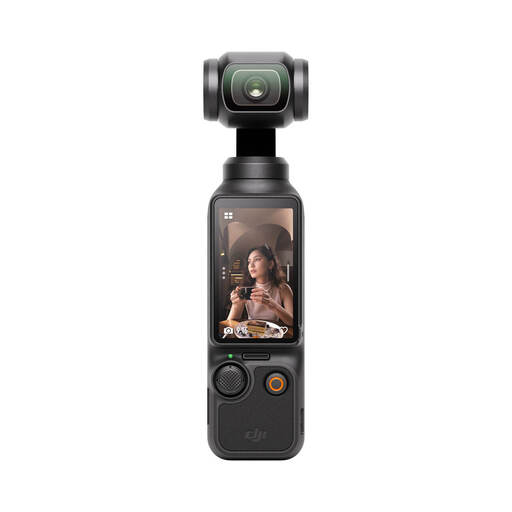
DJI Osmo Pocket 3, 1-inch CMOS, 4K/120fps, 3-axis stabilisation
This pocket camera is worth considering if a handheld model with a stabilised set-up suits the way you plan to use it; check the photo controls and angle of view for façades.
The product name lists a 1-inch CMOS sensor, 4K/120fps and 3-axis stabilisation.
View at Joybuy
 No image available
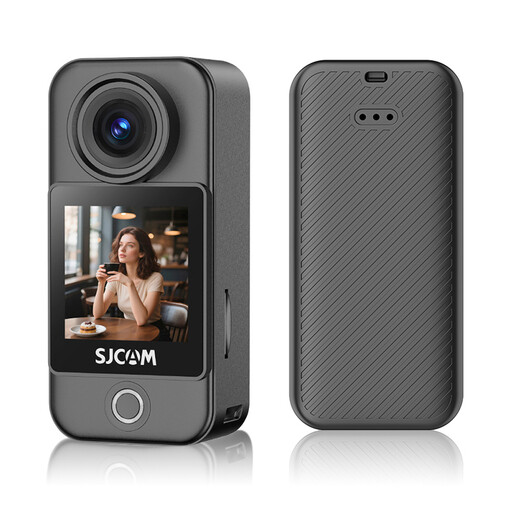
SJCAM C400 Pocket Action Camera, 16 MP photos, 154° wide-angle, 6-axis stabilisation
The wide-angle lens could be useful for expansive views; check whether the stated angle applies to photos and how building lines appear in the frame.
The product details list 16 MP photos and 6-axis gyro stabilisation.
View at Joybuy
Frequently asked questions
How can I avoid converging verticals when photographing a tall half-timbered house?
Start by considering your position and how you hold the camera, rather than simply looking for a wider lens. Leave some space around the building if you plan to correct the lines later: Nikon notes that perspective correction in post-production can reduce the image area. A wide angle of view won’t correct perspective by itself.
Do I need image stabilisation for photos when shooting handheld?
Yes, look specifically for stabilisation that’s stated to work for photos. Sony specifies optical image stabilisation for photos on the RX100 VII, while Ricoh lists 5-axis sensor-shift stabilisation for the GR IV. Canon explains that stabilisation is designed to reduce blur when using slower shutter speeds, but it won’t compensate for every movement in your subject.
What are my rights if I buy online in Germany and want to return a faulty item?
According to Verbraucherzentrale, online purchases by consumers generally come with a 14-day right to cancel; you must notify the other party to the contract that you wish to cancel. Your statutory rights if goods are faulty are separate from any voluntary manufacturer’s guarantee and generally apply against the seller. Check the specific contract and delivery terms before buying.
Can I photograph half-timbered façades from the street and publish the pictures?
Under certain conditions, § 59 UrhG allows you to photograph and publicly reproduce the exterior view of buildings that are permanently situated on public paths, streets or squares. This doesn’t automatically resolve questions about taking the photo from private property or including clearly identifiable people: images of people are subject to separate rules and exceptions under §§ 22 and 23 KunstUrhG. Consider the specific photo if you plan to publish it.


