Who are these options suited to?

Hikers with changing subjects

If you want to switch between sweeping panoramas and distant ridge details while out and about, without changing lenses, a travel zoom can be handy. Sony Deutschland and Panasonic Deutschland list different focal-length ranges and features for their respective models.

Considered landscape photographers

If you like to choose your angle of view in advance and keep your camera close to hand for handheld shots, a stabilised prime lens could be a good fit. Ricoh Imaging Europe and Fujifilm list different full-frame-equivalent focal lengths for the GR IV and X100VI respectively.

Photographers in challenging weather

If you regularly shoot in wet or dusty conditions and are happy to trade some telephoto reach for protection, check the specifications for the exact model. OM SYSTEM documents these features for the TG-7.

Which buying criteria matter?

Travel zoom

A good fit if: You want to switch between panoramas and distant details from the same spot.

Trade-off: A longer telephoto reach alone does not mean better image quality or better results in low light.

Prime lens

A good fit if: You prefer a fixed angle of view and compose your shot by changing position.

Trade-off: You can’t optically zoom in on distant ridge details.

Rugged compact camera

A good fit if: You often shoot in wet or dusty conditions and need documented protection for the camera body.

Trade-off: OM SYSTEM lists a full-frame-equivalent focal-length range of 25–100 mm for the TG-7, which is shorter than those of the travel zooms considered here.

What you need What to check before buying Who is it important to?
Distant ridge details Compare the optical focal-length range in full-frame equivalent and the stabilisation of the specific model; don’t confuse digital zoom with optical zoom. If you want to capture distant details from a viewpoint without moving, optical reach matters most. Around 27 % of consumers put distant subjects first.
Wide-ranging ridgelines Compare the full-frame-equivalent angle of view with the viewpoints you typically use and the composition you want. For a seamless panorama, the angle of view needs to suit the space available from your chosen spot. Around 27 % of consumers prioritise wide views.
Handheld shots in changing light Check the stabilisation and the widest aperture available at the zoom setting you use; the shutter speed must also suit the movement of your subject. If you shoot without support in changing light, you’ll want to reduce camera shake without losing sight of moving subjects. Around 20 % of consumers prioritise sharp handheld shots.
Protection in challenging weather Check the protection specifications and care instructions for the exact model; the size of the camera body alone tells you nothing about its weather protection. If you shoot in wet or dusty conditions, you may be happy to accept a shorter telephoto reach. Around 13 % of consumers prioritise weather protection.
Carrying less kit Compare the dimensions and weight of the specific version, including any accessories you’ll need. If you want to keep your camera close to hand on a hike, a smaller, lighter kit may matter more than extra reach or special protection. Around 13 % of consumers prioritise carrying less.

Which assumptions should you avoid?

  • Assuming the longest zoom automatically makes the best landscape camera

    According to the manufacturer, the Panasonic TZ99 reaches 720 mm in full-frame equivalent. But a higher telephoto figure alone says nothing about image quality or suitability for low light. At long focal lengths, keeping the camera steady remains important.

    First decide how far away your subjects usually are, then assess stabilisation and image quality separately from the zoom specification.

  • Confusing image stabilisation with freezing moving subjects

    Stabilisation counteracts camera movement. A slow shutter speed can still blur branches or animals.

    When photographing moving subjects, choose a suitably faster shutter speed and check the shot.

  • Assuming a compact design means weather protection

    Documented protection applies to the specific model. OM SYSTEM lists it for the TG-7, whose 25–100 mm full-frame-equivalent range offers less telephoto reach than the travel zooms considered here.

    Compare the protection specifications for the exact model with your focal-length needs, and follow the relevant care instructions.

  • Confusing a camera accessory with a camera offer

    An accessories page may simply list a camera model as a compatible device without offering the camera itself.

    Check the product category, full model name and what’s included on the product details page.

Key camera brands at a glance

Sony

According to Sony Deutschland, the RX100 VII combines a 24–200 mm travel zoom with an electronic viewfinder and optical image stabilisation for stills.

  • Its focal-length range suits changing compositions from a viewpoint.
  • Its telephoto reach is shorter than that of the Panasonic travel zooms considered here.

Panasonic

Panasonic Deutschland lists a 24–360 mm range and a 1.0-inch-type sensor for the TZ300. According to the manufacturer, the TZ99 offers a 24–720 mm optical zoom range, both in full-frame equivalent.

  • The models offer different documented zoom options.
  • A higher telephoto figure proves neither better image quality nor better low-light performance.

Ricoh

Ricoh Imaging Europe describes the GR IV as a compact APS-C camera with a stabilised prime lens of around 28 mm in full-frame equivalent.

  • Its fixed angle of view suits carefully composed wide shots.
  • You can’t optically zoom in on distant details.

Fujifilm

According to Fujifilm, the X100VI is an APS-C camera with image stabilisation and a fixed focal length of 35 mm in full-frame equivalent.

  • Its fixed angle of view could suit you if that perspective matches your subjects.
  • There’s no optical zoom for distant ridge details.

OM SYSTEM

OM SYSTEM documents features for the Tough TG-7 that include protection against water and dust, as well as water resistance to a depth of 15 m.

  • It’s an option if documented protection for the camera body is important to you.
  • Its stated 25–100 mm full-frame-equivalent focal-length range doesn’t reach as far as the travel zooms considered here.

Canon

Canon Deutschland lists a stabilised 24–100 mm zoom with an F1.8–2.8 aperture range for the PowerShot G7 X Mark III, in full-frame equivalent and f-numbers respectively.

  • Its short zoom could suit landscape subjects that are closer by.
  • Its telephoto end doesn’t reach as far as those of the travel zooms mentioned here.

Camera offers at Joybuy

The offers below include pocket and action cameras with a wide-angle or outdoor focus. They are not the same as the travel zoom and prime lens cameras described above, so check that the specific features meet your photography needs before buying.
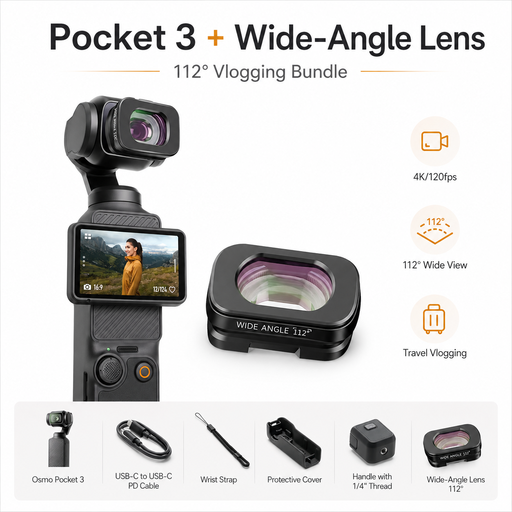
DJI Osmo Pocket 3 Standard Combo with ULANZI F35 112° wide-angle lens

DJI Osmo Pocket 3 Standard Combo with ULANZI F35 112° wide-angle lens

The bundle includes a wide-angle lens for landscapes and 3-axis gimbal stabilisation for filming.

The product title lists a 1-inch CMOS sensor and 4K/120fps.

View at Joybuy
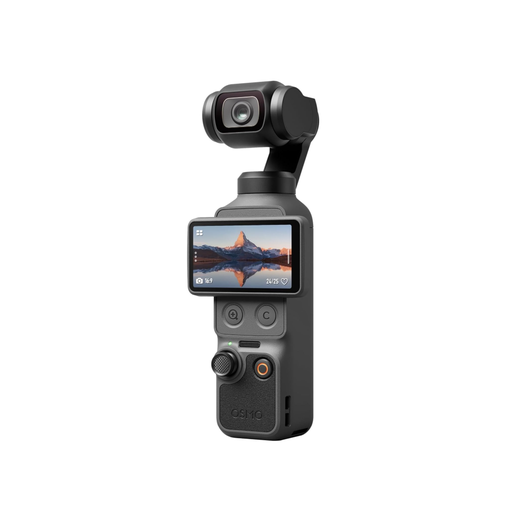
DJI Osmo Pocket 4 Standard Combo

DJI Osmo Pocket 4 Standard Combo

According to the product information, this compact gimbal camera is designed for vlogging and photography.

The product title lists a 1″ CMOS sensor, 2× lossless zoom, 107 GB of built-in storage and a rotating 2″ screen.

View at Joybuy
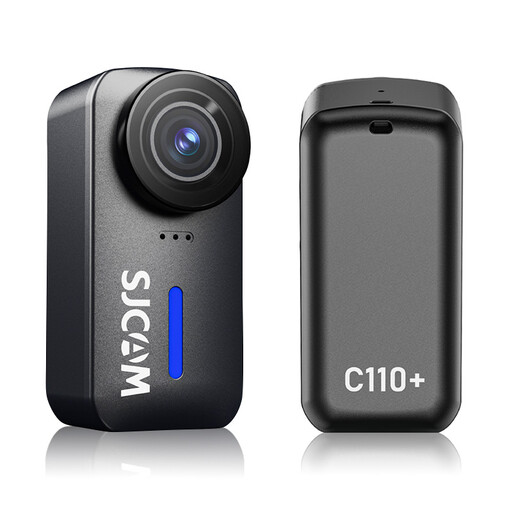
SJCAM C110+ 4K action camera

SJCAM C110+ 4K action camera

This action camera is described as suitable for outdoor filming, with stabilisation specified for video.

The product title lists a 170° wide-angle lens and 20 MP photos. The stated water protection to 30 m applies when using the housing.

View at Joybuy
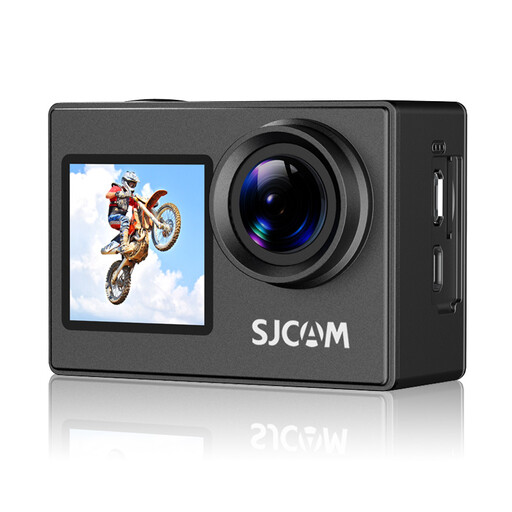
SJCAM SJ4000 dual-screen action camera

SJCAM SJ4000 Dual Screen Action Camera

This model combines photo and video functions; its EIS specification applies to video.

The product title lists 4K video, a 170° wide-angle lens and 16 MP photos. The stated water protection to 30 m applies when using the housing.

View at Joybuy
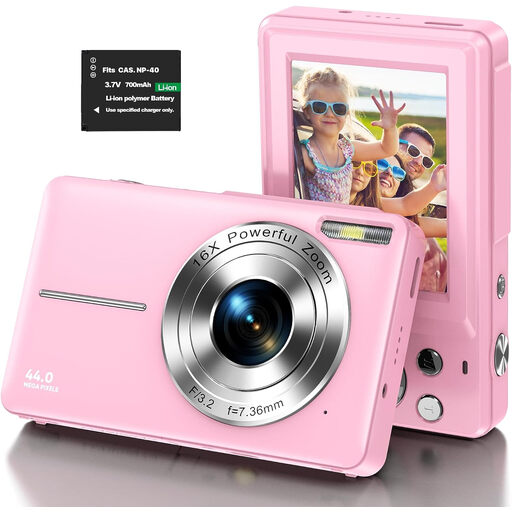
Songdian Pocket Camera 4K, Pink

Songdian Pocket Camera 4K, Pink

The product title describes this pocket camera as suitable for taking photos and recording video.

The stated 16× zoom is digital, not optical.

View at Joybuy

Frequently asked questions

Does image stabilisation help with every blurry handheld photo?

No. It can compensate for camera movement, but you’ll mainly freeze branches, animals or people by using an appropriate shutter speed. Check the result on the camera screen when shooting with a telephoto lens.

What should you set up before your first hike?

Charge the battery, insert a memory card that’s compatible with your specific model, and try out the stabilisation, framing and exposure in advance. Canon recommends a supported stance to hold the camera more steadily; this isn’t a promise about any particular camera model.

Who is responsible if there’s a fault after you buy?

For consumer purchases in Germany, statutory rights relating to faulty goods are generally against the seller; a voluntary guarantee is separate. Check the seller’s identity and guarantee terms for the specific offer. The Verbraucherzentrale lists other categories of device for the additional repair rights it has explained since July 2026, so these rights cannot be applied to compact cameras across the board.

Can you simply return a camera bought online?

For a consumer contract made online in Germany, you generally have a 14-day right to cancel after receiving the goods, as explained by the Verbraucherzentrale. Check for possible exceptions and the specific terms of the contract; you must notify the seller that you’re cancelling, as simply sending the item back isn’t enough.

Can you enter a protected area in the Thuringian Forest to get a better photo?

There’s no blanket answer without knowing the exact location and the conservation rules that apply there. The Umweltportal Thüringen distinguishes, among other things, between strictly protected core zones and other areas; nature reserves have their own restrictions and responsible authorities. Check signs and local rules rather than leaving accessible paths to get a photo.