Which camera suits you?

Skyline photographers

If you want to capture the whole site and its surroundings from an accessible spot, the right angle of view matters more than maximum telephoto reach. Panasonic gives the TZ300 a 24–360 mm full-frame equivalent range for 3:2 photos; Fujifilm lists a fixed 35 mm perspective for the X100VI.

Dusk photographers

If you’re shooting illuminated industrial scenes handheld, consider aperture and image stabilisation for stills together, rather than focusing only on the biggest zoom figure. Sony lists optical image stabilisation for stills on the RX100 VII; Panasonic specifies that the TZ300’s 5-axis HYBRID O.I.S. function is for video.

Detail photographers

If you want to switch between wide views and individual chimneys, blast furnaces or conveyor structures from a fixed viewpoint, optical telephoto reach is essential. Panasonic gives the TZ300 a range of up to 360 mm for 3:2 photos, while Sony lists up to 200 mm full-frame equivalent for the RX100 VII.

What to look for when buying

Travel zoom with long telephoto reach

A good fit if: You want to capture both the skyline and more distant details of the site from an accessible spot. Panasonic gives the TZ300 a 24–360 mm full-frame equivalent range for 3:2 photos.

The trade-off: Panasonic lists an aperture of F6.4 at the telephoto end. That gives you less scope for fast shutter speeds than the wide-angle setting at F3.3.

Compact zoom with a viewfinder

A good fit if: You want to combine wide views with moderately distant details and use a built-in electronic viewfinder. Sony lists a 24–200 mm full-frame equivalent range and optical image stabilisation for stills on the RX100 VII.

The trade-off: Its telephoto reach is shorter than the TZ300’s; Sony lists an aperture of F4.5 at the telephoto end.

Short zoom with a wide angle of view

A good fit if: You need an especially wide photo composition from a confined spot. Canon lists a 16–50 mm full-frame equivalent range for uncropped photos on the PowerShot V1.

The trade-off: The zoom doesn’t reach as far as the travel zooms mentioned above. The PowerShot G7 X Mark III offers a 24–100 mm zoom with an aperture of F1.8–2.8 instead.

Compact prime lens

A good fit if: You can choose your location and framing to suit a fixed perspective. Ricoh lists around 28 mm for the GR IV and Fujifilm 35 mm full-frame equivalent for the X100VI.

The trade-off: Neither model has optical zoom for distant industrial details, so check the framing from your intended spot in advance.

Buying priority What to look for Who it matters most to
Capture the whole skyline Compare the full-frame equivalent wide-angle setting for your chosen photo mode, and check the framing from your planned location. If I want to show the whole site from an accessible spot, I need a suitably wide angle of view. Around 31% of consumers put capturing the whole scene first.
Handheld shots at dusk Check the widest aperture at your preferred focal length and whether image stabilisation is available for stills. If I’m photographing illuminated sites without a tripod, I look for a wide aperture and stabilisation specifically listed for stills. Around 31% of consumers prioritise handheld photos at dusk.
Bring distant details closer Compare optical telephoto ranges using the same photo format, as well as the widest aperture at the telephoto end. Don’t count digital zoom as optical reach. If I can’t move closer to a blast furnace or conveyor structure, I need optical telephoto reach for a tighter composition. Around 23% of consumers put distant details first.
Luggage and photo editing Compare weights on the same basis, and check the file format and storage medium. If I want to carry my camera on longer walks and edit my photos later, I look for a manageable weight and suitable file formats. Around 15% of consumers prioritise portability and editing flexibility.

Common buying mistakes

  • Assuming the biggest zoom figure makes a camera suitable for night shots

    The Panasonic TZ300 offers a 360 mm full-frame equivalent focal length for 3:2 photos; Panasonic also lists a maximum aperture of F6.4 at the telephoto end.

    Compare the widest aperture at the exact focal length you plan to use at dusk.

  • Confusing video stabilisation with stabilisation for stills

    Panasonic describes the TZ300’s 5-axis HYBRID O.I.S. function as a video feature and notes an exception for 4K video.

    Check the specifications for photos and video separately, and make sure stabilisation is available for your shooting mode.

  • Choosing a prime lens without checking the framing

    Ricoh lists around 28 mm for the GR IV and Fujifilm 35 mm full-frame equivalent for the X100VI. Neither lens lets you optically zoom in on distant details.

    Before deciding, check that the fixed angle of view suits your subjects from an accessible spot.

  • Confusing a guarantee with your statutory rights

    Your statutory rights are against the seller; a guarantee is a separate, voluntary offer with its own terms.

    Check who the seller is and read the guarantee terms separately.

Camera brands to consider

Panasonic

The Lumix TZ300 is a travel zoom option if you want to cover wide views and distant details with a built-in lens.

  • Panasonic Germany lists a 24–360 mm full-frame equivalent range and F3.3–6.4 for 3:2 photos.
  • The widest aperture at the telephoto end is F6.4; the listed 5-axis HYBRID O.I.S. function is for video, and not 4K video. The manufacturer’s specifications don’t prove an overall quality advantage.

Sony

The RX100 VII combines a shorter travel zoom with a built-in electronic viewfinder.

  • Sony Germany lists 24–200 mm, F2.8–4.5 and optical image stabilisation for stills.
  • Its telephoto reach is shorter than the TZ300’s; the manufacturer’s specifications alone don’t support an overall quality comparison.

Canon

The PowerShot V1 and G7 X Mark III offer different strengths within their short zoom ranges.

  • Canon lists a 16–50 mm full-frame equivalent range for uncropped photos on the V1; the G7 X Mark III offers 24–100 mm and F1.8–2.8.
  • Check the photo mode and zoom range for each camera: these specifications apply to different models, not all Canon cameras.

Ricoh

The GR IV is an APS-C prime lens option with a wide angle of view.

  • RICOH IMAGING lists around 28 mm full-frame equivalent, DNG RAW and sensor-shift stabilisation.
  • There’s no optical zoom for distant details of industrial sites; the manufacturer’s specifications aren’t an independent measure of quality.

Fujifilm

The X100VI is an APS-C prime lens alternative if its fixed perspective suits your location.

  • Fujifilm X Series Germany lists 35 mm full-frame equivalent and built-in 5-axis image stabilisation.
  • You can’t optically zoom in on a distant blast furnace with this lens; the stated compensation figure applies under the test conditions set out in the data sheet.

Compact cameras at Joybuy

The products below include compact digital cameras and pocket cameras for photography and video. Check carefully that the actual angle of view for photos and the optical zoom range suit your location. Digital zoom isn’t the same as optical telephoto reach.
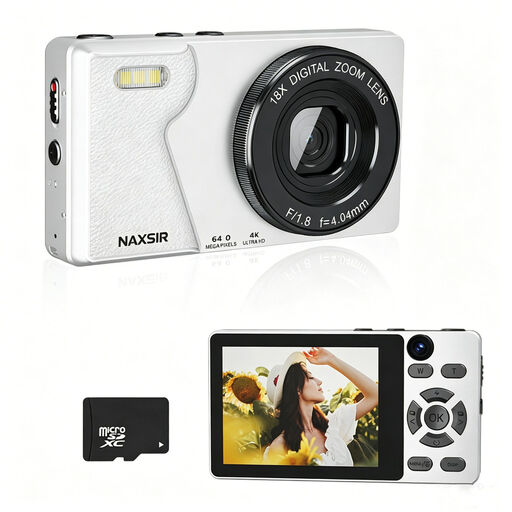
NAXSIR digital camera with 4K Ultra HD, 64 MP and 18x digital zoom

NAXSIR digital camera, 4K Ultra HD, 64 MP, 18x digital zoom

The product title lists 64 MP photos and 4K Ultra HD. Its 18x zoom is digital and doesn’t replace optical telephoto reach.

Includes a 32 GB memory card, according to the product title.

View at Joybuy
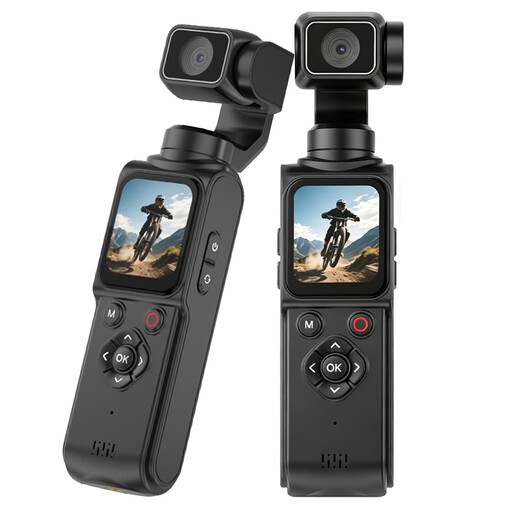
KINSI mini vlog camera with 4K, Wi-Fi and a rotating lens

KINSI mini vlog camera, 4K, 64 MP

The product title describes a compact vlog camera for taking on the go. Before choosing it for skyline photography, check the framing you need and whether it offers stabilisation for stills.

Features listed include Wi-Fi, a 330° rotating lens and a 1.72-inch touchscreen.

View at Joybuy
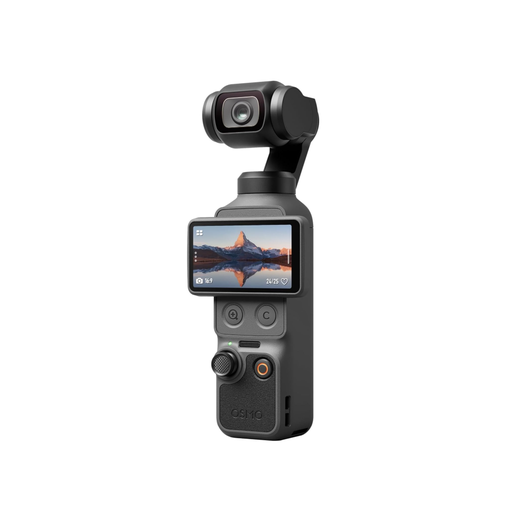
DJI Osmo Pocket 4 Standard Combo with 1-inch CMOS and 3-axis stabilisation

DJI Osmo Pocket 4 Standard Combo

The product title describes a pocket gimbal camera for photos and video. Check that its angle of view suits your location and subject.

Features listed include 1-inch CMOS, 4K/240fps, 3-axis stabilisation, 2x lossless zoom, 107 GB of built-in storage and a 2-inch rotating screen.

View at Joybuy
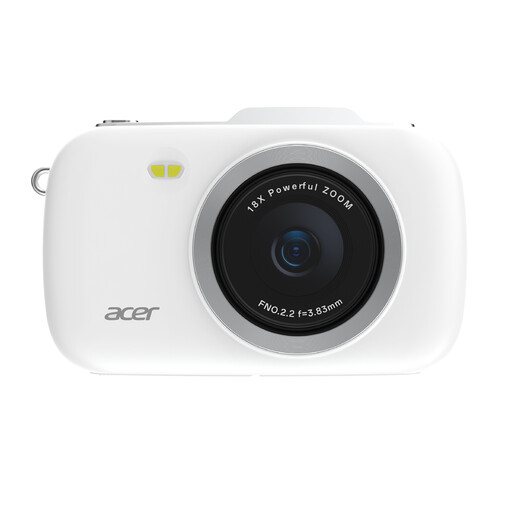
Komery G7-A digital camera with 4K, 80 MP and 18x digital zoom

Komery G7-A digital camera, 4K, 80 MP, white

The product title lists 18x digital zoom for tighter framing, but this doesn’t provide optical telephoto reach.

The title lists 4K video and the white colour option.

View at Joybuy
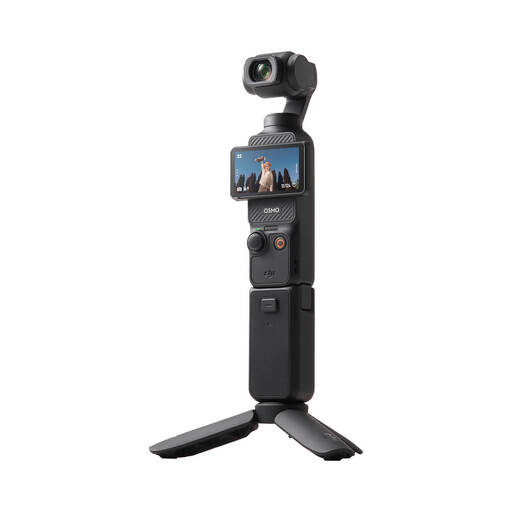
DJI Osmo Pocket 3 Creator Kit with 1-inch sensor and 4K/120fps

DJI Osmo Pocket 3 Creator Kit

The product title describes a pocket gimbal camera. Before buying, check that its framing is wide enough for your industrial scenes.

Features listed include a 1-inch sensor and 4K/120fps.

View at Joybuy

Frequently asked questions

Will image stabilisation help with every night-time industrial shot?

No. Image stabilisation can’t guarantee a sharp shot at every shutter speed. Check whether the specific model’s stabilisation applies to stills: Panasonic describes the TZ300’s 5-axis HYBRID O.I.S. as a video feature and notes an exception for 4K video.

What should I set before my first photography trip?

First choose the photo aspect ratio, then check the actual framing and image stabilisation for stills. The full-frame equivalent focal length of the TZ300 varies with the aspect ratio; the Canon PowerShot V1 also differs between uncropped photos and 4K video.

What should I consider when choosing a storage format and editing photos later?

Check which file format and storage medium you want to use. RICOH IMAGING lists DNG RAW and microSD for the GR IV, while Panasonic Germany lists RAW and SD cards for the TZ300. The card formats differ.

Can I photograph an industrial site that’s permanently visible from a public road and publish the image?

Under certain conditions, § 59 UrhG allows photographs of works permanently situated on public paths, roads or squares; for buildings, this covers only their exterior. The provision doesn’t give blanket permission to enter an industrial site or override other rights. The relevant source is the legislation published by Gesetze im Internet, Federal Office of Justice.

What if people are recognisable in the published skyline photo?

Under § 22 KunstUrhG, consent is generally required to distribute or publicly display portraits. § 23 sets out exceptions, including people appearing as incidental details alongside a landscape or other location; subsection 2 continues to protect legitimate interests. So assess the specific image. The relevant sources are the legislation published by Gesetze im Internet, Federal Office of Justice.