Rock details from a viewpoint
You want to photograph distant rocks without changing your position for every shot. Check the optical telephoto reach in the photo format you actually use.


Choose a camera based on the framing you need from the places you usually shoot: a travel zoom makes it easier to capture distant rock formations, while a short, fast zoom or a prime lens may be better suited to wide views and shaded stretches of valley. If you often take photos in the rain, specifically stated weather protection is a separate factor to consider. Stabilisation counteracts camera shake, but it cannot replace the right exposure settings for moving subjects.
You want to photograph distant rocks without changing your position for every shot. Check the optical telephoto reach in the photo format you actually use.
You take handheld photos of wide views and wooded stretches of valley. The right wide-angle coverage, lens aperture and stabilisation specifications may matter more to you than extreme telephoto reach.
You take your camera on longer walks and shoot in wet or dusty conditions. Size and explicitly specified weather protection should then be among your selection criteria.
A good fit if: you want to switch between valley views and distant rock details from a path or viewpoint. For 4:3 photos, Panasonic lists a 24–720 mm full-frame equivalent for the DC-TZ99.
Bear in mind: The 1/2.3-inch type sensor and F6.4 at the telephoto end are no guarantee of good results in shaded areas.
A good fit if: you mainly photograph valley views and moderately distant details. Sony specifies a 24–200 mm full-frame equivalent for the RX100 VII, along with optical image stabilisation for photos and an electronic viewfinder.
Bear in mind: The telephoto end does not reach as far as the DC-TZ99; Sony lists F4.5 as the maximum aperture. These specifications alone do not prove that one model delivers better image quality than the other.
A good fit if: shaded areas of valley and short to medium focal lengths matter more to you than distant details. Canon lists a 24–100 mm full-frame equivalent and F1.8–2.8 for the PowerShot G7 X Mark III.
Bear in mind: The stated focal length range falls well short of the travel zooms mentioned here; the specifications alone do not establish a general comparison of image quality.
A good fit if: you want to choose a fixed angle of view deliberately, or are looking for explicitly stated water and dust protection. Ricoh lists approximately 28 mm for the GR IV, and Fujifilm lists a 35 mm full-frame equivalent for the X100VI; OM Digital Solutions lists IPX8 and IP6X for the Tough TG-7.
Bear in mind: The prime lenses mentioned here do not offer optical zoom. With a 25–100 mm full-frame equivalent, the Tough TG-7 does not reach as far as the travel zooms mentioned here.
| What you need | What to check when buying | Who is it important to? |
|---|---|---|
| Distant rock details | Compare optical, full-frame-equivalent focal lengths for the same photo format; check the aperture and stabilisation at the telephoto end you need. | If you want to capture details from a viewpoint without changing position, optical telephoto reach is your main priority; around 40% of consumers put this need first. |
| Shaded stretches of valley | Check the maximum aperture at the focal length you use, and the stabilisation specified for photos or particular video formats. | If you take handheld photos in the shade, lens aperture and stabilisation may matter more to you than extreme zoom; around 30% of consumers prioritise low-light photography. |
| Fixed angle of view | Compare the full-frame-equivalent focal length with your usual shooting position; if you choose a prime lens, bear in mind that it has no optical zoom. | If you enjoy composing valley views with a deliberately chosen angle of view, you may be happy to go without zoom; around 20% of consumers put a fixed angle of view first. |
| Wet and dusty conditions | Check the explicit protection ratings for the exact model and weigh them against the focal length range you need. | If you often take photos in rain or dust, clearly specified weather protection matters to you; around 10% of consumers prioritise this protection. |
A zoom factor alone does not tell you how tightly the lens can frame a subject optically. Panasonic lists optical and digital zoom separately for the TZ99.
Compare the optical, full-frame-equivalent focal lengths for the photo format you plan to use.
Panasonic excludes the 5-axis HYBRID O.I.S. function specified for the TZ99 when recording 4K video. Stabilisation also cannot guarantee a sharp image of a moving subject.
Check the specifications for photo and video modes separately, and choose suitable exposure settings for moving subjects.
The Ricoh GR IV and Fujifilm X100VI have fixed, different angles of view; neither replaces an optical telephoto zoom.
Before you buy, consider whether you mainly compose valley views or want to capture details from further away.
The LUMIX DC-TZ99 is an option if you want long optical telephoto reach for 4:3 photos.
The RX100 VII combines a compact zoom with a mid-range telephoto reach.
The PowerShot G7 X Mark III is worth considering if short to medium focal lengths and a larger lens aperture are your priorities.
The GR IV is a compact camera with a fixed wide-angle lens rather than a zoom lens.
The X100VI is a prime lens option with a 35 mm full-frame-equivalent angle of view.
The Tough TG-7 may suit situations where explicitly stated water and dust protection is important.
The following Joybuy products are described as being for mobile photography and video. For valley views, pay particular attention to the stated focal length range and type of zoom.
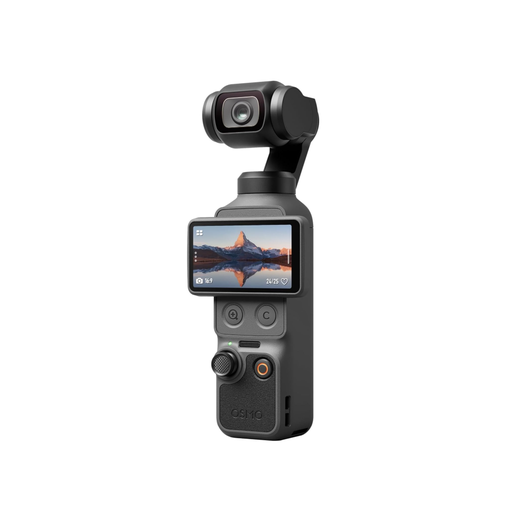 No image available
According to its product description, this pocket gimbal camera is designed for mobile photography and video.
1-inch CMOS sensor, 4K/240fps, 3-axis stabilisation, 2× lossless zoom, 107 GB built-in storage and a 2-inch rotatable screen.
 No image available
Described as a portable digital camera for photography and travel, it is designed for taking pictures on the go.
The product name lists 80 MP, 4K video, autofocus and 18× digital zoom. Digital zoom is not the same as optical telephoto reach.
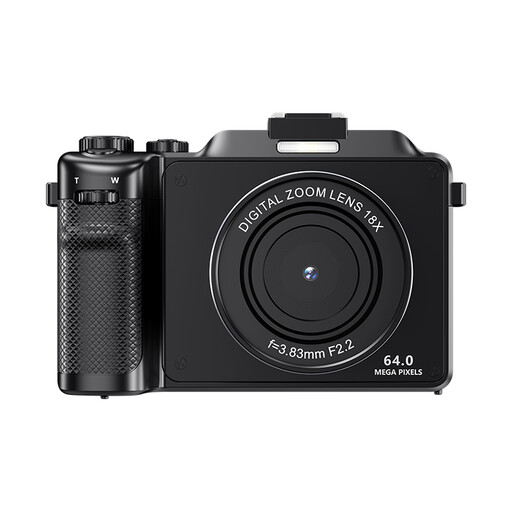 No image available
According to its product description, this portable digital camera is designed for taking on the go.
The product name lists 64 MP, 4K, autofocus and 18× zoom. Before you buy, check whether the shot you need can be framed optically.
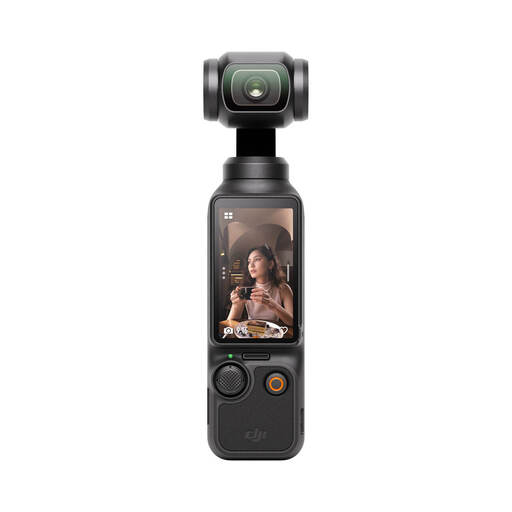 No image available
According to its product description, this small camera is designed for photography and video on the go.
1-inch CMOS sensor, 4K/120fps, 3-axis stabilisation, fast focus and a 2-inch rotatable touchscreen.
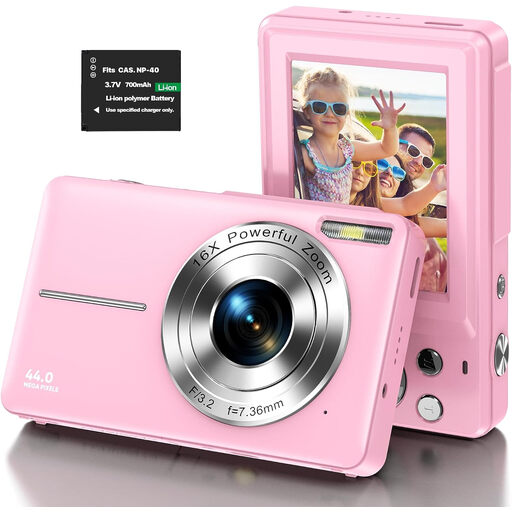 No image available
According to its product description, this pocket camera is designed for taking photos and videos on the go.
The product name lists 44 MP, 4K, autofocus and 16× digital zoom. Digital zoom does not describe optical telephoto reach.
No. What matters is the optical framing you need in your photo format. For 4:3 photos, Panasonic lists a 24–720 mm full-frame equivalent for the DC-TZ99, while Sony lists 24–200 mm for the RX100 VII; the maximum apertures at the telephoto end also differ.
Check that your memory card, battery, charging option and preferred photo settings are ready. Also read the stabilisation and protection specifications for your exact model and shooting mode: Panasonic excludes the 5-axis HYBRID O.I.S. function specified for the TZ99 when recording 4K video.
There is no general answer without knowing the specific area you are visiting. The Stuttgart Regional Council describes nature reserves as legally designated areas where nature and the landscape receive special protection. Check the regulations and signs at the site.
Your statutory rights for faulty goods are a claim against the seller; a manufacturer’s guarantee is separate and voluntary. According to the consumer advice centre (28 September 2026), the first step when a product is faulty is to request a remedy, such as a repair or replacement.
As a general rule, § 22 KunstUrhG requires consent to distribute or publicly display images of people. § 23 KunstUrhG sets out exceptions, including people who appear only incidentally alongside a landscape; the legitimate interests of those pictured must still be respected. Whether someone counts as incidental in a particular image cannot be decided in general terms.