Occasional bakers with limited space
You want to bake smaller quantities, so check that your chosen spot can accommodate both the appliance and the required clearances.


First, measure the space available, including the clearances specified by the manufacturer for the model you’re considering. Then compare the usable baking-tray area with the number of biscuits you plan to bake. A compact countertop oven may suit smaller batches; larger batches need more tray space and, in turn, more room on your worktop. Having several shelf positions does not, by itself, mean you can use several trays at once.
You want to bake smaller quantities, so check that your chosen spot can accommodate both the appliance and the required clearances.
If you want to change trays as little as possible, compare the actual tray dimensions with the space available and the quantity you plan to bake.
If you want to choose between convection and conventional top or bottom heat, check the heating modes listed for the complete model before buying.
A good fit if: You bake smaller quantities and have room for the appliance, the door to open and the clearances specified for the model.
The trade-off: A smaller tray may mean you need to bake in more batches. The manufacturer requires 4 cm of clearance at the sides and 1 m above the Rommelsbacher BG 1055/E; these measurements do not automatically apply to other models.
A good fit if: You often bake larger batches and have enough space, including the required clearances. According to the manufacturer, the baking tray for the Rommelsbacher BGE 1580/E measures 32,5 × 28,5 cm.
The trade-off: With this model, the larger tray area comes with a casing measuring 48,5 × 39,5 cm wide and deep. Check the manual before planning to use several trays at once.
A good fit if: You already have a suitable oven, want to bake larger quantities on your existing trays and don’t have a safe extra spot for a countertop appliance.
The trade-off: Another appliance won’t take up worktop space, but a countertop oven’s smaller cooking cavity doesn’t automatically mean you’ll save on electricity for your particular bake.
When space is limited, it’s not just the appliance’s dimensions that matter: safety clearances, tray area and the heating mode you need must all suit the way you plan to use it.
| Priority | What to check | Who is this important to? |
|---|---|---|
| A safe place to position it | Check the external dimensions, door opening and clearances specified in the manual for the model you’re considering. | If my worktop space is limited, the oven needs to fit safely with enough room around it. Around 33 % of consumers would make positioning space their top priority. |
| Tray area and batch size | Compare the dimensions of the compatible tray with the space needed for your laid-out biscuits; only plan to use additional trays if the manufacturer confirms they’re suitable. | If I want to bake in as few batches as possible, I compare the tray area with the quantity I plan to make. Around 27 % of consumers would put batch size first. |
| Heating modes | Check that the complete model number offers convection, and refer to your recipe and the appliance manual for the right heating mode. | If my recipe calls for a particular heating mode, I want to be able to select it on the appliance I’m buying. Around 20 % of consumers would prioritise the heating modes available. |
| Baking and temperature settings | Check that the temperature control and timer cover the settings you need. | If I want precise control over the temperature and baking time, I check the settings available on the model. Around 13 % of consumers would check these controls first. |
| Cleaning and replacement trays | Check the cleaning instructions, whether the crumb tray can be removed and which replacement accessories are available for the model. | If crumbs build up after several batches, I want to be able to reach them easily and find the right accessories again. Around 7 % of consumers would prioritise easy maintenance. |
The required clearances vary from one model to another. An appliance might fit on your worktop but still not be safe to use in the space you’ve chosen.
Measure the available space, allowing for the door to open and the clearances stated in the manual for the model you’re considering.
The cooking cavity’s volume doesn’t tell you directly how many biscuits will fit on a tray. A smaller usable area may mean baking in more batches.
Compare the dimensions of the compatible tray with the size of your usual batch, rather than relying on the litre capacity alone.
According to the manufacturer, the Severin TO 2067 has no additional convection function, while the TO 2068 offers a fan-assisted hot-air function.
Check the full model number and the listed heating modes before buying.
The rated power alone doesn’t show how much electricity a complete baking session will use. A smaller tray area may also mean you need to bake in more batches.
To work out what suits your needs, consider the whole baking process and the number of trays you’ll need, rather than comparing wattage or litre capacity alone.
According to Rommelsbacher, the BG 1055/E and BGE 1580/E come in different sizes: 18 l and 30 l respectively. The manufacturer gives the BGE 1580/E tray dimensions as 32,5 × 28,5 cm.
For the KB M19, Steba lists a 19 l capacity, switchable convection and external dimensions of 45 × 37 cm wide and deep.
According to Severin, the TO 2068 is a 20-l baking and toast oven with a fan-assisted hot-air function. The similarly named TO 2067 does not have additional convection, according to the manufacturer.
According to CASO Design, the TO 26 SilverStyle is a freestanding 26-l oven with convection; its external dimensions are 48 × 40 cm wide and deep.
The product options below range from small countertop ovens with top and bottom heat to larger appliances with convection or fan-assisted hot-air settings. Before buying, compare the heating mode, dimensions and tray size with your recipe and the space available.
 No image available
For small batches, provided top and bottom heat suits your recipe. If you need convection, check the heating mode of the specific version.
 No image available
For anyone looking for a countertop oven with convection and several heating modes; check that the appliance will fit in your chosen spot.
Shelf positions alone do not confirm that several trays can be used at once.
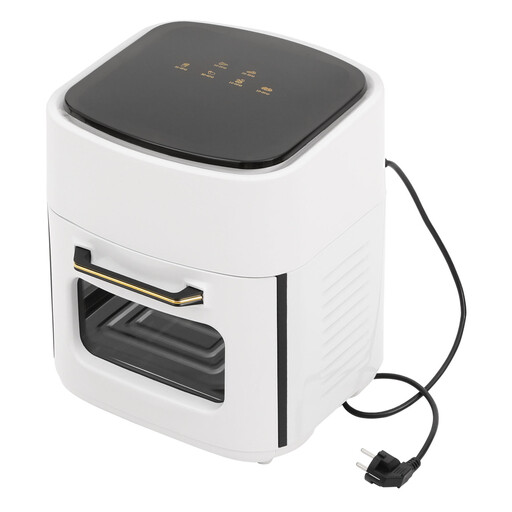 No image available
An option if you’re considering a compact appliance with circulating heat and a viewing window; check that the interior and accessories suit your baking trays.
 No image available
For larger batches, provided you have enough room for this bigger appliance; check that its heating modes suit your recipe before buying.
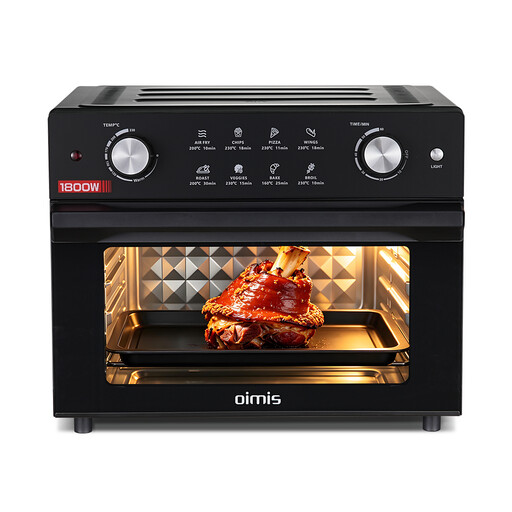 No image available
An option if you’re looking for an appliance with air circulation and manual time and temperature controls; its dimensions need particular attention if worktop space is limited.
That depends on the positioning instructions for the specific model. For example, Rommelsbacher requires 1 m of clearance above the BG 1055/E, while the manufacturer specifies 30 cm for the Severin TO 2068. Measure the available space against the manual for the appliance you’ve chosen.
No. The number of shelf positions alone doesn’t confirm that you can use several trays at once. Check the manual or ask the manufacturer whether this is permitted for the specific model, and which trays will fit.
Follow the instructions for the appliance you’ve chosen. For the KB M19, Steba requires a properly earthed, easily accessible socket and warns that surfaces can get hot. The removable crumb tray on the Rommelsbacher BG 1055/E is a cleaning feature specific to that model.
For online purchases from a trader in the EU, you generally have a 14-day right to cancel from the date of delivery; exceptions and possible return costs should be taken into account. Your Europe also explains the legal guarantee of at least two years for faulty goods. This is separate from any voluntary manufacturer’s guarantee.
The Bundesnetzagentur recommends checking, among other things, for the CE marking, product identification, manufacturer details and German-language instructions with the necessary warnings. This is general guidance from a regulatory authority, not an assessment of any individual oven.