
Lieferung heute & morgen

Qualitätsgarantie

Willkommens-Angebote freischalten: KOSTENLOSE Lieferung | Bis zu 80 % RABATT | Kostenlose 30-Tage-JoyPlus-Testphase
App herunterladen
A small chest freezer is a practical solution for anyone living in an apartment with limited space but who doesn't want to miss out on the benefits of frozen food storage. Whether for students in dorms, couples in their first apartment, or as a supplement to a main refrigerator, a compact freezer creates valuable storage. However, the market can be overwhelming, and not every offer delivers on its promise. Before you make a decision, it's crucial to understand the most common pitfalls that can lead to disappointment and unnecessary costs.
Many buyers focus solely on the price, overlooking crucial details that can significantly impact everyday usability. Here are three common problems you should avoid:
To make an informed decision, you should focus on objective, measurable criteria. These three factors are essential for use in an apartment.
Instead of just looking at the litre specification, check the external dimensions (width x depth x height) and ensure the appliance fits into its intended space. Plan for about 5-10 cm of clearance on the sides and back for air circulation, allowing the unit to cool efficiently. A chest freezer with 100 litres of usable capacity is a common benchmark for one to two-person households, offering a good compromise between footprint and capacity. Measure the available space in your apartment precisely before you order.
An energy-efficient chest freezer is a smart long-term investment. Since 2021, the new EU energy label with classes from A (very efficient) to G (less efficient) has been in effect. For example, a Class E appliance consumes significantly less electricity than a comparable model of the old Class F. Pay attention to the annual electricity consumption in kilowatt-hours (kWh/annum) indicated on the label to better estimate running costs.
For use in living areas, the noise level is a critical factor. The noise emission is specified in decibels (dB). A quiet chest freezer should not exceed a value of 40 dB. Values around 38-39 dB are comparable to a soft whisper and are generally not perceived as disruptive, even in quiet environments. You can also find this information on the EU energy label.
Here are some product recommendations tailored to the specific requirements of users in small living spaces.
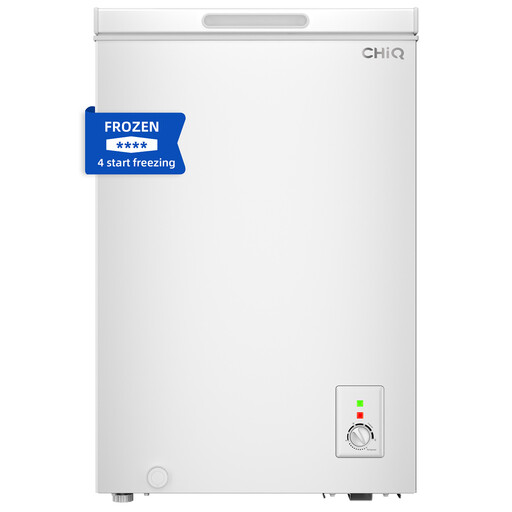
Why This Fits Their Persona: Ideal for individuals seeking a compact and efficient solution for their city apartment. At 99 litres, this mini chest freezer offers ample space for groceries without taking up much floor space (only 0.26 m?).
Addresses the noise trap with a quiet operation of 39 dB. The Class E energy efficiency (new standard) helps keep electricity costs under control. The clear dimensions (54.5×47.6×83.5 cm) prevent the capacity illusion.
4-star freezing performance for safe long-term freezing and a 12-year service warranty on the compressor provided by the manufacturer.
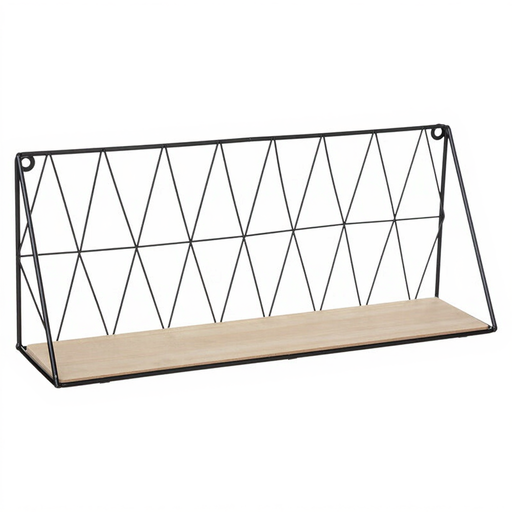
Why This Fits Their Persona: Anyone placing a chest freezer in a small kitchen needs to make the most of the remaining space. This wall shelf creates vertical storage above or next to the appliance for spices, cookbooks, or small kitchen utensils.
It avoids the "clutter trap" that arises when a new appliance further reduces limited space. Instead, it transforms unused wall area into a functional storage surface, maintaining order.
Sturdy construction of iron and wood-MDF with a maximum load capacity of 5 kg. The minimalist design complements many modern interior styles.
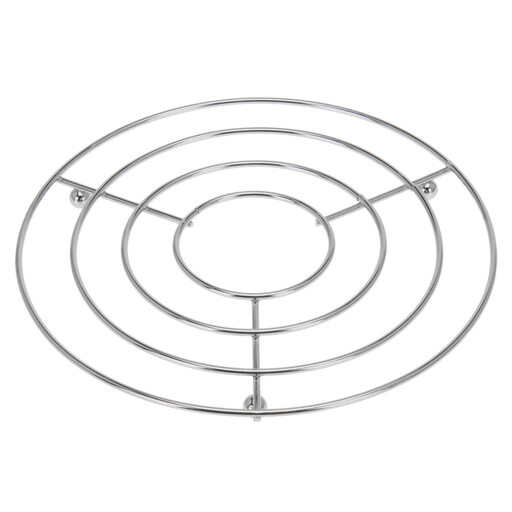
Why This Fits Their Persona: Those who cook more often handle hot pots and pans. In a small kitchen with limited counter space, a trivet is essential to prevent heat damage to worktops or tables.
Prevents the costly mistake of damaging a countertop with a hot pot. A small, inexpensive purchase that averts expensive repairs or the loss of a security deposit.
Made of robust, chrome-plated steel wire that is heat-resistant and stable. The design ensures good air circulation underneath cookware.
We have compiled a complete, real-time list of products that fully satisfy these strict selection criteria and UK safety regulations.
The noise emission indicates how loud the appliance is during operation. For a small chest freezer in a living room or bedroom, a low value is crucial.
Consumption depends on the energy efficiency class, volume, and usage. A modern, small chest freezer (approx. 100 litres) in Class E typically consumes between 150 and 180 kWh per year. You can find the exact figure on the EU energy label of the respective product. Multiply this value by your current electricity price per kWh to estimate the approximate annual running costs.
Although they are described as "small" or "compact," even these appliances require adequate space. Carefully measure the intended niche or location. It's important to consider not only the appliance's dimensions but also to plan for the necessary clearance for ventilation (approx. 5-10 cm on the sides and back). Without sufficient air circulation, the appliance can overheat, which reduces efficiency and shortens its lifespan.