
Lieferung heute & morgen

Qualitätsgarantie

Willkommens-Angebote freischalten: KOSTENLOSE Lieferung | Bis zu 80 % RABATT | Kostenlose 30-Tage-JoyPlus-Testphase
App herunterladen
A compact fridge freezer has to fulfil several roles at once in a small kitchen: it should take up minimal floor space, offer enough storage for everyday needs and be straightforward to install. Singles, couples, students and people living in smaller homes therefore often look for models such as a 55 cm-wide fridge or a slim top-freezer refrigerator.
When comparing models, however, the stated capacity in litres is not the only consideration. Some offers look inexpensive at first glance but only reveal their drawbacks during everyday use.
A fridge that is 55 cm wide can still take up too much space if you do not account for the door hinge, clearance from the wall or ventilation. Before buying, check:
Depth is also important. Although an appliance may fit into an alcove, the door may not be able to open fully there.
A 206-litre fridge can offer different amounts of space for large bottles, saucepans or storage containers, depending on its internal layout. Pay attention to the number and position of the shelves, the division between the fridge and freezer compartments, and whether there is a separate salad drawer.
Height-adjustable shelves are particularly useful if you regularly store containers or bottles of different heights. Without a flexible layout, an appliance that appears spacious can prove impractical in everyday use.
According to the product description, a fridge with rapid cooling may be designed to restore the cooling temperature more quickly after being switched on or after larger quantities of food have been loaded. However, this function should not be treated as a permanent operating mode, as it may increase energy consumption.
The same applies to a fridge with a rapid-freeze function: this can be useful for fresh food or larger shopping trips, but it should be used according to the manufacturer's instructions and switched off again afterwards.
In addition to the appliance dimensions, a fridge needs sufficient air circulation. Keep to the clearances specified in the operating instructions and do not place the appliance directly next to heat sources. An uneven floor can cause noise, unstable doors or uneven loading.
Height-adjustable levelling feet help compensate for minor floor irregularities. However, the feet are not a substitute for a stable, load-bearing surface. You can find more suitable products and accessories in the levelling feet category.
The EU energy label ranges from A to G. An energy-efficient class E fridge is not automatically the most economical appliance on the market. For running costs, the annual energy consumption in kilowatt-hours shown on the energy label is the most important factor.
For a simple estimate, you can calculate:
Annual consumption in kWh × electricity price per kWh = approximate annual electricity costs
Actual consumption depends on factors including room temperature, how full the appliance is, how often the door is opened and which functions are selected. Always compare appliances with a similar usable capacity and similar design.
A fridge with a salad drawer should provide enough space for fruit and vegetables without unnecessarily restricting the rest of the fridge compartment. LED interior lighting makes it easier to see the contents while taking up less space than conventional bulbs. Removable shelves and an easily accessible door seal make cleaning easier.
With a top-freezer refrigerator, the freezer compartment is at the top. This can make it easier to access frozen food, while frequently used chilled items may be positioned slightly lower down. The most suitable design therefore depends on your daily habits.
The following selection is based on the product data provided. For the specific search for a fridge, only the cooling appliance matches the stated buying purpose. The two other entries are not fridges and are therefore clearly labelled as unsuitable products.
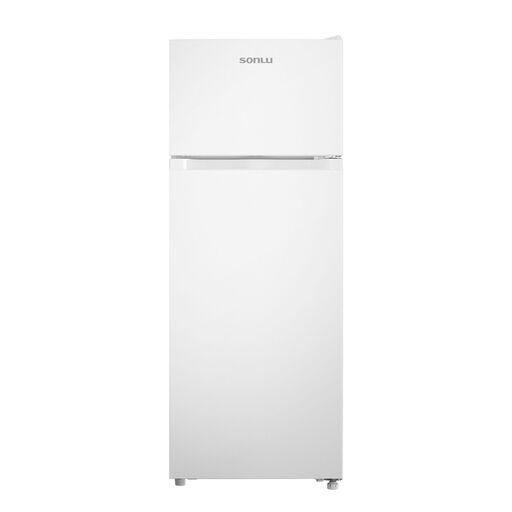
Why this product suits the profile: This model combines a stated width of 55 cm with a capacity of 206 litres, making it suitable for households with limited kitchen space.
Details of the rapid-cooling function, rapid-freeze function, height-adjustable shelves and levelling feet make the key features easy to assess. Nevertheless, you should check the complete installation dimensions before buying.
206-litre capacity, energy class E, LED interior lighting, fruit and vegetable drawer, and height-adjustable shelves according to the product description.
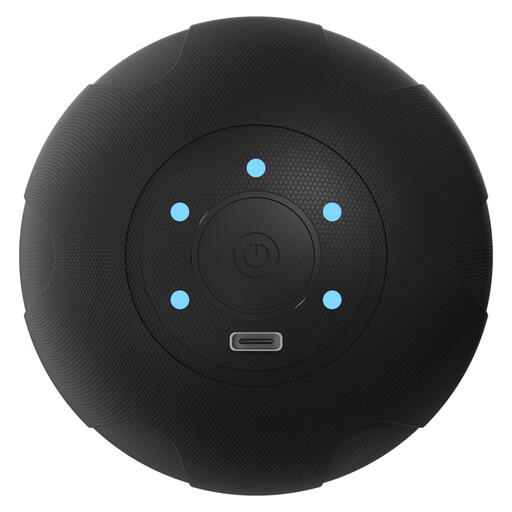
Why this product suits the profile: This product is not part of the fridge category and is not suitable for buyers looking for a compact fridge.
The clear labelling prevents an unsuitable item from being mistaken for a fridge.
Five intensity levels and a 1500 mAh battery according to the product description; not a substitute for a cooling appliance.
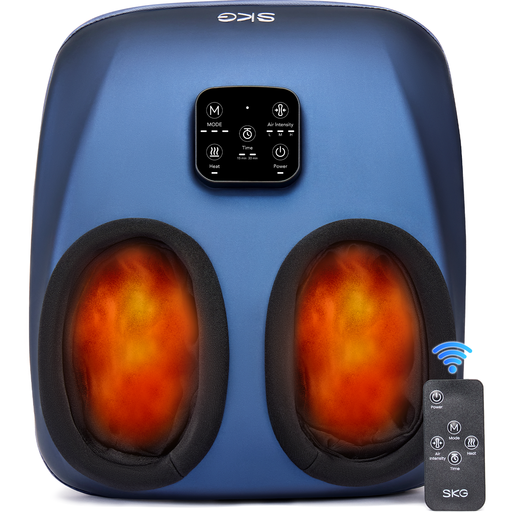
Why this product suits the profile: This item is intended for a specific additional need and is not suitable for cooling or storing food.
The product type is stated explicitly, allowing buyers to distinguish this item from their search for a fridge freezer.
Three adjustable intensity levels, remote control and removable inner linings according to the product description; not intended for food.
We have put together a complete, regularly updated list of products that fully meet these strict selection criteria and the safety regulations applicable in the EU.
As well as the width, height and depth, you should allow for the door movement and the ventilation clearances specified by the manufacturer. With a 55 cm-wide fridge, the actual floor space required may therefore be greater than the appliance's width alone.
Service life depends on usage, location, cleaning and maintenance. Permanently high ambient temperatures, frequently leaving the door open for long periods or overfilling the interior can increase the strain on the appliance. Check the door seal regularly and keep the ventilation areas clear.
No. Both functions are intended for specific situations, such as after loading larger quantities of food. For normal operation, the standard temperature setting is generally sufficient. Follow the manufacturer's instructions and compare the annual consumption shown on the energy label before estimating running costs.