People styling fringes and short hair
If you want to grip small sections around your face precisely, check the plate width rather than relying on the word ‘mini’ alone.


For short sections around your face, a narrow plate width stated in the product details matters more than the word ‘mini’. If storage space is limited, check the plate width and the overall size separately. If you want to choose the temperature yourself, look at the specific settings available. With a cordless model, you’ll also need to factor in charging time and accessories.
If you want to grip small sections around your face precisely, check the plate width rather than relying on the word ‘mini’ alone.
Allow space for the whole appliance, including its cable or charging accessories and heat protection, not just the body.
If you want to adjust the heat yourself, compare the temperature settings and weigh them against the appliance’s size and cordless operation.
First, check whether the plates can grip small sections of hair. Then make sure the appliance and its accessories will fit in the space you have in mind. Temperature control and cordless use are additional considerations if they matter for your styling space.
| What you need | What to check before buying | Who is it important to? |
|---|---|---|
| Precision on small sections | Plate width and edge shape; for short hair, check the minimum hair length stated too. | If I want to target my fringe or short face-framing sections, plate width is key. Around 36% of consumers are likely to prioritise precise styling. |
| Space-saving storage | Overall length, cable or charging accessories, and whether it has a protective cap or travel lock. | If I only have a small drawer or bag, the appliance and its accessories need to fit inside. Around 29% of consumers are likely to prioritise compact storage with protection. |
| Temperature control | The specific temperature settings and the instructions for the model in question. | If I want to adjust the heat myself, I compare the available settings rather than assuming the appliance is suitable for my hair. Around 21% of consumers are likely to prioritise temperature control. |
| Cordless styling | Battery life, charging time, charging accessories and the protective cap for the specific model. | If there isn’t a socket where I style my hair, cordless use matters more to me than the most compact design. Around 14% of consumers are likely to prioritise cordless operation. |
A short overall length doesn’t tell you whether the plates can grip small sections precisely.
Check the plate width and the appliance’s dimensions separately. For very short sections, look for an explicitly stated narrow plate.
Cables and charging accessories can take up space too. Caps and locking mechanisms also vary from one model to another.
Measure the storage space you have in mind and check that the appliance, accessories and heat protection will all fit together.
Cordless use and temperature control meet different needs. A cordless appliance needs charging, while a fixed temperature setting can’t be turned down manually.
Decide whether you have a socket where you style your hair and whether you want to adjust the temperature yourself. Check the settings against the guidance for the specific model.
ghd Germany describes the ghd mini as a styler with 15-mm plates for short hair and fringes.
Remington offers different designs for limited storage space and temperature control: the 15 cm On The Go S2880 and the Pro-Ceramic Extra Slim S5515.
Beurer describes the HS 20 as a compact, cordless hair straightener with three temperature settings.
Rowenta describes the Pocket Power SF1120 as an ultra-compact styler with slim plates for short hair and fringes.
This selection includes compact cordless styling tools, such as straightening brushes, straighteners and a straightening clamp. Check the design and features of each model if you want to style short sections around your face or store accessories away.
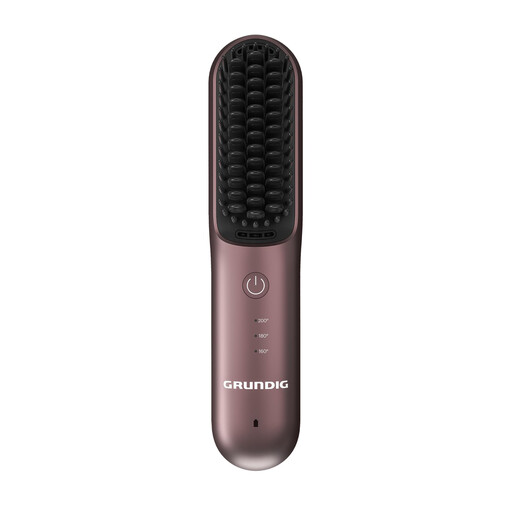 No image available
The cordless brush design could suit you if you want to style your hair without a socket nearby. It’s different from a straightener with narrow plates.
The product name lists three temperature settings.
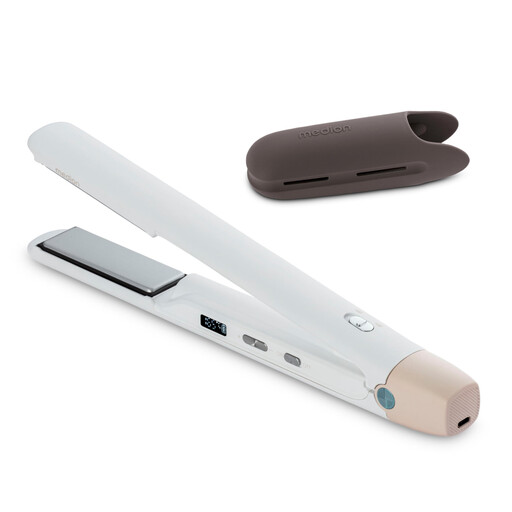 No image available
A cordless straightener could suit you if you want to style your hair without a socket nearby. Before buying, check whether a protective cap is included for storage.
The product name lists ceramic and titanium plates, five temperature settings from 165 °C to 210 °C, up to 25 minutes of cordless styling, an LCD display and automatic shut-off after 30 minutes.
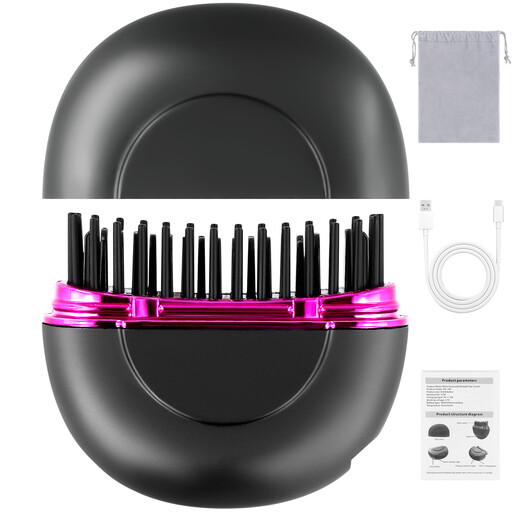 No image available
The brush design is a compact alternative to a straightener with plates. If you want to grip very small sections precisely, check whether this design suits the way you style your hair.
The product name describes the appliance as cordless and lists heat-resistant bristles.
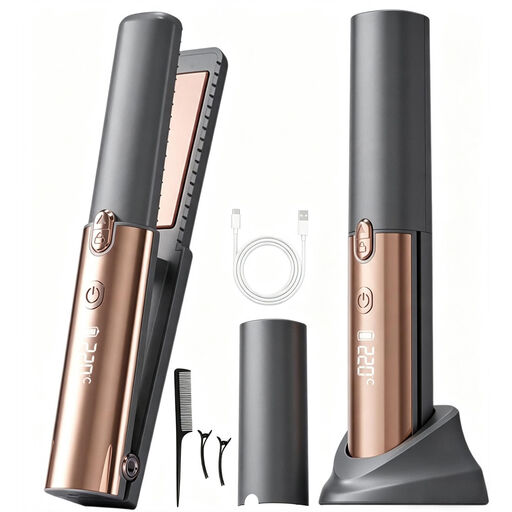 No image available
This 2-in-1 appliance could suit you if you want to straighten or curl your hair on the go. Compare its design with what you need for styling small sections around your face.
The product name lists USB-C, five temperature settings from 160 °C to 220 °C and a fast-heating function.
 No image available
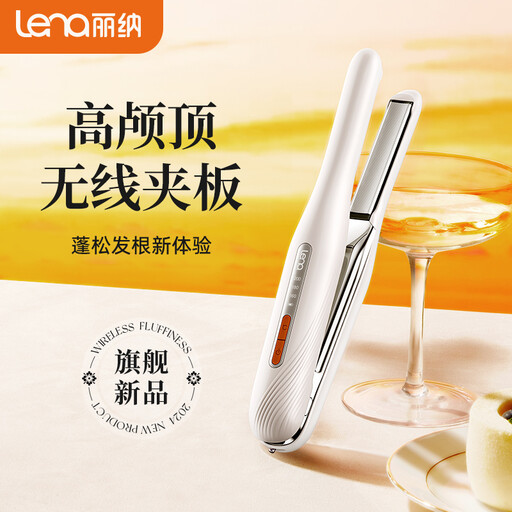
The 12 mm plate stated in the product name gives you a clear indication of its width if you’re looking for a narrow design for small sections. Check whether you find the clamp easy to handle.
The product name lists a curved 12 mm plate and a weight of 150 g.
Check the plate width and overall dimensions separately. The ghd mini is listed with 15-mm plates, while the manufacturer gives the Remington On The Go S2880 an overall length of 15 cm. These measurements answer different questions.
Follow the instructions for the specific appliance and its protective cap or pouch. A cap described as heat-resistant isn’t blanket approval for use on every surface or for putting the appliance in a closed drawer. Beurer and Rowenta list protective caps for their respective models.
Beurer’s instructions warn against using the HS 20 near baths, sinks or showers. They also recommend fitting a residual-current device to the bathroom circuit. This is the manufacturer’s recommendation, not a statement that one must be fitted in every case.
For a defect in the goods, the seller is generally your point of contact for your statutory rights. The Verbraucherzentrale states that the period for goods to be free from defects at the time of delivery is two years. Any additional manufacturer’s guarantee is separate and subject to its own terms.
For electrical products covered by relevant harmonised EU rules, the manufacturer uses the CE marking to declare conformity. It isn’t an independent quality mark. Check the product actually being offered to see which rules apply to that particular mains-powered or cordless appliance and whether the marking and documentation are in place.