Measure the space available for your keyboard and mouse, then note which keys you need to reach quickly in your development environment and during testing. A 75% layout can free up desk space while keeping the arrow and function keys to hand. An even more compact model is only a good fit if its secondary key functions suit your workflow. If you do a lot of typing, work across several devices or share your workspace, the layout, connectivity and typing noise may matter more than extra gaming features.
Who can benefit from a compact keyboard for level prototyping?
Level designers short on mouse space
If you switch between a level editor and playtesting, you need room for your mouse and want frequently used arrow or function keys within easy reach. Keychron and Razer include these keys on their respective 75% models.
Solo developers who do a lot of typing
If you write lengthy passages of code or text at a small desk, pay particular attention to the keyboard layout, key feel and typing noise. CHERRY describes the KW 9200 MINI as having scissor switches, while Logitech lists backlighting and programmable keys for the MX Keys Mini.
Developers working across several devices
If you work on your prototype across more than one computer or other devices, multiple connection options can make switching easier. Keychron and CHERRY list several connection types for their respective models.
What should you look for when buying a keyboard for a small desk?
First, measure the space available, then check the keyboard’s actual layout against the editor and game commands you need. Finally, make sure the layout, connections and key feel suit the way you work and test.
| Buying priority |
What to check |
Who this matters to |
| Desk space and quick access |
Measure the available width for your keyboard and mouse; check that the layout gives you access to the commands you use most. |
If you need room for your mouse when switching between the editor and playtesting, but want arrow and function keys close to hand, check the actual key layout. Around 36% of consumers put desk space and quick access first. |
| Input during playtesting |
Check the movement and action keys you need, along with any combinations pressed at the same time; make sure the connection suits your computer. |
When testing repeatedly, you want to reach the movement and action keys you need, without assuming that individual spec-sheet figures will make a noticeable difference. Around 29% of consumers prioritise input during playtesting. |
| Typing, layout and noise |
Check whether the keyboard has a DE-ISO or QWERTZ layout and where frequently used characters are positioned; consider the switch type and key feel. |
If you write a lot of code and notes, the exact layout and key feel may matter more to you than extra gaming features. You may also want to consider typing noise in a shared space. Around 21% of consumers put typing, layout and noise first. |
| Switching between devices |
Check the number and type of connections you need, as well as the devices and operating systems supported by each model. |
If you work on your prototype across several devices, you’ll want to switch between them in a way that suits your setup, rather than having to reconnect each time. Around 14% of consumers prioritise switching between devices. |
What mistakes should I avoid when choosing a compact keyboard?
-
Choosing a keyboard based on its layout percentage alone
For editing and playtesting, what matters is whether you can reach the keys you actually need. The label ‘75%’ doesn’t tell you that for every version.
List the commands you use most and compare them with the layout of the specific model.
Unfamiliar secondary key functions can take extra time to get used to during repeated editing and testing.
-
Assuming hot-swap means universal switch compatibility
The right switch type depends on the model and its specific version. Keychron lists compatible low-profile switches for the K3 Max, while Razer says the BlackWidow V4 75% version has sockets for 3- or 5-pin switches.
Check the exact model and switch version before buying new switches.
-
Assuming a barebones keyboard comes fully equipped
Razer notes that its barebones version is sold without keycaps, switches or a wrist rest.
Check what’s included with the version you’ve selected before placing your order.
Key keyboard brands at a glance
Keychron
Keychron’s K3 Max is a 75% keyboard with a DE-ISO layout, several connection options and customisable key mapping.
- Keychron’s QMK/VIA customisation could be useful for recurring editor commands.
- Hot-swap support and compatible low-profile switches depend on the specific version. Check the layout and switch type before buying.
CHERRY
CHERRY describes the KW 9200 MINI as a slim, compact keyboard with scissor switches and several connection options.
- CHERRY gives its dimensions as 29,5 × 12,9 × 1,6 cm and lists Bluetooth, 2,4 GHz and a wired connection.
- The KW 9200 MINI doesn’t have a built-in number pad. Check that its layout suits your shortcuts; the manufacturer’s description can’t replace trying the key feel for yourself.
Razer
Razer’s BlackWidow V4 75% is a mechanical keyboard with arrow and function keys.
- Razer lists hot-swap sockets for 3- or 5-pin switches.
- According to Razer, the barebones version doesn’t include keycaps, switches or a wrist rest. What’s included and the layout vary depending on the version you choose.
Logitech
Logitech describes the MX Keys Mini as a compact wireless keyboard designed primarily for typing.
- Logitech lists backlighting and programmable keys.
- Check the combinations you need on your own system, rather than assuming that a compact design comes with specific gaming features.
Compact keyboards at Joybuy
The Joybuy models below include 75% mechanical keyboards and a more compact 65% alternative. For each version, check that the layout gives you access to the editor and game commands you need.
 No image available
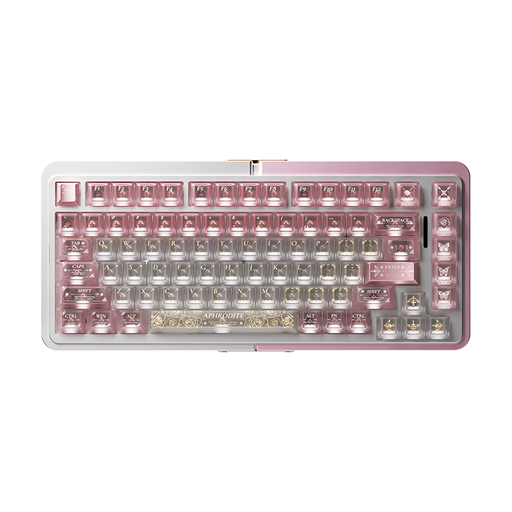
Royalaxe E75 TTC keyboard with magnetic switches
The 75% layout is a compact option if you want to save desk space while prototyping levels.
75% layout; magnetic switches; RT mode; Type-C connection; aluminium case.
Joybuy
 No image available
Ticktype EVO75 Tri-Mode, ISO-DE
If you want to customise editor commands, check that the stated VIA compatibility and macros suit your workflow.
75% layout; ISO-DE; Bluetooth, 2,4 GHz and USB-C; VIA-compatible; hot-swap.
Joybuy
 No image available
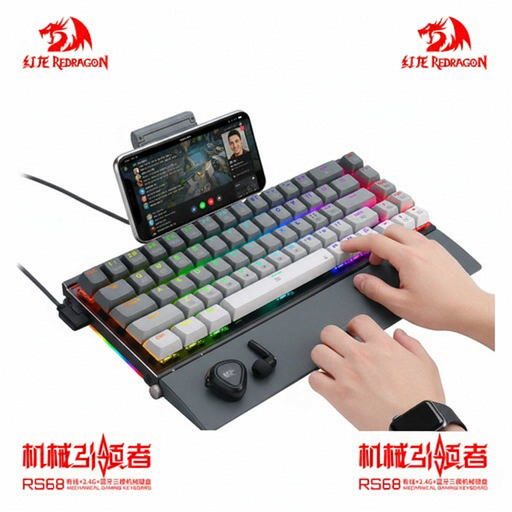
Redragon RS68 3-Mode, 65%, 68 keys
If desk space is especially limited, this compact layout could be a good fit, provided you can still reach the commands you need.
65% layout with 68 keys; Bluetooth, 2,4 GHz or wired; hot-swap; detachable wrist rest.
Joybuy
 No image available
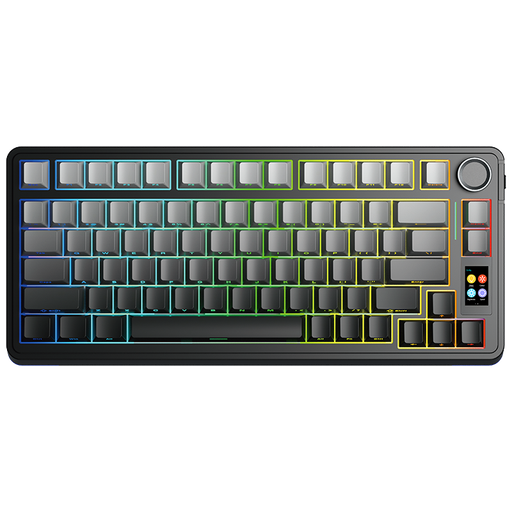
AULA S75 Pro 75%
The 75% format could be a good fit if you’re looking for a compact layout for editing and playtesting.
75% layout; Bluetooth, 2,4 GHz and USB-C; TFT display and rotary knob; hot-swap.
Joybuy
Frequently asked questions about keyboards for level prototyping
Is a 75% keyboard enough for editing and testing a platform level?
It could be a good fit if you can reach your frequently used commands with the available arrow, function and other keys. Keychron describes the K3 Max as a 75% model; before buying, check that the layout of the specific version suits your development environment and game.
What should I check when choosing a hot-swap keyboard?
Check switch compatibility for the exact model and version you’re buying. Keychron lists compatible low-profile switches for the K3 Max, while Razer says the BlackWidow V4 75% has sockets for 3- or 5-pin switches.
Which connections matter when switching between devices?
Choose a keyboard with connections that suit your devices and the way you switch between them. CHERRY lists two Bluetooth channels, plus a 2,4-GHz channel and a wired channel for the KW 9200 MINI. Keychron lists Bluetooth, 2,4 GHz and a wired connection for the K3 Max. Check the connection options for the specific version.
What if the keyboard is faulty or I don’t like the key feel after buying online?
Your statutory rights if a product is faulty are separate from any voluntary guarantee. The Verbraucherzentrale says online orders generally come with a 14-day cancellation period from the day you receive the goods. Check the seller’s information about the process and returns.


