
Lieferung heute & morgen

Qualitätsgarantie

Willkommens-Angebote freischalten: KOSTENLOSE Lieferung | Bis zu 80 % RABATT | Kostenlose 30-Tage-JoyPlus-Testphase
App herunterladen
Compact kitchen appliances are designed to save space and simplify everyday life. In small flats, student studios or single-person households, however, it's not just the external dimensions that matter. What's crucial is the usable capacity, power consumption, ease of operation, and whether the appliance can stay on the worktop permanently.
With air fryers and mini fridges in particular, unclear advertising claims often lead to the wrong purchase. A large litre capacity, for example, doesn't automatically mean you can cook more food in a single layer. Similarly, a low purchase price isn't necessarily good value if cleaning, noise levels or ongoing energy costs don't suit your household later on.
An air fryer may look compact, but it also needs clearance from walls and overhead cabinets for proper air circulation. So check not just the width, depth and height, but also the recommended free space around the ventilation openings.
With a mini fridge, the installation width is especially important. A model that is 44.5 cm wide can fit into narrow alcoves, but it also needs room for the door to open, the cable and ventilation.
A 3.2 L air fryer is designed for single portions or a small household. A 4.2 L air fryer offers more room for two people or larger single portions. If you regularly cook for several people, a 6.2 L air fryer with a stated food capacity of up to 1 kg may be more suitable.
A 7.1 L dual air fryer has two separate cooking baskets. This is handy when you want to cook a side dish and a main component at the same time with different settings. However, the total volume alone doesn't tell you how much fits into each basket.
An air fryer with Rapid Air technology works with circulating hot air and usually needs little or no extra oil compared to traditional deep frying. However, the appliance doesn't automatically change the properties of the ingredients you use. The ingredients, portion size and cooking method remain key. Health-related advertising claims should therefore be viewed critically.
Base your choice on typical meals rather than the maximum litre capacity:
Pay attention to the food quantity stated by the manufacturer. For the Philips model NA210/00, for example, it is 0.4 kg, while the NA320/00 can hold up to 0.8 kg and the NA330/00 up to 1 kg.
Measure the available space before you order. The Philips NA210/00 measures 352 × 257 × 273 mm, while the NA320/00 measures 286 × 397 × 294 mm. These two appliances differ significantly in their footprint, even though they fall into a similar size category.
In terms of electrical power, the air fryers mentioned range between 1,300 and 2,450 W. Higher power can mean faster heating, but it doesn't tell you anything about the actual running costs. For a rough estimate, use this formula:
Cost = Power in kW × Usage time in hours × Electricity price per kWh
A mini fridge, on the other hand, runs for many hours. The Comfee model with 43 L states 110 kWh per year and energy efficiency class E. The actual consumption depends on factors such as ambient temperature, how full it is, how often the door is opened and the temperature setting.
A dishwasher-safe air fryer can reduce the cleaning effort. What matters is which removable parts are dishwasher-safe and whether the coating needs special treatment according to the instruction manual. The Philips models in this selection have dishwasher-safe removable parts. The main unit must not be immersed in water.
Also look out for:
A compact fridge should have adjustable shelves, a suitable door opening and a clear temperature control. For singles, a fridge for singles with 43 L is sufficient if you mainly store drinks, breakfast items and small fresh goods.
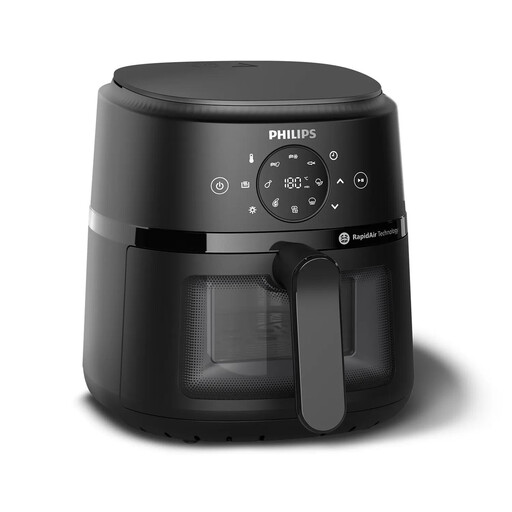
Why this product fits the profile: The 3.2 L capacity and 0.4 kg food capacity are designed for single portions and small households.
The specific food capacity prevents the litre figure alone from being used as a benchmark. The dimensions make it easier to plan on small worktops.
1,300 W power, 13 programmes, viewing window and dishwasher-safe removable parts.
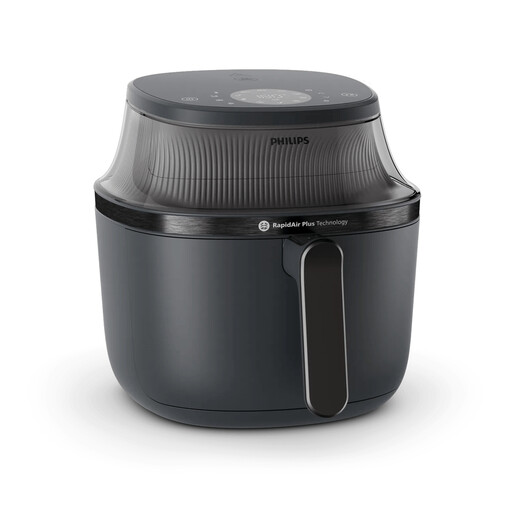
Why this product fits the profile: The balance of 4.2 L volume, 0.8 kg food capacity and compact single-basket design is ideal for regular meals without a dual-basket housing.
The product details state both volume and food quantity. This makes it easier to assess suitability for your own household.
Rapid Air technology, 12 programmes, temperature range from 40–200 °C and dishwasher-safe removable parts.
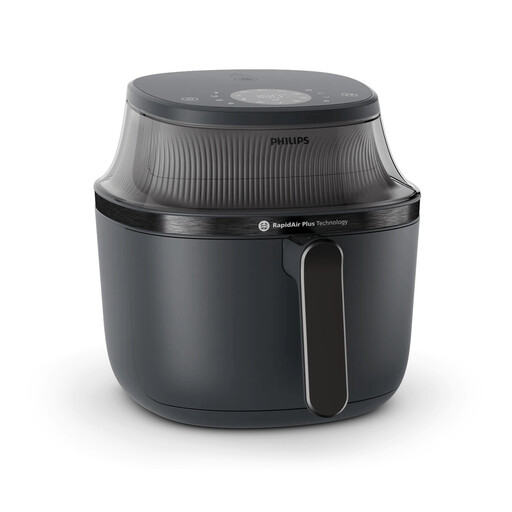
Why this product fits the profile: With 6.2 L volume and a stated food capacity of 1 kg, this model is designed for larger portions and batch cooking.
The viewing window allows you to check food without opening the basket. The precise maximum quantity helps avoid overloading.
12 programmes, 40–200 °C, viewing window, keep-warm function and 24-hour timer for selected applications.
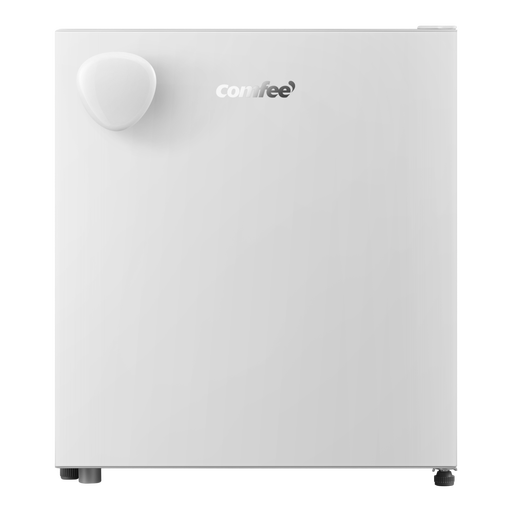
Why this product fits the profile: The 43 L interior, 44.5 cm width and three temperature settings are designed for singles, offices or small kitchens.
The slim design and removable or adjustable shelves make it easier to plan for tight alcoves and to clean.
110 kWh per year according to product data, height-adjustable shelves and a separate chiller compartment.
We've put together a complete, regularly updated list of products that fully meet these strict selection criteria and the safety regulations in force in the EU.
Place air fryers on a stable, heat-resistant and level surface. The air intake and outlet must not be covered. Do not fill the basket with frying oil or fat, as this can pose a fire risk. Before cleaning, the appliance must be allowed to cool down completely and be disconnected from the mains.
With the fridge, ventilation areas must be kept clear. Store food according to the selected temperature and do not open the door unnecessarily often. For the disposal of electrical appliances, local regulations for separate collection apply; they must not be disposed of with household waste.
For one person, a 3.2 L air fryer can be sufficient if you mainly cook single portions. If you often batch cook or plan larger portions, you could consider a 4.2 L model. The key factors are food capacity and the available worktop space.
Consumption depends on power, cooking time and how often you use it. A 1,300 W air fryer running for 30 minutes uses approximately 0.65 kWh. To work out the actual cost, multiply this figure by your electricity price. Preheating and multiple cooking cycles will increase consumption.
It's not possible to give a general lifespan. It depends on usage, ambient temperature, cleaning, door seals and ventilation. Regular defrosting, keeping ventilation paths clear and setting an appropriate temperature can help to keep the technical strain low in everyday use.