Writers with a small desk
If you need room for a mouse, book or notes beside your keyboard, compare its dimensions with the space available. Also check which keys remain easy to reach on the specific compact layout.


For a small desk, a compact 75% model is a sensible place to start if you often need navigation and function keys when proofreading. A smaller layout can free up more room for your mouse, book and notes. What matters is the key arrangement and the specific German layout and switch option on offer. Check these, along with the connectivity and dimensions, rather than relying on the model name alone.
If you need room for a mouse, book or notes beside your keyboard, compare its dimensions with the space available. Also check which keys remain easy to reach on the specific compact layout.
If you often move between passages or repeat commands while editing, check the actual key arrangement and any functions you can remap. Keychron and Akko describe customisation options for certain versions.
If you work within earshot of other people, don’t choose based on the model name alone: the switch option affects both the feel and sound of each keystroke. Logitech lists Tactile Quiet, Clicky and Linear as different options for the MX Mechanical Mini.
Start by considering how much desk space you have and which keys you regularly need when proofreading. Then choose switches, connectivity and customisation options to suit your workspace.
| Consideration | What to check before buying | Who is this important to? |
|---|---|---|
| Desk space | Compare the keyboard’s dimensions and the keys you need with the space available for your mouse, book and notes. | If I need room for my mouse and book on a small desk, the space the keyboard takes up really matters. Around 33% of consumers give this consideration the most weight when choosing. |
| Proofreading keys | Compare the layout of the specific DE version with the navigation and function keys you use most often. | If I often jump between paragraphs or repeat commands while editing, I want the right keys within easy reach. Around 27% of consumers place the greatest importance on quick access to proofreading keys. |
| Typing feel and sound | Check the full switch name for the version on offer and, if possible, try typing on it and listen to the sound. | If I work within earshot of other people, I want the feedback I prefer without ignoring how loud the keystrokes are. Around 20% of consumers prioritise switch feel and sound. |
| Connectivity and customisation | Check the connection types you need and the features of the exact version; for hot-swap models, check switch compatibility too. | If I want to position my keyboard flexibly or customise recurring commands, connectivity and setup options matter. Around 20% of consumers prioritise these features. |
A 75% layout and a 68-key model differ in size and key arrangement. A smaller keyboard can free up space, but may change how you access certain proofreading functions.
Before buying, compare a photo or layout diagram of the specific version with the proofreading commands you use most often.
An unfamiliar layout may take extra setup or time to get used to.
The models mentioned are available with different layouts and switch options. The product family name alone doesn’t reliably tell you which version you’re choosing.
Check the specific listing for an ISO-DE or QWERTZ version and the full switch name.
The product description for the Keychron K3 Max lists specific compatible low-profile mechanical switches for its hot-swap version. Hot-swap doesn’t mean every switch will fit.
Check the compatibility information for the exact keyboard version before choosing replacement switches.
The K3 Max is a low-profile 75% option for a compact writing space. Keychron lists several connection types and QMK/VIA for certain versions.
The MX Mechanical Mini is a compact, low-profile office keyboard with clearly named switch options.
The MX-LP 2.1 Compact Wireless is an especially compact 68-key option. The KC 200 MX is a wired office alternative with extra keys.
The 5075B-Plus range is another 75% option; certain versions are listed as ISO-DE models with VIA.
This selection includes compact mechanical keyboards for a small writing space, including 75% and especially compact layouts. For each model, check that the specific key arrangement suits the proofreading commands you use.
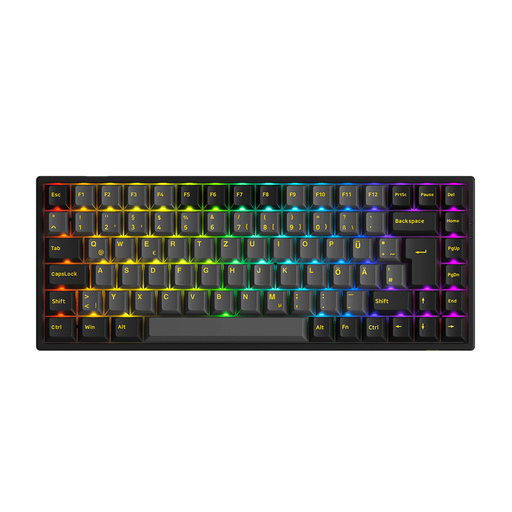 No image available
The 75% layout is worth considering for a compact writing space; compare the key arrangement with the proofreading commands you use most often.
 No image available
The explicitly compact 65% format is an option when desk space is especially limited; check how you’ll access the proofreading functions you need.
 No image available
The 75% layout is designed for a compact writing space; check the specific key arrangement and whether you want to use the customisation features listed.
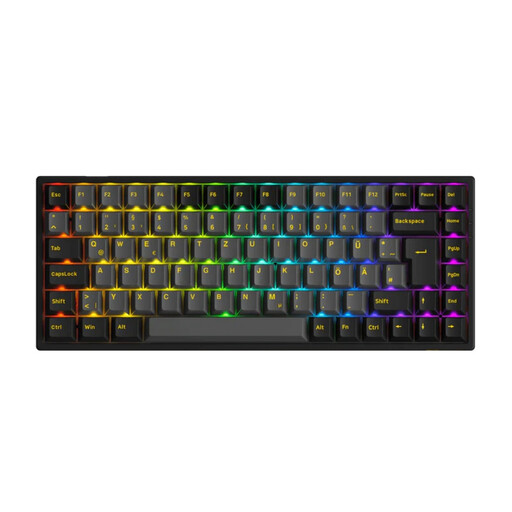 No image available
The 75% layout may suit a small desk; compare the specific key arrangement with your proofreading commands.
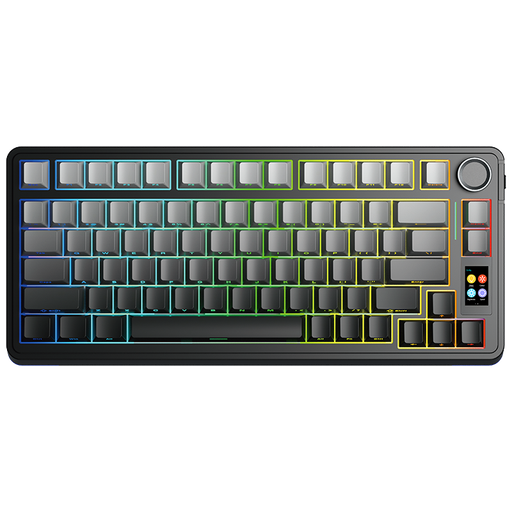 No image available
The 75% layout is worth considering for a compact writing space; check that the key arrangement covers the proofreading functions you use most often.
Compare the proofreading commands you use most often with a photo or layout diagram of the specific keyboard on offer. Manufacturers describe both 75% and 68-key models; the format alone won’t tell you whether the layout will suit you.
Position your keyboard and mouse so you can use both without feeling cramped. Germany’s ASR A6 guidance for workplaces and home-working spaces describes a keyboard that can be operated in a neutral position and placed centrally in front of the user; its scope doesn’t automatically apply to every home desk.
No. It depends on the specific version and switch compatibility. The Keychron K3 Max product description limits hot-swap compatibility to certain low-profile mechanical switches. Check the details for your exact model before choosing replacements.
Your statutory rights if a product is faulty are separate from any voluntary guarantee. Many online purchases also generally come with a right to cancel; the Verbraucherzentrale explains these two matters separately. Check the terms of your specific purchase, and don’t confuse cancelling because you’ve changed your mind with making a faulty-goods claim.
An old keyboard should go to a designated return point or local collection scheme, not in your household rubbish. The Verbraucherzentrale explains ways to dispose of old electrical equipment; whether a retailer is required to take it back depends, among other things, on the legal requirements that apply to that retailer.