Who are the different setups best suited to?

Photographers at narrow entrances

If you want to capture the entire entrance but can’t move much further back, the angle of view of the complete camera-and-lens setup matters more than a high-resolution camera body alone. Canon specifically recommends the RF-S 10–18 mm for architecture and places where you can’t step back.

Photographers working in changing light

When moving from a bright street into a darker passageway, you’ll want to control exposure and camera shake. Nikon describes exposure bracketing as a way to capture shots at different exposures, although moving people remain a separate challenge.

Photographers travelling light

If you’re exploring several arcades on foot, your kit should take up as little space and weigh as little as possible. A compact camera with a fixed lens saves you from carrying an additional lens, as long as its angle of view suits the shots you want.

What should you consider when choosing?

Mirrorless camera with a wide-angle zoom

A good fit if: You want to photograph an entrance from a tight spot and capture architectural details with different compositions. Canon recommends the RF-S 10–18 mm for APS-C EOS R cameras and shooting locations where you can’t step back.

The trade-off: You’ll need to buy and carry both the camera body and the lens. With the EOS R50, stabilisation for the zoom in question is in the lens, not provided by sensor-shift stabilisation.

Compact camera with a fixed wide-angle lens

A good fit if: You want to travel with a camera that doesn’t require lens changes and its fixed angle of view is wide enough for the location. Ricoh gives the GR IV’s focal length as equivalent to around 28 mm in 35 mm format.

The trade-off: You can’t swap its built-in lens for another wide-angle zoom, so the position you can shoot from matters, especially at a particularly wide entrance.

Keep using your existing camera system

A good fit if: Your existing system already gives you the composition you want, or you can use a compatible wide-angle lens.

The trade-off: Compatibility depends on the system. Canon describes RF-S lenses for EOS R cameras, while Sony describes the SEL1018 for APS-C E-mount. These specifications don’t mean the lenses are interchangeable between systems.

What matters What to check before buying Who is this important to?
Angle of view from your shooting position Compare the angle of view equivalent to 35 mm format for the specific lens on the sensor in question. Canon describes the RF-S 10–18 mm as an APS-C ultra-wide-angle lens; Ricoh gives the GR IV’s focal length as equivalent to around 28 mm in 35 mm format. If I want to capture the whole entrance but can’t move any further back, I need a wide enough frame from the actual spot I’ll be shooting from. That’s why around 33% of consumers put angle of view first.
Exposure and handheld sharpness Check the exposure controls, whether exposure bracketing is available, and the stabilisation offered by the specific camera-and-lens combination. Canon doesn’t list sensor-shift stabilisation for the EOS R50; the RF-S 10–18 mm has optical stabilisation. If I’m photographing between a bright street and a dark passageway, I want to control exposure and reduce camera shake when shooting static architecture. Around 27% of consumers prioritise control over light and camera shake.
What you’ll carry on a walk Compare the weight of the camera body and the lens you plan to use, as well as any accessories you’ll need. Canon gives the black EOS R50’s weight as around 375 g with battery and memory card, without an additional lens. If I want to explore several arcades on foot, the weight of the complete setup matters to me, not just the camera body. Around 20% of consumers prioritise a setup that’s easy to carry.
Total cost and lens choice Check exactly what’s included in the kit, the lens mount and which compatible lens will give you the angle of view you need. The RF-S 18–45 mm and RF-S 10–18 mm are different Canon lenses. If I don’t want to budget for another lens after buying the camera, the lens included in the kit needs to suit the location already. Around 20% of consumers prioritise total cost and their future lens options.

Which buying and photography mistakes should you avoid?

  • Choosing a standard zoom just because the camera body is small

    According to Canon, the focal length on the Canon EOS R50 is equivalent to 1.6 times the actual focal length. This means the RF-S 18–45 mm lens in the kit mentioned starts at a calculated equivalent of 28.8 mm in 35 mm format; the separate RF-S 10–18 mm is designed to provide a wider angle of view.

    Before choosing a lens, check where you can shoot from and the full name of the kit.

    An additional compatible wide-angle lens may be another part of the setup you need to carry.

  • Assuming image stabilisation will keep passers-by sharp

    The stabilisation described compensates for camera movement. People moving during the exposure may still come out blurred.

    If there are people in your shot, consider the shutter speed you’ll need separately. Use stabilisation to help you photograph static architecture handheld.

  • Waiting until you reach the entrance to judge a fixed angle of view

    According to Ricoh, the GR IV has a fixed focal length equivalent to around 28 mm in 35 mm format. You can’t fit a different lens to the camera.

    Before you go, compare the composition you want with the space available at the actual spot you’ll be shooting from.

  • Assuming the inside of an arcade is the same as a public street

    The information from the City of Leipzig about handheld filming applies to public spaces and doesn’t automatically cover the rules inside an arcade. Section 59 of the German Copyright Act (UrhG) covers the external view of buildings beside public thoroughfares.

    Distinguish between exterior views and interior shots, check the rules at the location and consider the rights of people depicted when publishing your photos.

Which brands and systems are worth considering?

Canon

The EOS R50 system with RF-S lenses is a good option if you want to pair an APS-C camera body with a carefully chosen wide-angle zoom.

  • Canon recommends the RF-S 10–18 mm for architecture and locations where you can’t step back.
  • The EOS R50 doesn’t have sensor-shift IS; stabilisation is built into the lens on the RF-S 10–18 mm. The R50 kit with the RF-S 18–45 mm is a different setup, not the same wide-angle option.

Ricoh

The GR IV compact camera suits photographers who are happy with a fixed perspective equivalent to around 28 mm in 35 mm format.

  • Ricoh specifies an APS-C sensor and 5-axis in-body stabilisation.
  • The 18.3 mm lens is fixed in place and can’t be replaced with a wide-angle zoom.

Sony

An APS-C E-mount system offers interchangeable lenses, for example with the separately sold SEL1018.

  • Sony gives the SEL1018’s angle of view as equivalent to 15–27 mm in 35 mm format. It has optical stabilisation and weighs 225 g.
  • These specifications apply to the SEL1018, not every Sony kit or the performance of all Sony cameras.

Fujifilm

The X-S20 is an APS-C interchangeable-lens camera body for photographers who want to combine in-body stabilisation with their own choice of lens.

  • Fujifilm specifies 5-axis IBIS and a weight of 491 g for the X-S20.
  • Fujifilm’s claim of up to seven stops applies under CIPA conditions to pitch and yaw movements with an XF35mmF1.4 R. It doesn’t mean the same level of performance for every wide-angle lens used for architecture.

Nikon

The Nikon Z DX system is an option if you want to pair a compatible DX camera body with the NIKKOR Z DX 12–28 mm PZ VR.

  • Nikon gives this lens a weight of 205 g and specifies a built-in VR image stabiliser.
  • The stated 4.5-stop effectiveness is the manufacturer’s figure for the lens, not a guarantee for every camera or movement scenario.

Joybuy products on this topic

The Joybuy products below include mirrorless cameras as well as compact cameras and gimbal cameras. For each model, check that its actual angle of view suits your shooting position and the way you plan to use it for architectural photography.

Sony Alpha 6100 APS-C mirrorless camera with 16–50 mm power zoom

Sony Alpha 6100 with 16–50 mm power zoom

If you want to adjust your framing, the kit mentioned includes a zoom lens; check that its angle of view is wide enough for where you’ll be shooting.

APS-C mirrorless camera with 16–50 mm power zoom lens.

Tilting display.

View at Joybuy
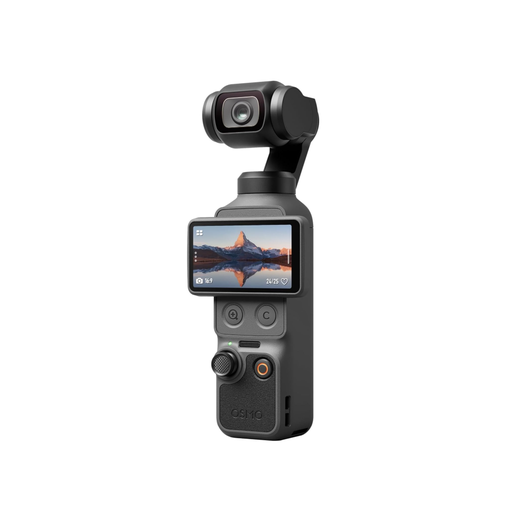
DJI Osmo Pocket 4 Standard Combo with 1-inch CMOS sensor

DJI Osmo Pocket 4 Standard Combo

If you’re planning to shoot vlogs as well as photos, check that this compact gimbal camera can capture the architectural compositions you want.

1″ CMOS sensor, 4K/240fps, 3-axis stabilisation, 2× lossless zoom and 107 GB of built-in storage.

2″ rotatable screen.

View at Joybuy
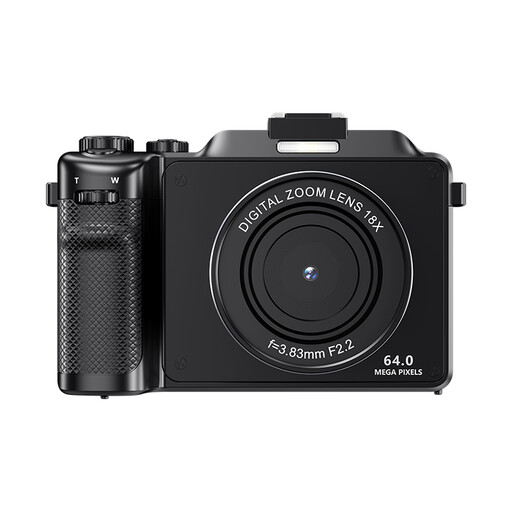
KOMERY X9 digital camera with autofocus and 18× zoom

KOMERY X9

If you want to use zoom for different compositions, check in advance whether you can achieve the angle of view you need from your shooting positions.

64 MP, autofocus, 18× zoom and flash.

View at Joybuy
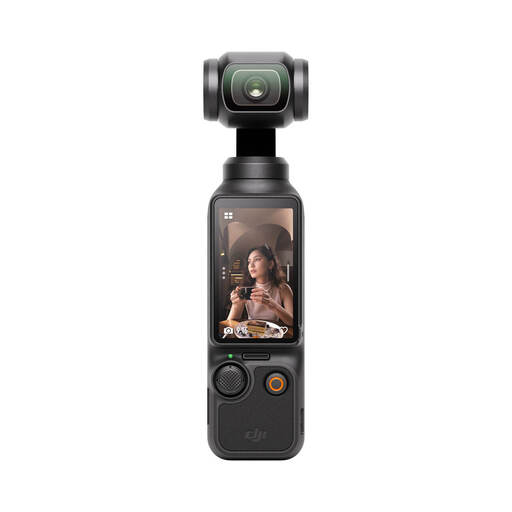
DJI Osmo Pocket 3 with 1-inch CMOS sensor and rotatable touchscreen

DJI Osmo Pocket 3

If you’re looking for a compact camera for photos and vlogging, check that its angle of view suits the entrances you want to photograph.

1-inch CMOS sensor, 4K/120fps video and mechanical 3-axis stabilisation.

Fast focusing and a 2-inch rotatable touchscreen.

View at Joybuy
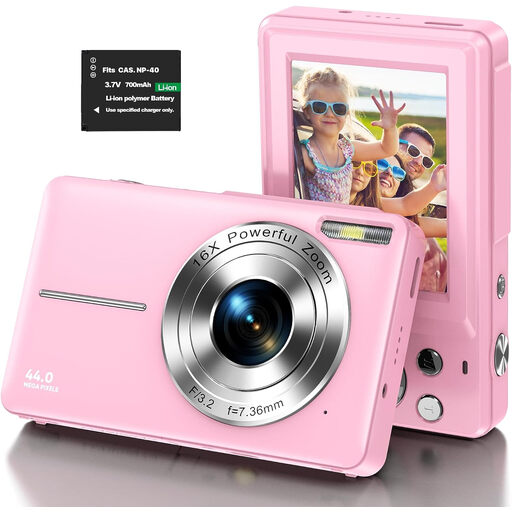
Songdian Pocket Camera with 4K and 16× zoom

Songdian Pocket Camera, Pink

If you’re looking for a compact camera to take out and about, check its angle of view and whether the format suits your architectural photography.

4K, 16× zoom and autofocus.

The description mentions Full HD video and a removable memory card.

View at Joybuy

Frequently asked questions

Do I need a filming permit from the City of Leipzig to take handheld photos of an entrance from a public street?

According to the City of Leipzig, teams of up to five people don’t need a filming permit for handheld filming in public spaces if they aren’t using equipment or aids such as tripods, and aren’t restricting public access. This information doesn’t automatically cover the rules inside an arcade.

Can I publish a photo of the outside of an arcade entrance?

Under certain conditions, Section 59 of the German Copyright Act (UrhG) permits the photographing and reproduction of works permanently situated beside public thoroughfares, streets or squares. For buildings, this applies only to their exterior. It doesn’t provide blanket permission to take interior shots or publish images of identifiable people.

What if people are identifiable in the photo I publish?

Under Section 22 of the German Art Copyright Act (KunstUrhG), images of people may generally only be distributed or displayed publicly with the consent of the person depicted. Whether a legal exception applies in a particular case depends on the image and how it’s used, so take care when photographing identifiable people.

How can I handle very bright and dark areas in a photo without a tripod?

Start by setting the exposure for the part of the image that matters most to you. If the architecture is largely static, you can combine shots taken at different exposures later; Nikon describes this approach for exposure bracketing and HDR. If people move between shots, you may see differences caused by movement.

Will I need to buy a lens as well as the camera?

The Ricoh GR IV has a built-in lens. With a mirrorless camera, check exactly what’s included in the kit: the Canon EOS R50 kit described includes an RF-S 18–45 mm; the RF-S 10–18 mm is a different lens with a wider starting angle of view.