What should you look for when buying?
First, decide what matters most on your walk: spontaneous shots in the rain, high magnification, light luggage or precise control over focus.
| Buying priority |
What to look for |
Who is it important to? |
| Close-ups in the rain |
Check the close-up range and the protection offered by the specific model. OM Digital Solutions lists close-ups down to 1 cm for the TG-7, as well as IPX8 and IP6X ratings; this does not mean it is resistant to salt water. |
If I want to get close to a leaf spontaneously in the rain, I want to use the camera without changing lenses. Around 36% of consumers prioritise spontaneous close-ups in the rain. |
| Magnifying drops |
Compare the maximum magnification ratio rather than just the minimum focusing distance. Canon Academy considers true macro photography to typically start at a magnification ratio of 1:1. |
If I want to make small drops look significantly larger, I’m happy to use a separate macro lens. Around 29% of consumers prioritise high magnification of drops. |
| Luggage for your walk |
Compare the total weight of the body and lens. OM SYSTEM Deutschland lists the OM-5 Mark II at 418 g with battery and SD card; you’ll need to add the weight of your chosen lens. |
If I also want to photograph the landscape and path, the weight of my full kit matters, not just the macro function. Around 21% of consumers prioritise light, versatile luggage. |
| Focus when subjects move |
Check the focusing aids and, where applicable, focus stacking; movement of the leaf or camera can make macro photography more difficult. |
If a leaf is moving in the wind, I want to be able to set the focus precisely rather than rely on several images layered together. Around 14% of consumers prioritise focus control when subjects move. |
Action cameras at Joybuy
The products shown here are described as waterproof action cameras for outdoor photography. These product specifications alone don’t confirm close focusing or magnification ratios for macro shots of drops.
 No image available
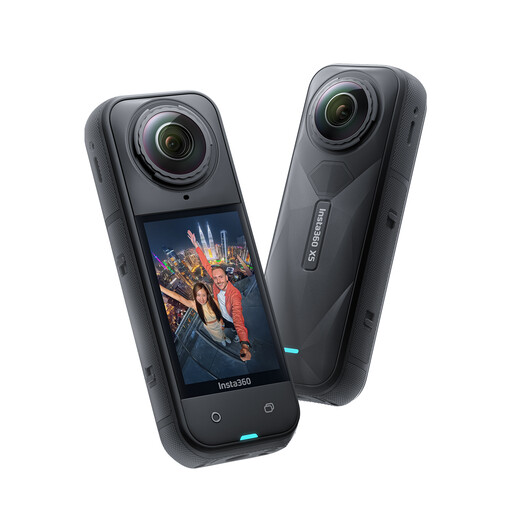
Insta360 X5 Waterproof 8K 360° Action Camera
Described as an action camera for outdoor photography; check close focusing and magnification ratio separately if you want raindrops to fill the frame.
The product specifications list 8K 360° recording at 30 fps and waterproofing down to 15 m without a housing.
View at Joybuy
 No image available
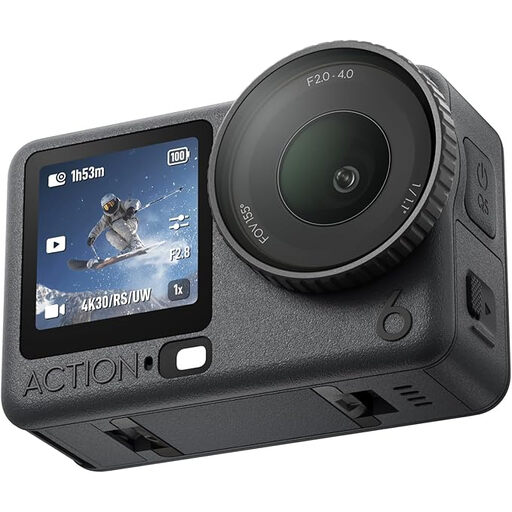
Osmo Action 6 Standard Combo Action Camera, 1/1.1″ Square Sensor
Described as an action camera for outdoor photography; for close-up shots of drops, check the close-focusing capability and maximum magnification ratio separately.
The product specifications list a 1/1.1″ square sensor, a variable aperture, 4K recording and waterproofing down to 20 m without a housing.
View at Joybuy
Frequently asked questions
How can I tell whether a camera can make drops look really large?
Compare the maximum magnification ratio, not just the minimum focusing distance. At 1:1, a subject is reproduced at life size on the sensor; however, there’s very little depth of field at close range.
Can I simply use focus stacking in windy conditions?
Only to a limited extent: focus stacking can provide greater depth of field with still subjects, but even slight movement makes macro photography more difficult. For a swaying leaf, a carefully focused single shot is an obvious option to try.
Does weather protection also mean protection from salty spray?
No. The IP and weather protection ratings mentioned don’t confirm protection against salt spray. Before using your camera on the coast, check the instructions for your specific model and keep compartments closed while taking photos.
What additional costs and requirements should I consider?
With a mirrorless camera, a macro lens is an additional purchase. For ordinary claims relating to defects in movable goods, § 438 BGB generally specifies a limitation period of two years from delivery; a voluntary manufacturer’s warranty is separate.
Can I leave the path to photograph a leaf in a nature reserve?
There’s no universal answer. § 23 BNatSchG protects nature reserves from harmful or persistently disruptive activities and refers to more detailed regulations; § 59 BNatSchG sets out a general principle for access to the open countryside. So check the rules and signs for the specific coastal area.


