For small carving details, the most important thing is whether the close-up capability of the lens or camera mode you’re actually using suits your subject. For whole figures, framing, a steady set-up and lighting may matter more than achieving the greatest possible magnification. A compact camera with a close-up mode saves you changing lenses, while a system camera with interchangeable lenses gives you more choice—but the lens and mount must suit what you want to do. Under artificial light, a controlled white balance and, where appropriate, RAW shooting can help you assess the colour of the wood.
Which camera is right for you?
Collectors looking to capture small carving details
If you want faces, grooves or textures to appear large in the frame, the close-up capability of the specific lens or camera mode is key. OM SYSTEM says the Tough TG-7 can take close-ups from as near as 1 cm; that distance alone doesn’t indicate a 1:1 magnification ratio.
Sellers who care about colour
If you regularly photograph figures under artificial light, check the white balance under the lighting you plan to use, so you can assess wood colours consistently. Nikon describes white balance as a setting for adjusting colour reproduction.
Beginners photographing whole figures
For whole figures or small arrangements, getting the framing right is the priority; a dedicated macro lens doesn’t have to be part of your first set-up. Canon describes the EOS R50 as an interchangeable-lens camera, so consider the kit lens and any later additions separately.
What should you look for when buying?
Compact camera with a close-up mode
A good fit if: you want to photograph small, stationary carvings without changing lenses.
The trade-off: The short shooting distance can leave less room for lighting; being able to focus up close doesn’t automatically mean a 1:1 magnification ratio.
Mirrorless camera with a zoom lens
A good fit if: you mainly want to photograph whole figures or arrangements and expand your system later.
The trade-off: For very small details, check the close-focusing limit of the specific kit lens; you may need a separate macro lens.
Mirrorless camera with a 1:1 macro lens
A good fit if: you want individual grooves and surface textures to fill the frame and choose a suitable macro lens.
The trade-off: Check that the camera and lens have a compatible mount and what’s included; at short working distances, you’ll also need room for the lighting.
| What matters |
What to check when buying |
Who should consider it? |
| Fine carving details |
Compare the close-up mode or magnification ratio, as well as the distance between the lens and the subject. OM SYSTEM says the TG-7 can take close-ups from as near as 1 cm; Nikon lists a 1:1 magnification ratio for the NIKKOR Z MC 50mm f/2.8. Allow room for lighting, too. |
If I want to show grooves or small surface textures at a large size, the performance of the specific lens or mode matters. Around 36% of consumers prioritise capturing small details. |
| Wood colours under artificial light |
Check whether the white balance can be adjusted. If you want to edit RAW files, also check whether the specific model can shoot in RAW. Nikon explains how white balance works; OM SYSTEM lists RAW shooting for the TG-7. |
If I photograph figures under consistent artificial light, I want to assess their colours reliably. Around 29% of consumers prioritise colour reproduction. |
| Depth of field for whole figures |
Check whether you can control the aperture and set the camera up securely. If a single shot doesn’t provide enough depth of field, you could take a focus series and combine the images afterwards; Canon describes focus stacking as a multi-step process. |
If I want a three-dimensional figure to be sharp from front to back, I look for good depth of field and a stable set-up. Around 21% of consumers prioritise this. |
| Easy to get started |
Check the exact kit name and what’s included. The Canon EOS R50’s RF mount is relevant when choosing lenses later; a particular macro lens isn’t automatically included in a kit. |
If I want to get started with whole figures without buying lots of extra equipment, I value a straightforward set-up. Around 14% of consumers prioritise an easy start. |
Avoid common misconceptions
-
“Macro” or “1 cm” automatically means 1:1
These figures don’t describe the same thing: OM SYSTEM lists a minimum focusing distance of 1 cm for the Tough TG-7, while Nikon gives the NIKKOR Z MC 50mm f/2.8 a magnification ratio of 1:1.
Compare how large your subject appears in the frame with the specific lens or mode, and check that there’s enough room between the camera, the figure and the lighting.
-
Comparing camera bodies alone
Close-up performance depends on the lens you actually use. A kit zoom isn’t automatically equivalent to a separately available macro lens.
Check exactly what’s included and the full kit name. If you want to photograph small details, check the close-focusing limit of the included lens.
-
Artificial light alone guarantees natural wood colours
White balance also affects colour reproduction. RAW images can give you the option to correct colour during editing, but you’ll need a suitable workflow.
Take a test shot under the lighting you plan to use and check whether you’re happy with the colours and whether you want to edit RAW files.
Relevant brands and product ranges to consider
OM SYSTEM
The Tough TG-7 is a compact camera with a fixed lens and close-up modes, suited to buyers who don’t want to change lenses.
- OM SYSTEM lists 12 megapixels, RAW shooting and close-ups from as near as 1 cm.
- The short focusing distance doesn’t prove that it offers the same magnification ratio as a 1:1 macro lens; check there’s room to light your subject.
Canon
The EOS R50 is a mirrorless camera with an RF mount. You can use it for whole figures and add a compatible lens later.
- Canon lists a magnification ratio of up to 1:2 for the separately available RF 35mm F1.8 MACRO IS STM.
- The RF-S 18–45mm kit lens isn’t equivalent to this macro lens; check the close-focusing limit of the lens in question.
Nikon
You can pair the Z50II with the separately selected NIKKOR Z MC 50mm f/2.8 if you want a 1:1 macro lens.
- Nikon lists a 1:1 ratio for this lens and around 5 cm between the lens and subject at the minimum focusing distance.
- These specifications apply to the lens named here, not to all Z kits. Your lighting must suit the working distance.
Sony
The α6700 with E-mount can be paired with the separately available APS-C E 30mm F3.5 Macro lens for a 1:1 macro set-up.
- Sony lists a 1:1 magnification ratio for the SEL30M35.
- The stated working distance is 2.4 cm. Check there’s enough room in front of the lens for your lighting and figure.
Related products from Joybuy
The cameras below differ in design and features. For photographing wood carvings under artificial light, check the framing and close-up capability you need for each model.
 No image available
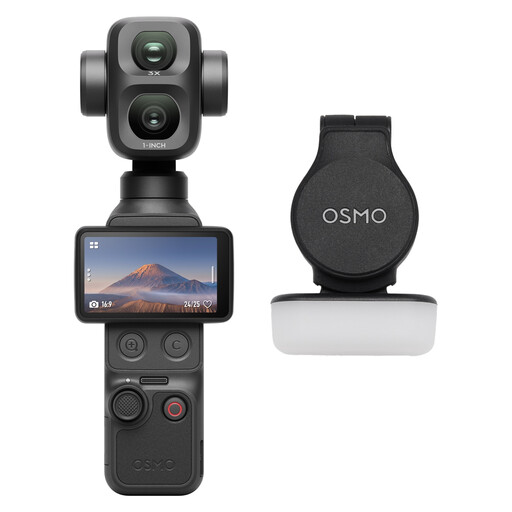
Osmo Pocket 4P – Standard Combo – Black
If you want to frame whole figures, check whether the stated wide-angle lens suits the framing you’re after; this doesn’t establish that the camera has macro capability.
The product details list a 20 mm wide-angle lens, a 1-inch CMOS sensor, 4K recording and a 2-inch screen.
View at Joybuy
 No image available
Sony Alpha 6100 with 16–50 mm Power Zoom Lens
If you want to adjust the framing of a figure, the included zoom lens is relevant; on its own, this doesn’t establish macro capability.
The product details list a 16–50 mm zoom lens, 24.2 MP and RAW as a supported file format.
View at Joybuy
 No image available
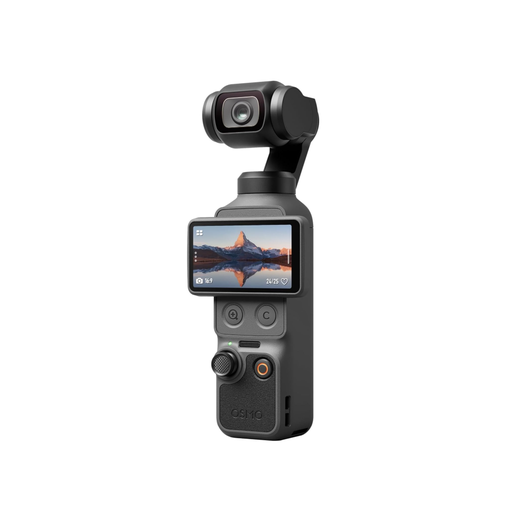
DJI Osmo Pocket 4 Standard Combo
If you want to photograph whole figures, check the framing with your specific subject; the stated zoom specifications don’t indicate close-up performance.
The product name lists a 1-inch CMOS sensor, 2× zoom, 4K/240fps, 3-axis stabilisation and 107 GB of built-in storage.
View at Joybuy
 No image available
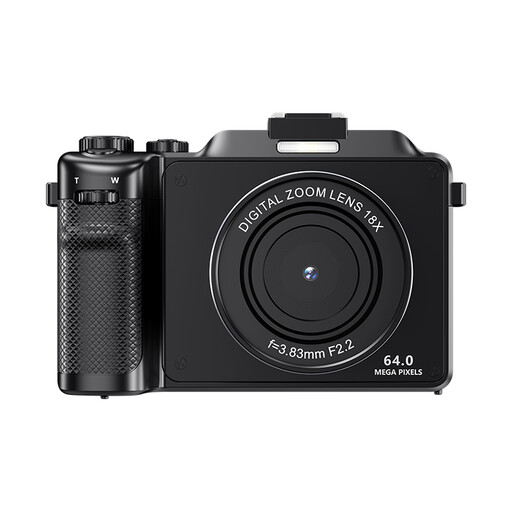
KOMERY X9
For photographing wood figures under artificial light, check that the distance and lighting will work with your subject; the listed specifications aren’t a substitute for checking close-up performance.
The product name lists 64 MP, 18× zoom, autofocus and flash.
View at Joybuy
 No image available
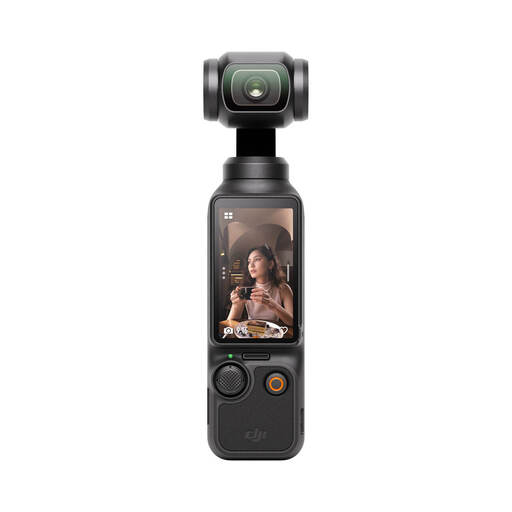
DJI Osmo Pocket 3
If you want to photograph wood figures, check before buying that you can get the framing and close-up shots you need; the listed video specifications don’t answer that.
The product details list a 1-inch CMOS sensor, 4K/120fps, 10-bit D-Log M colour recording and a rotating screen.
View at Joybuy
Frequently asked questions
Do I need a 1:1 macro lens to photograph a whole wood carving?
No. What matters is whether the lens you use gives you the framing you want. A 1:1 magnification ratio is mainly relevant if you want very small details to appear large in the frame. Canon describes the EOS R50 as an interchangeable-lens camera; for the separately available RF 35mm F1.8 MACRO IS STM, Canon lists a maximum ratio of 1:2.
How can I avoid colour casts and blurry areas under artificial light?
Check the white balance under the lighting you plan to use, and set the camera up securely for stationary figures. The aperture affects depth of field. If a single shot isn’t enough, you can combine a series taken with different focus points; this requires several images and a suitable workflow.
What extra equipment and consumer rights should I consider?
Check whether the lens you need is included in the kit, and consider a stable set-up and suitable lighting for small subjects. The Verbraucherzentrale explains that, for newly purchased faulty goods, you have statutory rights against the seller for two years after the goods are handed over or received. These are separate from a voluntary manufacturer’s guarantee.
Can I use photos of wood carvings online or to sell them?
There isn’t a blanket answer that applies to every carving and every use. Under certain conditions, Section 2 of the German Copyright Act (UrhG) also covers works of applied art. Section 58 of the UrhG applies to advertising a public exhibition or sale only where its stated conditions are met. If a work may belong to someone else and be protected by copyright, check that you have the rights for your intended use before publishing images.


