For a small picnic batch, a freestanding compact oven is an obvious choice, provided the baking tray fits and you can meet the specified clearance requirements. For larger batches using several trays, a built-in oven with an explicitly stated multi-level baking function may be more suitable. What matters is the usable tray size, whether the oven will fit your kitchen and the heating method—not just the capacity in litres. Dr. Oetker and VerbraucherService Bayern describe fan-assisted cooking as an option for baking on several trays; depending on the recipe, you may need to lower the temperature and keep an eye on browning.
Which type of oven is right for you?
Making a big batch of biscuits for a picnic
If you’re preparing a larger batch, compare the usable tray area and check whether the specific appliance is explicitly designed for baking on several levels at once. Bosch Hausgeräte lists this feature for certain models, while VerbraucherService Bayern explains the possibilities of fan-assisted cooking.
Short on worktop space
For smaller batches, a freestanding compact oven may be a good fit, as long as you have enough worktop space and can meet the clearances set out in the instructions. Rommelsbacher and Steba specify installation requirements for their respective models.
Baking a delicate recipe
If you want to follow the heating method given in your recipe, check whether the oven lets you choose conventional top and bottom heat or fan-assisted cooking. Dr. Oetker and VerbraucherService Bayern note that fan-assisted cooking can affect browning and moisture loss.
What should you look for when buying?
Freestanding compact oven
A better fit if: you’re baking smaller batches, don’t want to use a built-in oven space and can meet the model’s installation requirements.
Keep in mind: A small cavity doesn’t tell you how large the baking tray is or whether you can bake on several trays at once.
Built-in oven
A better fit if: you regularly bake larger batches, want to use several trays at once and have a suitable space for a built-in oven.
Keep in mind: Check the dimensions of the oven housing and whether the specific model has a stated multi-level baking function. Convenience programmes aren’t automatically necessary for almond biscuits.
| What to consider |
What to check before buying |
Who it matters most to |
| Tray area and batch size |
Compare the tray’s internal dimensions and what’s included with the number of biscuits you plan to bake; don’t assume that a higher litre capacity means a larger tray. |
If I need lots of biscuits for a picnic, what matters to me is how much dough will fit on the tray in one go. Around 33 % of consumers put usable baking capacity first. |
| A safe place to position the oven |
Check the external dimensions and where the oven will go; follow the clearances in the instructions for the specific model. Rommelsbacher requires the BG 1055/E to have 4 cm of clearance at the sides and 1 m above, and says it must not be built in. |
If I’m short on space, the appliance needs to fit the oven housing or worktop, with the required ventilation clearances. Around 25 % of consumers prioritise having a suitable place to position their appliance. |
| The right heating method |
Check that the available conventional top and bottom heat or fan-assisted settings match your recipe; if using fan-assisted cooking, keep an eye on the temperature and browning. VerbraucherService Bayern recommends reducing the temperature by around 20 °C when switching from conventional top and bottom heat to fan-assisted cooking. |
If my recipe calls for a particular heating method, I want to keep an eye on browning and choose the right setting. Around 25 % of consumers look at the heating method first. |
| Energy use and running costs |
For household ovens covered by the energy label, compare the kWh per standard cycle and consider how many batches you’ll need to bake. The European Commission excludes small and portable ovens from the scope of the EU energy label for household ovens. |
If I bake often, I want to understand the energy use per standard cycle and how many batches I’ll need to bake. Around 17 % of consumers put electricity use and running costs first. |
Common buying mistakes
-
Assuming cavity capacity tells you how many biscuit trays will fit
The capacity in litres tells you neither the usable tray area nor how many levels you can bake biscuits on at once.
Compare the tray dimensions and check whether a suitable tray is included and whether the manufacturer explicitly says you can bake on several levels at once.
Depending on the tray area or batch size, you may need to bake in additional batches or buy another suitable tray.
-
Positioning a freestanding compact oven like a built-in model
Installation requirements vary by model. Rommelsbacher says the BG 1055/E must not be built in and specifies ventilation clearances.
Before buying, check the instructions for the exact model against the space available, and don’t assume the clearances apply to other appliances.
If you can’t meet the required clearances in your chosen spot, you’ll need another place for the oven or a different type of oven.
-
Using the energy rating or wattage to estimate the cost of baking a batch of biscuits
The stated energy use per standard cycle won’t necessarily match the energy used for a particular recipe. The European Commission also excludes small and portable ovens from the same EU energy labelling requirements as household ovens.
For appliances covered by the label, compare the kWh per standard cycle and consider how often you bake and how many batches you’re likely to need.
Brands to consider
Rommelsbacher
The freestanding BG 1055/E and BGE 1580/E are compact ovens with different cavity capacities.
- The manufacturer lists a capacity of 18 litres for the BG 1055/E and 30 litres for the BGE 1580/E; both offer conventional top and bottom heat and optional fan-assisted cooking.
- The larger cavity takes up more space. The BG 1055/E’s ventilation clearances apply to this model, which must not be built in.
Steba
The KB M19 is a freestanding compact oven for smaller batches.
- Steba gives the internal dimensions as 23.5 × 31 × 25.5 cm (H × W × D) and lists selectable conventional top and bottom heat and fan-assisted cooking.
- The tray size is limited by the cavity. The instructions state that the appliance is not a built-in oven and should be positioned 10 cm from the kitchen wall at the back.
Severin
The TO 2058 is a freestanding oven and toaster with fan-assisted cooking.
- Severin lists a 42-litre cavity and four shelf positions.
- Having four shelf positions doesn’t in itself mean you can bake four trays of biscuits at once.
Bosch
The HBA272BB3 is a built-in oven for a suitable oven housing and may be worth considering for larger batches.
- Bosch Hausgeräte lists 3D hot air for up to three levels on this model.
- This manufacturer’s claim isn’t an independent test of how it performs with almond biscuits. Pyrolysis and automatic programmes are extra features, and their usefulness depends on what else you bake.
Siemens
The HR776G1B1 is a feature-rich built-in oven.
- Siemens lists 4D hot air and a usable capacity of 71 litres for this model.
- Steam assistance and other features go beyond the basic requirements for almond biscuits; consider whether you’d use them for other dishes too.
Joybuy products for different kitchens
This selection includes built-in ovens, freestanding compact ovens and a freestanding cooker with an oven. Cavity capacity alone doesn’t tell you how much space you’ll have for biscuits or whether you can bake several trays at once.
 No image available
Bosch HBA571BB4 Series 2 built-in oven
May be worth considering if you’re looking for a built-in oven with a stated multi-level baking function; check the tray dimensions for your recipe.
71-litre cavity and five shelf positions.
3D hot air for up to three levels, as well as conventional top and bottom heat.
View at Joybuy
 No image available
Comfee built-in oven, 60 cm, 70 l
A built-in option if the appliance dimensions suit your existing oven housing and you want to use the hot-air function.
70-litre cavity and 3 kW; listed as a 60 cm model.
The description mentions hot air for baking on several levels, as well as grill and pizza functions.
View at Joybuy
 No image available
WOLTU BF12sz mini oven, 32 l
May suit smaller batches if you’re looking for a freestanding oven and the baking tray is the right size for the number of biscuits you plan to make.
32 litres, 1,600 W and a temperature range of 100 to 250 °C.
Described as suitable for baking and grilling; a baking tray is listed.
View at Joybuy
 No image available
WOLTU mini convection oven, 28 l
A freestanding compact oven option if you want to match the available heating methods to the instructions in your recipe.
28 litres and three shelf positions; the number of positions alone doesn’t mean you can bake biscuits on all levels at once.
Three heating modes: top heat, bottom heat or both. Temperature range of 100 to 230 °C.
View at Joybuy
 No image available
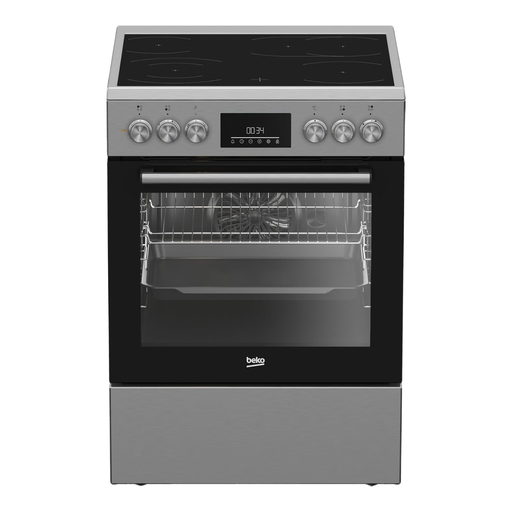
Beko FBM67320XS freestanding cooker with oven, 60 cm, 72 l
May be worth considering if you’re looking for a freestanding cooker with an oven and you have the space and a suitable connection in your kitchen.
72-litre cavity, one universal baking tray and eight heating functions, including fan-assisted cooking with a ring heating element.
The specified 240 V supply and freestanding installation need to be suitable for your kitchen.
View at Joybuy
Frequently asked questions
Which setting should I use to bake several trays of almond biscuits?
Fan-assisted cooking may let you bake on several trays at once, provided the specific appliance is designed for it. VerbraucherService Bayern recommends reducing the temperature by around 20 °C when switching from conventional top and bottom heat to fan-assisted cooking. Bear in mind that biscuits may dry out or brown more quickly too.
Can I put a compact oven in a kitchen cupboard?
Not as a general rule: Rommelsbacher says the BG 1055/E must not be built in and requires 4 cm of ventilation clearance at the sides and 1 m above. For other appliances, follow the installation requirements for the specific model.
Does every oven sold in Germany need an EU energy label?
No. According to the European Commission, small and portable ovens are outside the scope of EU energy labelling for household ovens. For appliances that are covered, the label includes figures such as energy use per standard cycle. So, a compact oven without a label isn’t, by itself, proof of a breach of the rules.
Who should I contact if my new oven is faulty?
The retailer is generally responsible for your statutory consumer rights, which are separate from any voluntary manufacturer’s warranty. Verbraucherzentrale says that new goods are generally covered for two years and explains additional rules for sales contracts from 31 July 2026, where you choose a repair to resolve a fault.


