Start by considering the engine you use, the scale of your test scenes and the space you actually have available – not just whether a PC is labelled “gaming”. For less demanding projects, a mini PC with integrated graphics may be suitable. For more demanding 3D scenes, compare compact systems with dedicated graphics, checking the exact model configuration against your engine’s requirements. More processing power won’t compensate for unsuitable physics time steps or collision modes.
Who is a compact test PC suitable for?
Physics testing on a small desk
If you’re developing or testing collision behaviour, you need to fit your computer, monitor and peripherals into a limited space. The key factors are the specific engine, a suitable configuration and how you set everything up; a faster PC won’t fix incorrect physics settings. Unity Technologies and Epic Games explain the relevant engine and simulation requirements.
Demanding 3D development
For larger or more graphically demanding scenes, compare the memory and graphics in the complete model configuration with the requirements of your chosen engine. For Unreal Engine 5.8 on Windows, Epic Games recommends 32 GB RAM and at least 8 GB of graphics memory. Unity Technologies notes that larger, more complex projects require additional memory.
A workstation with room to grow
If your projects may grow, check the documented RAM and storage options for the exact configuration. Remember to allow space for the case and connected devices too. ASUS ROG and MSI offer different configurations within their product ranges.
What should you look for when choosing one?
Mini PC with integrated graphics
A good fit if: Desk space is limited and the graphics in the specific configuration can handle your engine and test scenes.
Consider: Check the configuration’s limitations if you plan to work with more demanding 3D graphics or upgrade the graphics later.
Gaming mini PC with dedicated laptop graphics
A good fit if: You need a small footprint and a separately specified GPU for your planned 3D projects.
Consider: Check the full model number and allow space for the power supply, monitor, cables and ventilation.
Compact desktop with dedicated desktop graphics
A good fit if: You have a little more desk space and need documented ports or storage options.
Consider: Specifications and upgrade options vary by configuration, so check the details for the exact model.
Match the specific engine and project to your computer, and measure your entire workstation rather than just the case. The percentages show the proportion of consumers who rank each concern as their top purchase priority in the relevant scenario.
| Priority |
What to check when buying |
Who is this particularly important for? |
| Performance for physics testing |
Check that the engine version, CPU and installed RAM are suitable for your project; assess physics settings separately from PC performance. |
When I run collision and physics tests, I want to meet the requirements of my engine and scene without assuming a particular frame rate. Around 33% of consumers put physics testing performance first. |
| Footprint and set-up |
Check the external dimensions of the exact configuration and allow space for the power supply, ports and ventilation. |
On a small desk, I want to fit my computer, monitor and cables without losing sight of the usable work surface. Around 33% of consumers prioritise footprint. |
| Graphics for 3D scenes |
Check the graphics chip and graphics memory listed for the full model number against your scenes and engine. |
For more graphically demanding test scenes, I want to choose graphics headroom that suits the actual workload. Around 20% of consumers put 3D graphics headroom first. |
| Expandability |
Check the installed RAM, SSD and documented options for the specific configuration. |
If my projects grow, I want to consider possible future upgrades while making sure the computer will still fit on my desk. Around 14% of consumers prioritise expandability. |
Avoid common misconceptions
-
A high frame rate doesn’t prove that collision behaviour is correct
Physics time steps and detection modes affect testing. In Unreal Engine, sub-stepping can make the simulation more stable, but Epic Games notes that it adds CPU overhead.
Record your engine settings and assess simulation behaviour separately from PC performance.
-
“Mini” doesn’t mean your whole set-up will fit on the desk
Your monitor, power supply and cables also need space, and you’ll need to account for the set-up requirements of the specific configuration.
Measure the space available and check the manual for your chosen model before planning your workstation.
Remember to allow extra room for the power supply, monitor and cables when planning your set-up.
-
Models in the same range don’t all have the same specifications
Graphics and memory configurations vary between models in the ASUS ROG NUC and MSI Trident ranges.
Check the full model number, installed RAM, SSD and GPU against the details in the specific product listing.
Key brands at a glance
ASUS ROG
The ROG NUC range is aimed at buyers comparing gaming mini PCs for spaces where desk room is limited.
- ASUS ROG Germany lists configurations with different laptop graphics cards, RAM and SSD specifications.
- The specifications for one configuration don’t automatically apply to the whole range, so check the full model number.
MSI
The MPG Trident AS AI 2nd range offers compact desktop configurations with dedicated desktop graphics.
- For the MPG Trident AS AI 2NVL7-009EU configuration, MSI specifies an RTX 5060 with 8 GB of graphics memory, 32 GB RAM and a 1 TB SSD.
- These specifications and the documented slots apply to the configuration listed, not every model in the range.
GEEKOM
The A9 Max is a mini PC option for projects that can be handled by the integrated graphics in the specific configuration.
- GEEKOM Germany lists selectable configurations with 32 GB RAM and a 2 TB or 4 TB SSD.
- You can’t assume that a particular 3D test scene will be suitable based on this alone; check the full configuration and your engine’s requirements.
ZOTAC
MAGNUS ONE is a compact desktop design with a desktop processor and dedicated desktop graphics.
- For the RTX 50 range, ZOTAC specifies a case volume of 8,48 litres and configurations with up to 96 GB DDR5.
- These manufacturer specifications describe the range and don’t confirm any particular configuration or independently measured test performance.
Joybuy products for compact test set-ups
The Joybuy products below include compact computers for testing where desk space is limited, including mini PCs and a gaming laptop. Match the specifications to your engine, test scenes and available space.
 No image available
HP Z2 Mini G1a Ryzen AI Max+ PRO 395, 128 GB, 2 TB
The compact mini PC design may suit a workstation where desk space is limited.
This configuration is listed with a Ryzen AI Max+ PRO 395, 128 GB RAM and a 2 TB SSD.
Joybuy
 No image available
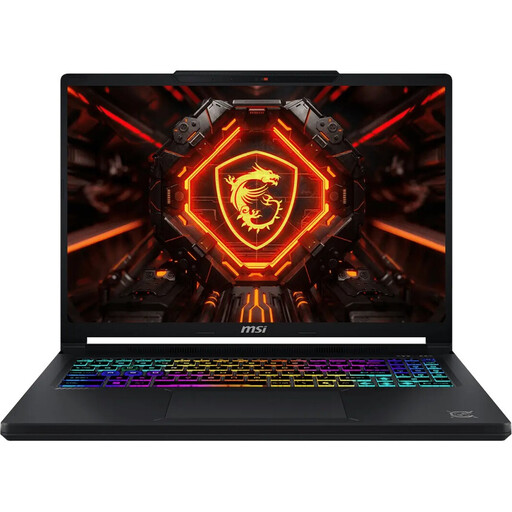
MSI Crosshair 16 Max HX E2WGXK-023, 16-inch gaming laptop
A laptop may be an alternative if you’re looking for a compact computer for gaming or development projects.
This configuration lists an Intel Core Ultra 9 275HX, an RTX 5070 with 12 GB, 16 GB DDR5 and a 1 TB SSD. The QHD+ OLED display is specified at 165 Hz.
Joybuy
 No image available
FIREBAT mini PC Ryzen 7 7735HS, 16 GB, 512 GB
The mini PC design may suit you if you’re looking for a compact system for your workstation.
This configuration lists a Ryzen 7 7735HS, Radeon 680M, 16 GB RAM and a 512 GB SSD. Two M.2 slots and support for up to three displays are also specified.
Joybuy
 No image available
FIREBAT F1 mini PC Ryzen 5 7640HS, 24 GB, 512 GB
The compact mini PC design may suit test projects on a small desk.
This configuration lists a Ryzen 5 7640HS, Radeon 760M, 24 GB LPDDR5 and a 512 GB PCIe 4.0 SSD. USB 4.0 and HDMI 2.1 are also specified.
Joybuy
 No image available
FIREBAT A8 mini PC Ryzen AI 9 365, 24 GB, 1 TB
The compact design may be worth considering for projects where desk space is limited.
This configuration lists a Ryzen AI 9 365, Radeon 880M, 24 GB DDR5 and a 1 TB PCIe 4.0 SSD. USB4, HDMI 2.1 and Oculink are also specified.
Joybuy
Frequently asked questions
Do I automatically need a particularly powerful graphics card for collision behaviour?
No, not just because you’re working with collisions. Match your engine, graphics and project scale to one another. Unity Technologies notes that resource requirements depend on the project; for development with Unreal Engine 5.8 on Windows, Epic Games specifies at least 8 GB of graphics memory.
What should I check first when setting up a collision test?
Check your engine’s collision mode and physics time steps. Unity Technologies distinguishes between discrete and continuous collision detection; Epic Games describes sub-stepping as a stability option that adds CPU overhead. Record your test settings before comparing results from different PCs.
What else needs to fit on a small desk besides the PC?
Allow space for your monitor, peripherals, power supply and connected cables. Measure the available space and check the set-up and ventilation requirements in the manual for the specific configuration. The terms “mini PC” and “compact” don’t tell you how much room the complete set-up will need.
Can I put an old PC I’ve replaced in my household rubbish in Germany?
No. Germany’s Federal Ministry for the Environment classifies computers as electrical and electronic equipment and directs consumers to authorised collection points or retailers for old devices. Retailers’ take-back obligations apply under the relevant legal conditions.


