Photographers with limited desk space
You need to fit the screen, stand and space for cables on a small desk. BenQ and ASUS provide model-specific specifications that you can compare with your desk measurements.


Start by checking how much desk space you have, then decide whether you need more pixels for precise cropping or colour control for prints. BenQ lists 2560 × 1600 pixels and 99% Adobe RGB for the SW242Q; compact WUXGA models offer fewer pixels. For colour-critical decisions, calibration and profiling should be part of your workflow, as Adobe explains.
You need to fit the screen, stand and space for cables on a small desk. BenQ and ASUS provide model-specific specifications that you can compare with your desk measurements.
You check fine edges around your subject when cropping and want to know how many pixels will be available for your image and tools. Manufacturer specifications for resolution and aspect ratio make it easier to compare compact models from BenQ, EIZO and Dell.
As well as checking your crop, you assess colour for your intended output and factor in calibration and profiling. Adobe describes monitor profiling as part of colour management.
First, check that the complete monitor will fit on your desk. Then choose the resolution, colour workflow and connections that suit the way you plan to edit your photos.
| What matters | What to check before buying | Who it matters most to |
|---|---|---|
| Desk space | Available width and depth, including space for cables; dimensions with the stand. | If I work at a small desk, the stand and cables need to fit alongside my keyboard, with enough room to sit at a comfortable viewing distance. Around 31% of consumers put desk space first. |
| Detail when cropping | Native resolution and aspect ratio; how easy the screen is to read at your usual scaling. | When cropping, I want to see fine edges and keep my tools open without everything becoming too small. Around 31% of consumers place the greatest emphasis on checking detail when cropping. |
| Colour for prints | The colour gamut of the specific model; calibration and profiling for your intended workflow. | When preparing prints, a colour-managed workflow matters more to me than extra connection options. Around 25% of consumers prioritise assessing colour for prints. |
| Laptop connection | Compatibility with your video output; whether the connection provides the power you need. | At my laptop workstation, I want to know in advance whether the connection supports both video output and power. Around 13% of consumers put laptop connectivity first. |
The screen’s diagonal measurement doesn’t tell you how much room the complete monitor will take up on your desk. BenQ lists a depth of 262.6 mm for the SW242Q with its stand.
Measure the available width and depth, including space for cables, and compare them with the dimensions of the complete monitor.
A colour gamut specification on its own doesn’t guarantee a match with a particular print. Adobe describes calibration and a monitor profile as part of reliable colour reproduction.
Choose a monitor to suit your intended output, and factor in calibration and profiling.
Colour control may require extra set-up time and, depending on your needs, suitable calibration equipment.
Native pixel counts can vary considerably between compact models. For example, EIZO lists the CS2400S at 1920 × 1200 pixels, while the BenQ SW242Q has 2560 × 1600 pixels.
Compare resolution and aspect ratio, and check that your photo and tools remain easy to see at your usual scaling.
The brands below offer different approaches to compact monitors. The features listed relate to the relevant product ranges or models.
The SW242Q combines a compact screen size with a higher resolution and a documented Adobe RGB workflow.
The ColorEdge range is designed for colour-managed photography; the CS2400S is a compact model.
The ProArt PA248CRV is a compact 16:10 option for sRGB-focused work, with a USB-C connection.
The Pro P2425DE is a compact QHD option with a USB-C hub.
The 24BQ55WY-B is a 24-inch option for image work that is mainly viewed on screen and focused on sRGB.
The Joybuy models below are compact monitors for smaller workspaces. Compare their resolution, connections and footprint with your photography workflow.
 No image available
For sRGB-focused on-screen work in a small space, if FHD resolution gives you enough detail for checking your images.
1920 × 1080 pixels, IPS, 120 Hz, 99% sRGB, HDMI and VGA; VESA 100 × 100 mm.
 No image available
A compact option if 24 inches and FHD are enough for your cropping work and the listed connections suit your needs.
1920 × 1080 pixels, IPS, 116% sRGB, HDMI and DisplayPort.
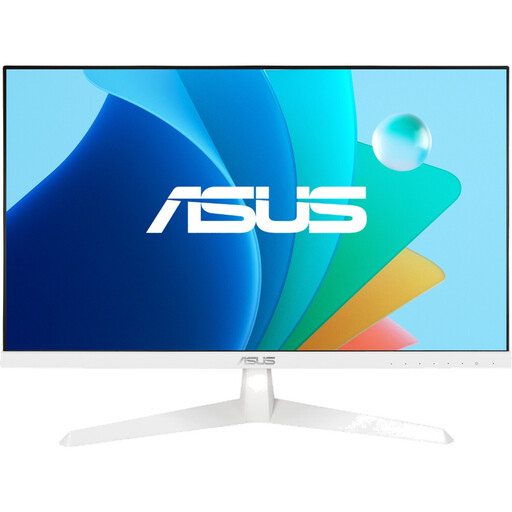 No image available
For a compact workspace, if the listed resolution is sufficient for your crops.
1920 × 1080 pixels, IPS, 100 Hz, 16:9, HDMI and VESA 100 × 100 mm.
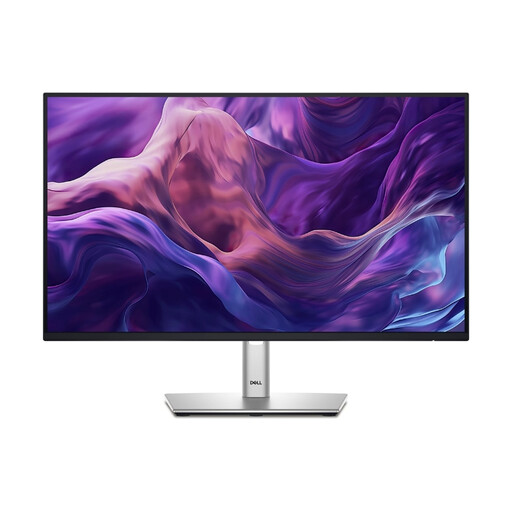 No image available
A good fit if you need a USB-C connection at your compact workstation and FHD is enough for your cropping work.
FHD, IPS and USB-C; check that the connection supports your laptop’s video output.
 No image available
A 24-inch screen can be a starting point for a compact workspace; check the monitor’s dimensions and resolution against your cropping needs.
Yes, if you want to judge colours reliably. Adobe distinguishes between calibration and a profile that describes the monitor’s current colour reproduction. Set up your monitor in stable lighting conditions and save the appropriate monitor profile. A factory specification won’t necessarily reflect your specific working environment over time.
No, not just because of the subject. What matters is your intended output. For a suitable colour-managed print workflow, the Adobe RGB features listed for models from EIZO and BenQ are relevant. If you mainly view your photos on screen, you can start by comparing sRGB coverage, resolution and the space the monitor needs. A suitable monitor profile is still important when assessing colour.
For goods that consumers buy from a trader in the EU, the legal guarantee is the seller’s responsibility and, according to Your Europe, lasts for at least two years from receipt of the goods. A separate manufacturer’s warranty is different; check its specific terms separately.
No. The German Environment Agency advises that old electrical appliances must be collected separately and must not be disposed of with household rubbish. Find a suitable collection or return point.