Who this choice matters to

Homes with narrow gaps around radiators

If you want to remove dust from behind or between radiator panels, check that the shape and depth of the gap are suitable for the nozzle. Bosch Home Appliances recommends using a long hose and a flexible crevice tool.

Homes with a small storage cupboard

What matters is whether the appliance, hose, tube and loose attachments will all fit in your chosen storage space. The manufacturer’s dimensions for the body and details of how accessories are stored can help you work out how much room you’ll need.

Homes where dust is a concern

If you want to minimise contact with collected dust, consider how the vacuum is emptied, how bags are replaced and how the filter is maintained. Bagged and bagless models require different steps.

What to look for when buying

Bagged cylinder vacuum cleaner

A good fit if: You’d rather dispose of collected dust in a bag and can find a suitable nozzle to reach behind your radiator.

The trade-off: Replacement bags are a consumable, and the crevice tool supplied won’t necessarily reach every gap.

Bagless cylinder vacuum cleaner

A good fit if: You don’t want to store or buy replacement bags, and you’re happy with the process of emptying the dust container.

The trade-off: The container and filters need cleaning. Also check that the nozzle on the specific model will fit into the narrow gap.

Priority What to check when buying Who is this especially important for?
Reaching behind the radiator Measure the opening and depth of the gap, then check the nozzle’s shape, length and connection. Bosch Home Appliances recommends a long hose and a flexible crevice tool for reaching the back. If I need to reach deeper or awkward spots too, the right reach matters to me. Around 36% of consumers put access behind the radiator first.
Storing the appliance and its accessories Compare the cupboard’s internal dimensions with the appliance body, and allow room for the hose, tube and loose attachments. With limited cupboard space, I want to store the whole vacuum, not just its body. Around 29% of consumers prioritise the space needed to store the appliance.
Handling dust when emptying the vacuum Check how to change the bag or empty the container, and what filter care the specific model requires. If I want to minimise contact with collected dust, disposal is especially important to me. Around 21% of consumers prioritise a low-dust disposal process.
Ongoing costs and maintenance Check the bag type, filter and care instructions for the exact model; don’t assume that bagless appliances are maintenance-free. If I need to weigh up ongoing consumables and regular maintenance, I want to know what each design involves. Around 14% of consumers prioritise ongoing costs and maintenance.

Common misconceptions

  • ‘Compact’ means everything will fit in the cupboard

    The dimensions of the body don’t show how much extra room the hose, tube and loose attachments will need. Bosch Home Appliances says the accessories for the Bosch BGDS2BL1D2 aren’t stored inside the appliance.

    Check how the whole vacuum will be stored and measure the available space before you decide.

  • A supplied crevice tool will fit every radiator

    The clearance and shape of your radiator determine whether the nozzle can actually reach the area you want to clean. Simply listing an accessory doesn’t prove that it has the reach you need.

    Measure the gap and check the nozzle’s length, shape and connection against it. If you need a longer nozzle, check that it’s compatible too.

  • Bagless means maintenance-free

    Even bagless models need their dust containers and filters cleaned. With a bagged vacuum, you’ll need to use the right replacement bags.

    Compare how the specific model is emptied and maintained with the amount of effort you’re happy to put in day to day.

  • Wattage or an old energy rating proves how well a vacuum cleans

    The Verbraucherzentrale (German Consumer Advice Centre) points out that higher wattage doesn’t automatically mean better cleaning performance. It also says there is no valid EU energy label for vacuum cleaners.

    Don’t treat wattage as the only proof of performance, and don’t use old energy ratings as a current basis for comparison.

Brands to consider

Bosch

Bosch’s Series 2 range includes bagged and bagless models, with different accessories and ways to dispose of dust.

  • For the BGDS2BL1D2, Bosch Home Appliances lists a crevice tool and body dimensions of 237 × 290 × 367 mm.
  • The accessories for this model aren’t stored inside the appliance. Bosch lists a combination nozzle for the BGS05AAA1; don’t assume that nozzle features not specified are the same across both models.

Rowenta

The Compact Power Parkett RO3953EA is a bagged option that comes with a 2-in-1 crevice tool.

  • Rowenta lists a 3 l bag capacity and includes the crevice tool among the accessories.
  • Bags are a consumable. You’ll need to check separately whether the nozzle can reach into the gap behind your radiator.

Severin

The BC 7030 is another bagged option that comes with a crevice tool.

  • Severin lists body dimensions of 20 × 25,5 × 35,5 cm and a 2 l container capacity.
  • The body dimensions don’t include the hose or tube, and don’t prove that the nozzle will reach behind a particular radiator.

Miele

The Guard S1 Performance is a bagged option that Miele describes as lightweight and compact.

  • Miele lists a 10 m operating radius for this model.
  • The operating radius doesn’t tell you whether the nozzle is long enough for the gap behind your radiator. Check the features of the specific version.

Joybuy product options

The options below include a compact bagless cylinder vacuum cleaner and a compact bagged model. For both, check that the nozzle will fit into the gap behind your radiator.
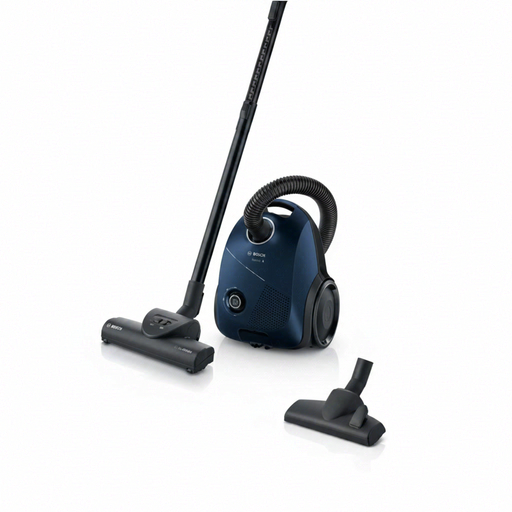
Bosch Series 2 BGBS2BU1T bagless vacuum cleaner, 850 W, 3.5 l, blue

Bosch Series 2 BGBS2BU1T

Described as compact, this bagless cylinder vacuum cleaner could suit you if you don’t want to store replacement bags. Check the nozzle supplied with the specific model to make sure it will fit behind your radiator.

Specifications listed: 850 W, 3.5 l, blue.

Joybuy
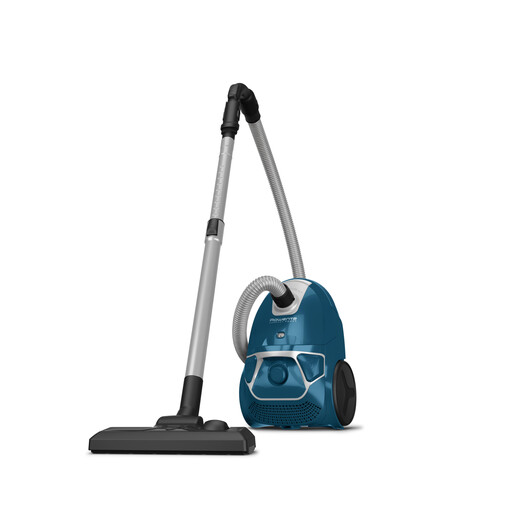
Rowenta Compact Power RO3950EA bagged cylinder vacuum cleaner with parquet nozzle

Rowenta Compact Power RO3950EA

This compact bagged cylinder vacuum cleaner comes with a crevice tool and could suit narrow, accessible areas around radiators. Check that the nozzle fits the gap before buying.

Specifications listed: 900 W, 3 l bag capacity, 8.8 m operating radius, 42 × 29 × 24 cm; with parquet nozzle.

Joybuy

Frequently asked questions

How can I clean behind a radiator without forcing in the wrong nozzle?

Switch off the radiator and let it cool completely before you start cleaning. Vaillant recommends doing this first; Bosch Home Appliances suggests using a long hose and flexible crevice tool to reach the back. Check the gap and gently insert a nozzle only if it fits.

Do I need to buy a new vacuum cleaner for this job?

Not necessarily. If your existing vacuum and a compatible attachment can reach the area, you don’t need to buy another appliance just for this task. First check that the connection and nozzle shape are suitable.

What’s the difference between a guarantee and statutory warranty rights when buying in Germany?

Statutory warranty rights give you a legal claim against the seller if goods are faulty; a guarantee is an additional voluntary promise with its own terms. The Verbraucherzentrale distinguishes between these two rights. For a typical online purchase by a consumer, you generally have a 14-day right to cancel. Exceptions and when the period starts depend on the relevant legal details.

Is there a current EU energy label for vacuum cleaners?

No. In July 2026, the Verbraucherzentrale said that there is no valid EU energy label for vacuum cleaners. Old energy ratings are therefore not a current basis for comparison, and wattage alone doesn’t prove strong cleaning performance.

How should I dispose of an old cylinder vacuum cleaner?

An old vacuum cleaner should go to a separate collection point for waste electrical and electronic equipment, not into your household bin. The Umweltbundesamt (German Environment Agency) says municipal collection points generally accept this equipment free of charge; retailers must take it back when the relevant legal requirements are met.