Who photographs petals on the coastal path?

Detail photographers

If you want to capture the veins, droplets or surface of individual fallen petals in close-up, look at the magnification ratio and depth of field. OM SYSTEM gives a 1:1 magnification ratio for its M.Zuiko 60 mm F2.8 Macro; Canon Academy explains that depth of field becomes very shallow at high macro magnifications.

Walkers in changeable weather

If you want to take spontaneous photos on a sandy or damp coastal path without changing lenses, check the protection ratings for your entire setup. OM SYSTEM describes the TG-7 as water- and dust-resistant; Sony recommends changing lenses on interchangeable-lens cameras in a clean environment wherever possible.

Light-travelling subject collectors

If you want to photograph more than just petal details on your walk, compare the weight of the complete setup, ready to use. OM SYSTEM lists the OM-5 Mark II at 418 g including battery and SD card; the separate M.Zuiko 60 mm F2.8 Macro weighs 185 g according to the manufacturer.

What should you consider when choosing?

Rugged compact camera with close-up mode

A good fit if: You want to get close to fallen petals on your walk and avoid changing lenses. OM SYSTEM describes the TG-7 as water- and dust-resistant and lists macro photography modes.

Things to weigh up: A short focusing distance alone doesn’t tell you how large a detail will appear in the image. OM SYSTEM lists a minimum focusing distance of 1 cm in microscope mode for the TG-7 Micro Adventure Kit; compare this separately with the magnification ratio.

System camera with a suitable macro lens

A good fit if: You want to capture small details with precision and choose a camera and lens that work well together. OM SYSTEM lists the OM-5 Mark II as IP53-rated and weighing 418 g including battery and SD card; the separate M.Zuiko 60 mm F2.8 Macro offers 1:1 magnification at a minimum focusing distance of 0.19 m, according to the manufacturer.

Things to weigh up: The lens adds to the weight of the camera body. OM SYSTEM gives the M.Zuiko lens an IPX1 rating; this is not the same as the camera body’s IP53 rating.

System camera for close-ups and other subjects

A good fit if: You’d like to use a macro lens for other subjects on your walk, too. Nikon describes the NIKKOR Z MC 50 mm f/2.8 as offering a 1:1 magnification ratio and being suitable for more than just macro photography.

Things to weigh up: The camera and lens are separate purchasing decisions. Before using them on a coastal path, check the protection ratings for both.

Priority What to check when buying Who it matters most to
Detail size and sharpness Check the magnification ratio and minimum focusing distance separately; with system cameras, also check lens compatibility. If I want to show the veins or droplets on a single petal in close-up, detail reproduction and controllable sharpness matter to me. Around 36% of consumers put magnification first.
Protection from moisture and sand Check the protection ratings for the camera body and attached lens separately; avoid changing lenses in sandy surroundings wherever possible. In changeable weather, I want to take spontaneous photos without changing lenses on the coastal path. Around 29% of consumers prioritise protection.
Carrying weight Consider the camera body, the lens you need and any accessories together; check what the stated weight includes. If I’m going to carry the camera for a while, the weight of the complete setup matters more to me than the body alone. Around 21% of consumers prioritise keeping carrying weight down.
Other subjects on your walk Check which focal length and lens are actually included in the offer. If I want to capture other subjects as well as petals, I’m looking for equipment that suits both. Around 14% of consumers put versatility first.

Common selection mistakes

  • Comparing only the minimum focusing distance

    A focusing distance of 1 cm and a magnification ratio of 1:1 describe different features. At high magnifications, only a narrow area may be in focus.

    Compare the focusing distance and magnification ratio separately, and check whether you can get the subject as sharp as you want.

  • Assuming the camera body’s weather protection applies to the whole setup

    OM SYSTEM lists the OM-5 Mark II as IP53-rated and the separate 60 mm macro lens as IPX1-rated; the manufacturer describes the TG-7 as water- and dust-resistant. These ratings are not equivalent.

    Read the protection ratings for every part you’ll be using, and don’t assume that weather protection means the equipment can be submerged or exposed to seawater.

  • Considering only the camera body’s weight

    The 418 g listed for the OM-5 Mark II includes the battery and SD card, but not the separate M.Zuiko macro lens, which weighs 185 g.

    Compare complete setups that are ready to use for the photos you want to take.

Key brands at a glance

OM SYSTEM

For photographing petals on a coastal path, consider a rugged compact camera or a system camera with a macro lens chosen separately.

  • OM SYSTEM describes the TG-7 as water- and dust-resistant and lists macro photography modes.
  • OM SYSTEM lists a 1:1 magnification ratio at a minimum focusing distance of 0.19 m for the M.Zuiko 60 mm F2.8 Macro.
  • The protection ratings for the OM-5 Mark II and its lens differ; consider the camera body and lens together.

Nikon

The Z50II with the NIKKOR Z MC 50 mm f/2.8 is an option for detail shots and other subjects with a system camera.

  • Nikon lists a 1:1 magnification ratio for its Z macro lens and describes it as suitable for a wider range of uses.
  • Check the protection ratings for the camera and lens before using the setup in damp or sandy conditions.

Canon

The RF 100 mm F2.8 L Macro IS USM is a lens option for a compatible EOS R camera when macro photography is the priority.

  • The RF macro lens can only be used as photography equipment together with a compatible camera.
  • When choosing your setup, remember that a lens on its own isn’t a ready-to-use camera.

Sony

The FE 90 mm F2.8 Macro G OSS is an option for focused close-up photography with a compatible Sony system camera.

  • Sony lists a maximum magnification of 1:1, a minimum focusing distance of 0.28 m and a weight of 602 g for the lens.
  • Sony recommends changing lenses in a clean environment wherever possible, as dust or moisture can get into interchangeable-lens cameras.

Camera offers at Joybuy

The Joybuy offers below are cameras for taking photos or recording video. For petal details, check the close-focusing capability and magnification ratio of each one. On the coastal path, it’s also important to check the protection ratings for the specific equipment you’ll be using.
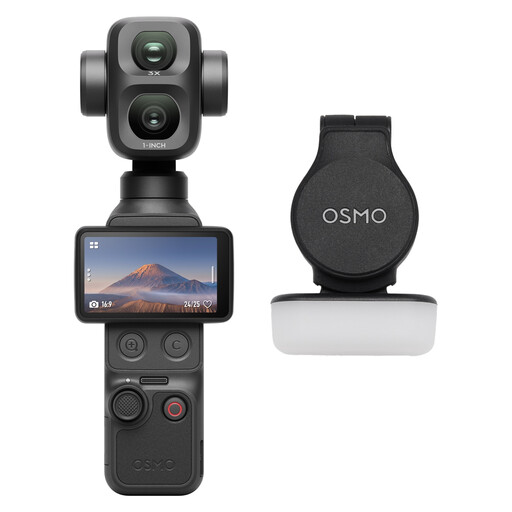
Osmo Pocket 4P Standard Combo in black

Osmo Pocket 4P – Standard Combo, Black

Described as a camera for photography and vlogging. For small petal details, check the close-focusing capability and magnification ratio; for the coastal path, check the protection ratings.

View at Joybuy

DJI Osmo Pocket 4 Standard Combo

DJI Osmo Pocket 4 Standard Combo

The product name lists a 1″ CMOS sensor, 4K/240fps video and 2× lossless zoom. These features don’t replace the need to check the close-focusing capability and magnification ratio for small petal details.

View at Joybuy
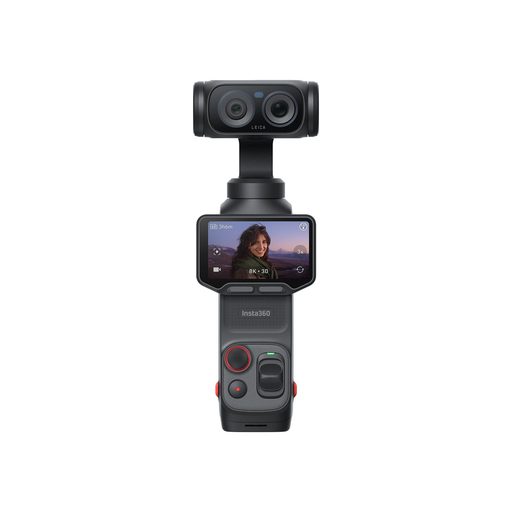
Insta360 Luna Ultra Standard Bundle in Cosmic Black

Insta360 Luna Ultra Standard Bundle, Cosmic Black

The product description lists a telephoto lens for close-ups and up to 6× lossless zoom. Check whether the close-focusing capability and magnification ratio are suitable for the level of petal detail you want.

View at Joybuy
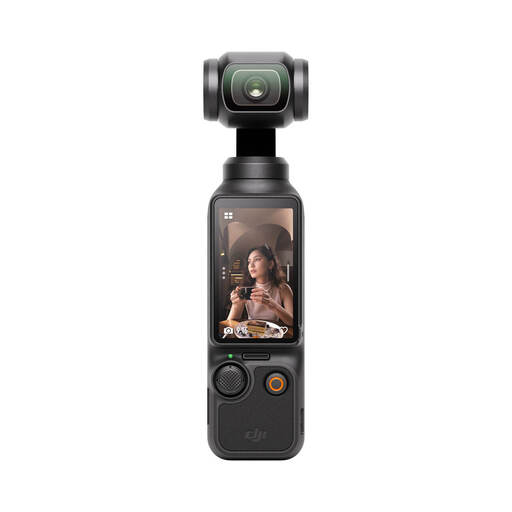
DJI Osmo Pocket 3 vlogging camera

DJI Osmo Pocket 3

The product name lists a 1-inch CMOS sensor and 4K/120fps video. For petal details, check the close-focusing capability and magnification ratio; for the coastal path, check the protection ratings too.

View at Joybuy

Sony Alpha 6100 with APS-C sensor and 16–50 mm power zoom lens

Sony Alpha 6100 APS-C with 16–50 mm Power Zoom

For consumers who want to photograph subjects beyond petals, the product name lists a 16–50 mm power zoom lens. According to the product description, the camera isn’t water-resistant, so don’t use it in damp coastal weather without suitable protection.

View at Joybuy

Frequently asked questions

Do I need a macro lens to photograph fallen petals?

No. You can also look for a camera with a suitable close-up mode. If you want individual details to appear as large as possible in the image, compare the stated magnification ratio; a 1:1 macro lens is one clearly specified option. At high magnifications, depth of field becomes very shallow.

Should I change lenses on a sandy coastal path?

If you can avoid it, wait until you’re somewhere clean before changing lenses. For interchangeable-lens cameras, Sony recommends switching the camera off before changing lenses, keeping the time with the camera open to a minimum and avoiding lens changes in dusty environments wherever possible.

Who should I contact in Germany if a product develops a fault after purchase?

If an item is faulty, the seller is generally responsible for your statutory rights under the legal guarantee; this isn’t automatically the camera manufacturer. The Verbraucherzentrale states that new goods generally come with two years of statutory rights. A voluntary warranty is separate.

Can I leave the path or alter plants to take a photo in a nature reserve?

There’s no general answer without knowing the rules for the specific area. Under Section 23 of the Federal Nature Conservation Act, activities that could damage or alter a nature reserve, or cause lasting disturbance, are subject to more detailed regulations. Section 39 covers removing or using wild plants without reasonable cause. So check the designated paths and local conservation rules at your chosen location.