
Lieferung heute & morgen

Qualitätsgarantie

Willkommens-Angebote freischalten: KOSTENLOSE Lieferung | Bis zu 80 % RABATT | Kostenlose 30-Tage-JoyPlus-Testphase
App herunterladen
A good compartment lunch box is the foundation for a perfect lunch on the go. Whether for professionals, students, or meal preppers, the right container keeps meals fresh, separate, and secure. But the market is flooded with products whose marketing claims often don't hold up in practice. Many buyers only discover after a few weeks that their new lunch box leaks, stains, or has an impractical layout for their needs.
This guide reveals the three most common pitfalls when buying and explains which objective criteria you need to consider to make an informed decision.
Before you buy a bento box, you should be aware of the typical problems that often only become apparent with everyday use.
To avoid the problems mentioned, you should base your choice on objective technical features. Pay attention to the following three core parameters.
The material is crucial for durability, safety, and functionality.
The lock is the weak point of many budget models. A reliable mechanism is essential to transport the contents securely in your bag.
Additional features can significantly enhance everyday usability.
Here are some models that are suitable for specific user profiles based on their objective features.
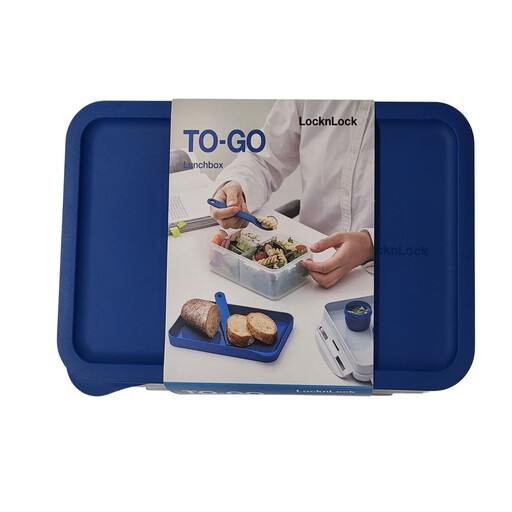
Why This Fits Their Persona: Ideal for users who need maximum flexibility for their meal prep routine. The combination of removable compartments, a complete cutlery set, and a separate sauce container allows for the preparation of diverse dishes, from salads to complex meals.
Solves the problem of an inflexible compartment layout with three completely removable inserts. Users can use the box with one, two, three, or no compartments at all, adapting it to any meal.
The patented four-sided locking system with a silicone seal ensures a high degree of leak protection. According to the manufacturer, the set is microwave-safe (without lid), freezer-safe, and dishwasher-safe.
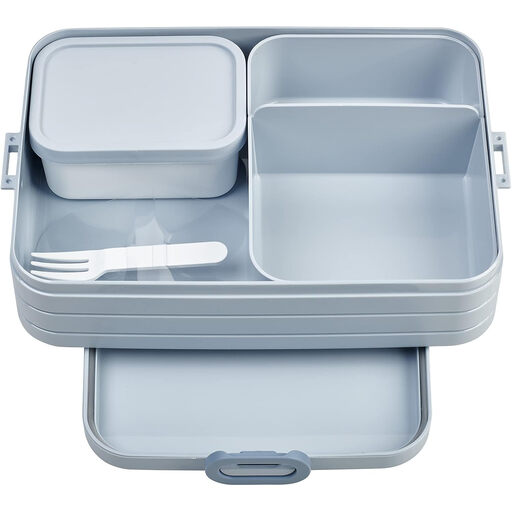
Why This Fits Their Persona: Suitable for professionals and students looking for a robust and straightforward solution for their daily lunch. Its large 1.5-litre capacity and simple handling make it a reliable companion.
Prevents the problem of material fatigue. The robust design and high-quality material (PP, TPE, ABS) are built for durability. The box is dishwasher-safe, and according to the manufacturer Mepal, the bento inserts are microwave-safe.
Offers two separate compartments plus an additional box with a fork. The division is clearly defined, preventing dry and wet foods from mixing. Made in the Netherlands.
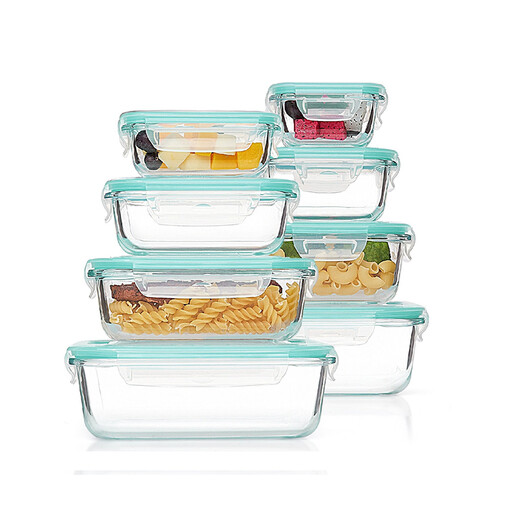
Why This Fits Their Persona: Perfect for users who prioritise material purity and are looking for a solution for both storage and transport. The set of eight containers in various sizes covers all needs, from small snacks to large meals.
Completely bypasses the problem of material fatigue and staining. High-borosilicate glass is extremely temperature-resistant, does not absorb odours or stains, and contains no plastics in the food-contact area.
The set offers great versatility for all meal preparation. The containers are suitable for the microwave, oven (without lid), freezer, and dishwasher. The lids provide a tight seal for transport.
We have compiled a complete, up-to-date list of products that fully meet these strict selection criteria and all relevant safety regulations.
Most high-quality lunch boxes are dishwasher-safe. For a thorough cleaning, it is recommended to place removable seals and inserts separately in the top rack of the dishwasher. When hand-washing, use a soft brush to reach corners and gasket grooves where food residue can accumulate. Allow all parts to air-dry completely before reassembling the box.
No, not necessarily. BPA-free refers to the absence of the chemical Bisphenol A in the plastic. Suitability for the microwave depends on the heat resistance of the specific material. Always check the manufacturer's specifications. As a rule, the lid must be removed before heating, as the steam pressure could cause it to warp or damage the seal.
This means that the main seal in the lid prevents liquids from escaping the box, for example, into your bag. However, it does not mean that the internal dividers are also sealed. So, if you put soup in one compartment and crackers in another, the soup will likely spill over onto the crackers. To transport both liquid and dry components in one box, you need a model that is explicitly labelled as "leak-proof between compartments".