
Lieferung heute & morgen

Qualitätsgarantie

Willkommens-Angebote freischalten: KOSTENLOSE Lieferung | Bis zu 80 % RABATT | Kostenlose 30-Tage-JoyPlus-Testphase
App herunterladen
A compartment lunch box should keep food separate, sit securely in your rucksack and be easy to clean. But in practice, the differences often only become clear after a few uses: liquids leak, seals absorb odours or the compartments are too small for the portions you want to pack.
This buying guide helps professionals, school pupils, students, parents and outdoor enthusiasts choose the right compartment lunch box, based on product features they can check for themselves.
The term leakproof lunch box is only meaningful if the lid, seal and fastenings work well together. Many models are suitable for dry foods, but that doesn’t automatically mean they’re suitable for soup or very runny sauces. Even an airtight lunch box should be carried upright when it contains liquids, if the manufacturer recommends this.
Look for:
Fixed dividers keep food separate, but limit how you can divide up portions. Removable inserts offer more flexibility, but need extra cleaning. With a bento lunch box, it’s also worth checking whether the inner containers can be removed individually and how much capacity each compartment actually offers.
“Microwave-safe” usually doesn’t mean you can heat the entire box with the lid on. Often, you’ll need to remove the lid or open a steam vent. Similarly, “dishwasher-safe” may only apply to the top rack. So it’s only worth buying a dishwasher-safe lunch box if you’ve checked which components the guidance applies to.
For plastic models, the product description should clearly state the material. According to the product information, several of the models featured here are made from BPA-free polypropylene (PP). This is a verifiable material specification, but it doesn’t replace the need to follow the full instructions for use.
According to the product information, the PURECOOK models are made from 304 stainless steel. Their interiors are uncoated. However, the lids, seals and fastenings are made from other materials, so they should be cleaned separately and checked for wear.
For a single meal, around 800 to 1,200 ml is often enough, while salads with toppings may need more room. It’s not just the total capacity that matters, but how useful the space is:
A salad box with a dressing container stops the dressing from making your salad soggy during the journey. For meal prep, several containers in different sizes can be more practical than one large box.
A meal prep box with seals or inserts should be easy to take apart completely. Any moisture left beneath the sealing ring can encourage odours. Allow hot food to cool before closing the box, unless the manufacturer’s instructions say otherwise.
For microwave use, remove the lid unless the product information specifically allows you to use it another way. When freezing, leave some space for liquids to expand. Damaged, cracked or badly warped components shouldn’t be used for everyday storage.
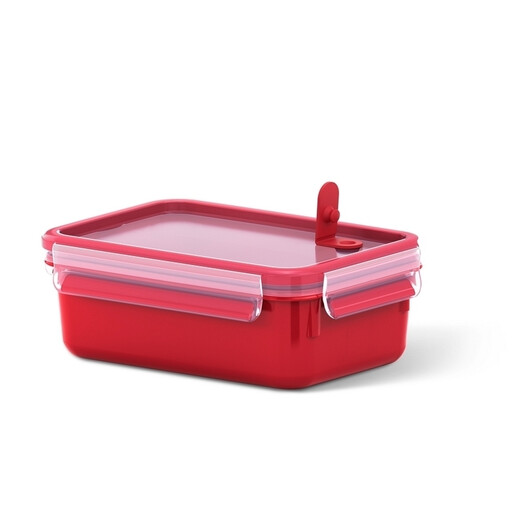
Why it suits this profile: This 0.8-litre box is designed for compact meals at the office, school or on the go. Product information also covers microwave, freezer and dishwasher use.
According to the product information, it has a leakproof lid and an integrated steam vent. The vent must be open before heating.
0.8-litre capacity, BPA-free material according to the product information, and suitable for use in the microwave, freezer and dishwasher.
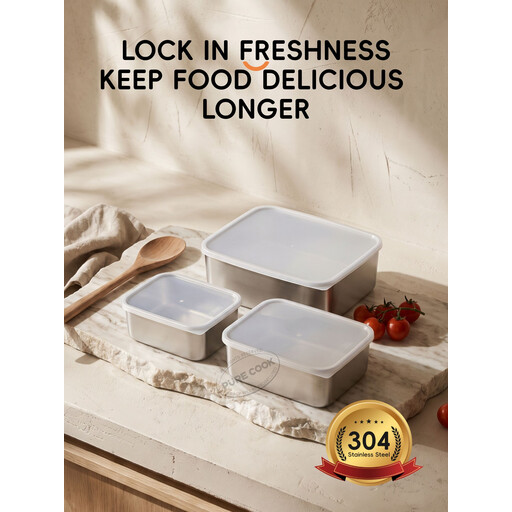
Why it suits this profile: This set includes three sizes – 1,000, 1,800 and 3,000 ml – for planned food storage, leftovers and meal prep portions of different sizes.
The product information specifies a PE lid with a silicone seal. Containers holding liquid food should be carried upright.
304 stainless steel body, three capacities, stackable rectangular design, and suitable for the fridge, freezer and dishwasher according to the product information.

Why it suits this profile: Three removable compartments, a cutlery set and a sauce container make this a practical choice for work, school, day trips and regular meal prep.
The dividers are removable and, according to the product information, the box has a four-sided locking system and a silicone seal. Liquid foods should still be sealed properly and carried upright.
1.2 litres, BPA-free PP according to the product information, cutlery and a sauce container included, and suitable for the microwave without the lid, freezer and dishwasher.
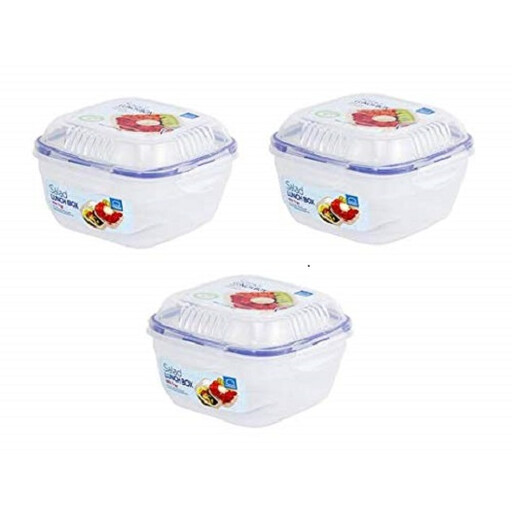
Why it suits this profile: Three containers of the same size, each with a toppings insert and dressing pot, make it easy to prepare several salads or meals.
According to the product information, the toppings and dressing stay separate from the salad. The lid is secured with four clip fastenings.
Three 950 ml containers, BPA-free plastic according to the product information, stackable design and dishwasher-safe.
We’ve put together a complete, regularly updated list of products that meet these strict selection criteria and fully comply with the safety regulations in force in the EU.
A leakproof lunch box needs a well-fitting lid, an intact seal and secure fastenings. For soup and very runny foods, you should also check the manufacturer’s guidance and carry the box upright. So always consider “leakproof” in the context of how you plan to use the box.
It depends on the model. Often, only the container is microwave-safe, and the lid must be removed. Some boxes require you to open a steam vent. The product description and instructions take priority; don’t heat a lunch box with the lid closed unless the manufacturer explicitly says you can.
For smaller snacks, 0.8 to 1.0 litres is often enough. A main meal with sides will often need 1.2 to 1.5 litres. If you want to carry salad, toppings and dressing separately, check the size of the individual inserts as well as the total capacity.