
Lieferung heute & morgen

Qualitätsgarantie

Willkommens-Angebote freischalten: KOSTENLOSE Lieferung | Bis zu 80 % RABATT | Kostenlose 30-Tage-JoyPlus-Testphase
App herunterladen
Lunchboxes with compartments are designed to keep meals neatly separated, stay sealed on the go, and be easy to clean. In practice, however, problems often arise not from the capacity, but from unclear information about closures, dividers, or suitability for the microwave and freezer.
For adults in the office, school pupils, parents, and meal-prep users, it is therefore worth taking a closer look at the construction. A suitable bento lunchbox can keep hot meals, side dishes, and snacks separate. A compartment lunchbox, on the other hand, is often more compact and designed for dry foods. Both product types meet different needs.
A leak-proof lunchbox may feature a continuous silicone seal and several locking points. However, this does not necessarily mean that each individual inner compartment is separately sealed. With removable inserts, you should check whether liquids can escape between the compartments.
For salad dressings, sauces, or yoghurt, a tightly sealing lid and a separate sauce pot are usually more practical than just a visible divider.
Several small chambers are helpful for snacks and side dishes. However, for large sandwiches, pasta salads, or a full meal, they can restrict the available space. So pay attention not only to the number of compartments, but also to their shape and the overall size.
A nominal volume of 950 ml or 1,000 ml is also not the same as the actually usable area of each compartment.
With many plastic boxes, the rule is: microwave use only without the lid. Some models must also not be used in the oven, on the hob, or directly on a heat source. Glass containers can be dishwasher-safe, but are heavier and, depending on the manufacturer's instructions, not intended for every temperature change.
The specific instructions for each product are therefore more important than general advertising claims.
First, think about which meals you regularly transport:
Removable inserts offer flexibility. Fixed integrated dividers, on the other hand, require fewer individual parts and can make daily packing simpler.
For a leak-proof lunchbox, these features are particularly relevant:
A single closure may be sufficient for dry snacks. For liquid foods, additional locking points and a well-fitting seal are more sensible. The terms "airtight" or "leak-proof" should always be considered in relation to the specific construction.
A BPA-free lunchbox made from polypropylene is often lightweight and suitable for everyday use. The selected LocknLock models are stated to be made from BPA-free polypropylene. Stainless steel is robust and odour-resistant, but can be heavier and is not automatically suitable for the microwave. Borosilicate glass is transparent and dishwasher-safe, but comes with a higher weight.
Check before buying:
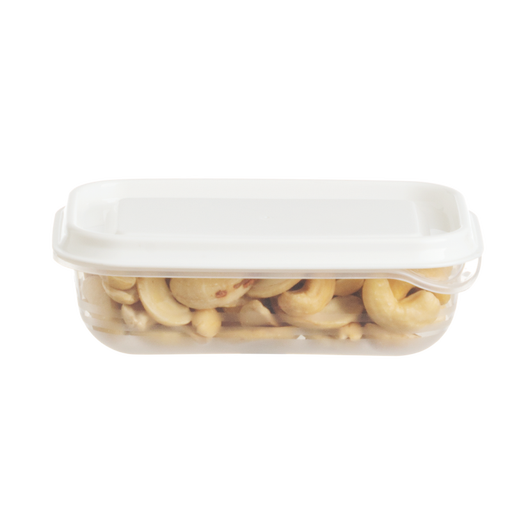
Why this product fits the profile: The set contains six reusable containers and is suitable for pre-prepared portions, leftovers, and organisation in the kitchen.
Several individual containers prevent a fixed divided layout from becoming impractical for different portion sizes.
Six-piece set, reusable, stackable and, according to the product description, equipped with tightly sealing lids.
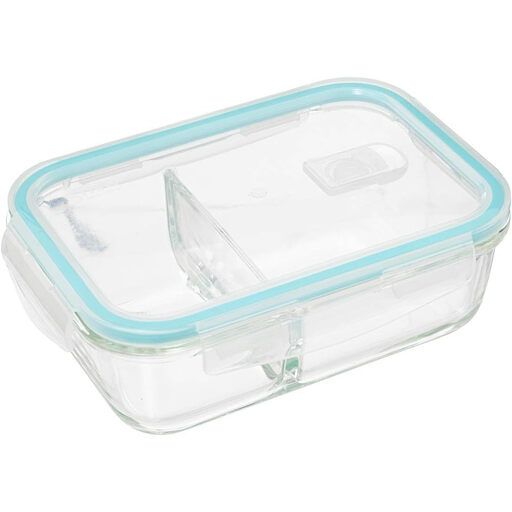
Why this product fits the profile: The borosilicate glass container is interesting for users who prefer a transparent food storage box with separate areas.
The glass makes the contents visible and the removable divider makes it easier to adapt to different foods.
Borosilicate glass, silicone seal, dimensions of 21.5 × 15.3 × 7.5 cm and, according to the product information, dishwasher-safe.
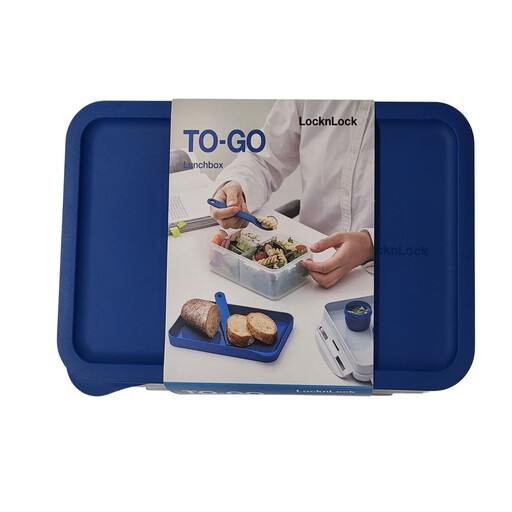
Why this product fits the profile: The box is aimed at professionals, school pupils, and travellers who want to transport separate foods, cutlery, and a sauce pot in one product.
Three removable compartments and a four-sided closure address the common problems of mixed foods and unclear sealing.
1.0 l total volume, cutlery and sauce pot included; according to the product information, dishwasher-safe, freezer-safe and microwave-safe, in the microwave without the lid.
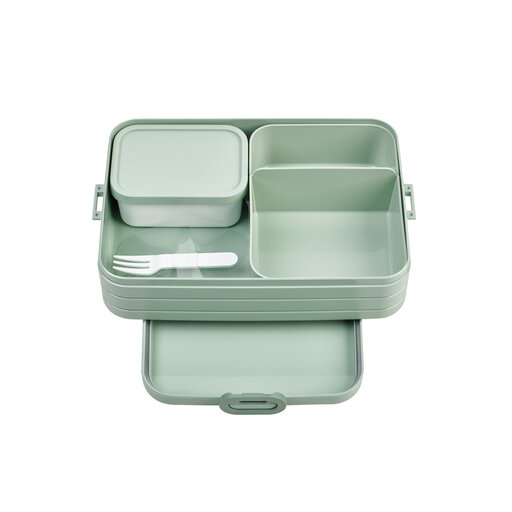
Why this product fits the profile: The 1.5 l bento lunchbox is designed for larger portions and combining different foods.
Two separate areas and an additional box with a fork help to transport the main course and side dishes separately.
1.5 l capacity, removable bento boxes, fork in the additional container and, according to the product information, dishwasher-safe and BPA-free.
We have put together a complete, regularly updated list of products that fully meet these strict selection criteria and the safety regulations in force in the EU.
Even a high-quality food storage box will only remain functional if the seal and closures are looked after. Clean the box as soon as possible after use and dry all individual parts completely before storing them closed.
With lunchboxes that include cutlery, also check small gaps and the underside of the seal. Damaged lids, cracks, or heavily deformed seals can affect the seal. When using the microwave, the lid and any inserts must be removed according to the manufacturer's instructions.
That depends on the seal and the construction of the inner compartments. For soups, sauces, or dressings, models with stated leak-proofing and a separate sauce pot are more practical. A simple divider does not automatically provide a liquid-tight seal.
For smaller meals and snacks, around 600 to 900 ml may be sufficient. For a full lunch, many models are between 1.0 and 1.5 l. What matters are portion size, bag format, and whether drinks and cutlery are transported separately.
A fixed lifespan cannot be given in general terms. It depends on the material, closure system, cleaning, and daily wear and tear. Check seals and clips regularly and replace the box if there are cracks, sharp edges, or persistent distortion.