
Lieferung heute & morgen

Qualitätsgarantie

Willkommens-Angebote freischalten: KOSTENLOSE Lieferung | Bis zu 80 % RABATT | Kostenlose 30-Tage-JoyPlus-Testphase
App herunterladen
A compartment lunch box should keep food separate, seal securely and be easy to use day to day. That sounds straightforward for workers, school pupils, students and families. In practice, though, unclear product details, seals that are difficult to clean and unsuitable materials can all lead to disappointing purchases.
To keep salad, sides, fruit and sauce separate until lunchtime, it’s worth taking a closer look at the design, capacity and care instructions. The criteria below can help you distinguish marketing claims from features that genuinely matter.
The term leakproof lunch box is only meaningful when the lid, fastenings and seal work together. Removable inserts may keep foods separate, but they don’t automatically stop liquid leaking between compartments or around the lid.
Look for:
Even an airtight lunch box needs to be closed properly and checked for damage before you take it with you. Soups and very runny foods often need a container designed specifically for them.
A 1-litre bento box offers enough space for many working days, provided the compartments suit your meal. For example, three equal-sized sections work well for a main, a side and a snack. If you often take salad with dressing, however, you’ll need a separate sauce compartment or a removable sauce pot.
When choosing, don’t just look at the total capacity. You should also consider:
‘Microwave-safe’ doesn’t mean you can heat the lunch box with the lid closed. With several models, the lid must be removed completely or a steam valve opened. What’s more, a stated range of -20 °C to 120 °C refers to the intended temperature limits; it doesn’t mean the box is suitable for an oven, hob or direct heat.
A dishwasher-safe lunch box should generally be cleaned in the top rack, according to the manufacturer’s instructions. Check seals and removable compartments separately, and dry them thoroughly before putting the box back together.
A BPA-free lunch box made from polypropylene, or PP, is lightweight and suitable for many everyday situations. With stainless steel products, the focus is often on a sturdy outer construction. What matters is whether the manufacturer says the specific model is suitable for food contact, and which parts are made from plastic or silicone.
When checking the product details, look for:
These details can vary by product. Don’t assume that information for one product in a range applies to every model.
A four-sided fastening spreads pressure more evenly than a single clip. This can be especially useful for a lunch box you take to work or school in a rucksack. Even so, whether it’s leakproof depends on the seal being fitted correctly and the lid being in good condition.
Before first use, it’s worth doing a simple water test. Part-fill the container, close it and carefully tip it over the sink. This doesn’t replace the manufacturer’s guidance, but it can help you spot obvious assembly problems.
A microwave-safe lunch box should only be used as directed in the instructions. For the plastic models listed below, remove the lid before heating. If the container has a valve, open it. Leave room for food to expand when freezing.
Also check:

Why it suits this type of user: With a total capacity of 950 ml, a removable three-section insert, plus a knife, fork, spoon and sauce pot, this box is handy for work, school or days out.
The product description clearly lists the removable compartments, four-sided fastening and separate sauce pot. This makes it easier to assess the layout before you buy.
BPA-free PP, a temperature range of -20 °C to 120 °C, and, according to the product details, suitability for the freezer, microwave without the lid and dishwasher.
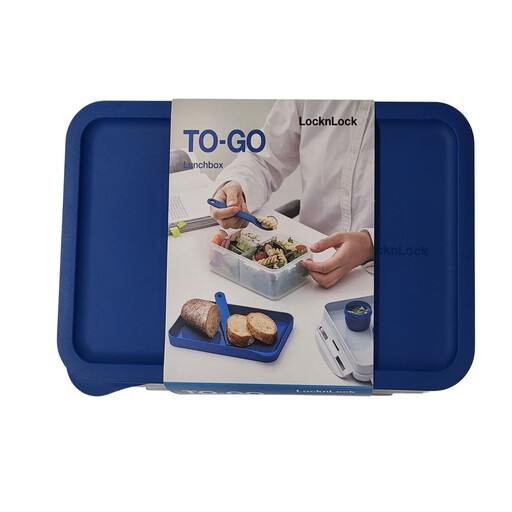
Why it suits this type of user: Three removable compartments, a cutlery set and a sauce pot make meal prep easier to plan, with a capacity of 1,000 ml.
The product details clearly specify the material, temperature limits and restrictions: microwave use without the lid only, and no use in an oven or on a hob. This helps prevent misuse based on vague ‘heat-resistant’ claims.
BPA-free polypropylene, four-sided fastening, a 1-litre capacity and, according to the product description, suitability for the freezer, microwave without the lid and dishwasher.
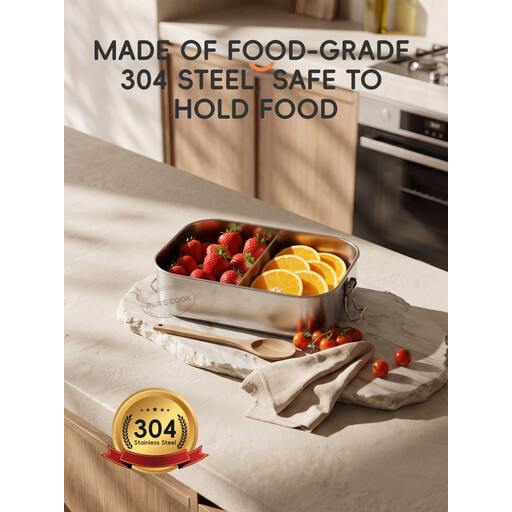
Why it suits this type of user: With two sections and a rectangular stainless steel design, this box is aimed at anyone looking for a durable, reusable option for work, travel and meal prep.
The design features a removable silicone seal and locking clips. Before buying, it’s still worth checking that the size and compartment layout suit your everyday meals.
The product name specifies 304 stainless steel, two separate sections, clips and a removable silicone seal. It’s also listed as suitable for the dishwasher.
We’ve put together a complete, regularly updated list of products that meet these strict selection criteria and fully comply with the safety regulations in force in the EU.
To help your compartment lunch box last as long as possible, remove and clean the seal regularly. Otherwise, residue from oil, tomato sauce or dairy products can build up in the grooves. Avoid abrasive sponges if the manufacturer advises against using them.
Check the following before each use:
Take care when removing hot food after microwaving. Even if a box is labelled microwave-safe, both the food and the container can become very hot.
For a main meal and a snack, around 750 to 1,000 ml is often enough. The compartment layout matters too, though. A total capacity of one litre isn’t always divided evenly between the sections.
No. ‘Leakproof’ refers to the uses specified by the manufacturer. Check whether liquids are explicitly mentioned, and carry out a careful leak test before taking it out for the first time. For very runny foods, a separate container with a secure seal may be more suitable.
Its lifespan depends on the material, how often you use it, how it’s cleaned and how you handle it. There’s no reliable one-size-fits-all timeframe. If the seal, lid or fastenings are damaged, stop using the box to carry liquid foods.