
Lieferung heute & morgen

Qualitätsgarantie

Willkommens-Angebote freischalten: KOSTENLOSE Lieferung | Bis zu 80 % RABATT | Kostenlose 30-Tage-JoyPlus-Testphase
App herunterladen
Getting the first set of essentials for a baby is an exciting time, but it can quickly become overwhelming. Especially when choosing a sleeping space, parents-to-be face a plethora of options. A complete co-sleeper set promises a practical all-in-one solution, but not every offer delivers on its promise. Certain design flaws or misleading product descriptions can lead to disappointment and unnecessary follow-up costs.
As your Joybuy Product Recommendation Officer, I'll help you identify the crucial features and avoid common pitfalls.
The 3 most common pitfalls when buying a co-sleeper:
To make an informed decision, you should focus on objective, verifiable criteria rather than marketing promises.
Ensure the cot meets the current European safety standard EN 1130:2019. This standard sets specific requirements for cribs and cradles, including:
A good height-adjustable baby cot must allow for precise alignment with the height of your mattress. Before buying, measure the height from your floor to the top edge of your mattress. Compare this measurement with the co-sleeper's adjustment range.
A true co-sleeper with mattress and accessories should include everything necessary in good quality right from the start.
Based on these objective criteria, we have identified some models that are suitable for different requirements and budgets.
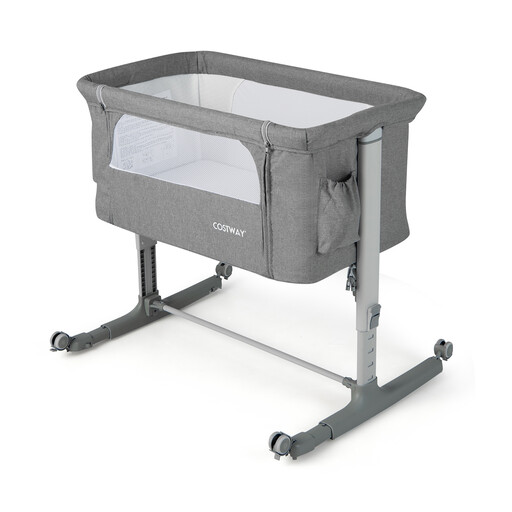
Why this model is a good fit: This model focuses on the core functions of a co-sleeper at an accessible price point. It offers flexibility for the first few months and is ideal for parents seeking a functional, safe, and straightforward solution without a high initial cost.
It bypasses the "complete set" illusion, as the mattress, fastening straps, and even a travel bag are already included. The 5-level height adjustment provides a solid basis for adapting to common bed heights.
3-in-1 function (co-sleeper, cradle, bassinet). Includes lockable wheels for mobility and side mesh panels for good air circulation.
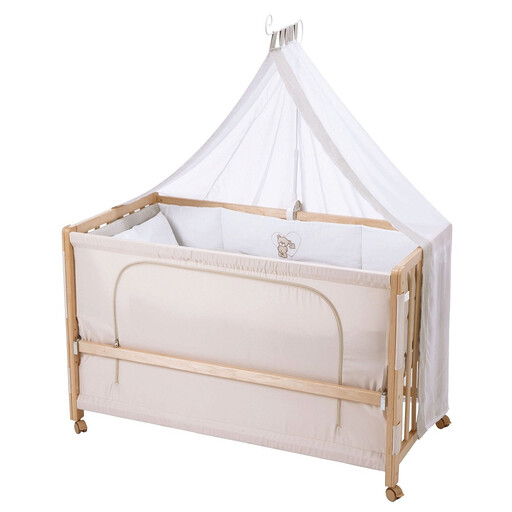
Why this model is a good fit: For parents looking for a long-term investment. Thanks to its generous 60x120 cm sleeping surface and its convertibility into a toddler bed, this model accompanies the family beyond the first few months, eliminating the need to buy a follow-up bed.
It's a true all-in-one package that includes the mattress, bedding, canopy, and even the side rail for converting it into a toddler bed. This avoids hidden follow-up costs and makes it a genuine convertible baby cot.
6-level height adjustment for precise adaptation. The fabric side with a zip allows for easy access to the child. Includes braking castors for mobile and safe use.
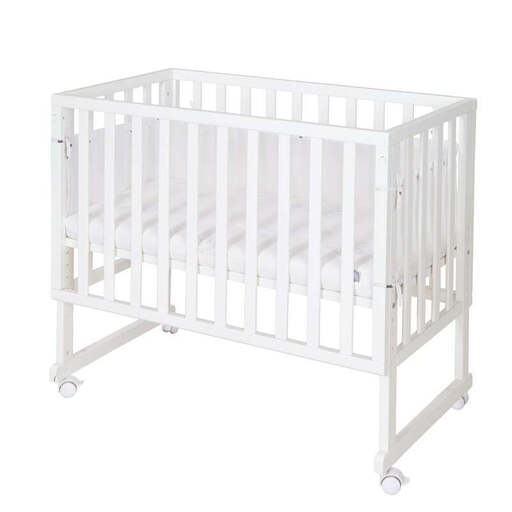
Why this model is a good fit: This cot was developed with a clear focus on safety and sleep comfort. It is the right choice for parents for whom certified safety, an optimal sleep environment, and high-quality materials are the top priority.
It directly addresses the safety pitfall by explicitly complying with the EN 1130:2019 standard and featuring a patented fabric barrier. The 7-level height adjustment minimises the risk of an incompatible fit.
Includes a breathable 'safe asleep' mattress with air-circulating channels. A surrounding mesh panel ensures optimal ventilation and visibility. Convertible to a bench.
We have compiled a complete, up-to-date list of products that fully meet these strict selection criteria and German safety regulations.
The sleeping surface of the co-sleeper should be adjustable to the exact same height as the top edge of the parents' mattress. There should be no step up or down. Therefore, before buying, measure the height of your mattress and ensure this value is within the co-sleeper's adjustment range.
The period of use depends on the model. Smaller co-sleepers (e.g., 45x90 cm) are typically suitable up to the age of about 6-12 months, or until the child starts to pull themselves up. A convertible baby cot with a 60x120 cm sleeping surface can often be used as a toddler bed or junior bed up to the age of 4-5 years.
Yes, as long as it is a high-quality model. Make sure that all wheels have a locking brake. These brakes must always be engaged when the cot is attached to the parents' bed or standing freely in the room. The overall construction of the cot must be stable and tip-proof, which is ensured by compliance with the EN 1130:2019 standard.