
Lieferung heute & morgen

Qualitätsgarantie

Willkommens-Angebote freischalten: KOSTENLOSE Lieferung | Bis zu 80 % RABATT | Kostenlose 30-Tage-JoyPlus-Testphase
App herunterladen
Compostable sugarcane disposable plates are a practical option when you need to serve a large number of people at a celebration and want to keep washing-up to a minimum afterwards. Bagasse plates are especially popular for this purpose. Bagasse is the fibrous material left over from sugarcane processing, which can be moulded into plates or bowls.
However, the product name alone does not tell you whether a plate is suitable for every menu. If you focus only on terms such as “biodegradable” or “sustainable”, you can easily overlook important details such as diameter, compartment layout, grease resistance and permitted disposal methods.
The terms biodegradable, compostable and “made from plant fibres” are sometimes used differently by retailers. A plate may be described as biodegradable without being intended for home composting. The manufacturer’s information, local disposal regulations and any relevant certification are what matter.
Before buying, check the following:
A pack of 50 may make sense for a barbecue with 20 people. For a small household or a picnic with just a few guests, however, a bulk pack can leave you with an unnecessary surplus. So compare the price per plate, not just the total price.
Plate size also affects how many you need: disposable plates measuring 23 cm are generally suitable for main courses, while 15 cm plates are better suited to cake, fruit or side dishes.
Grease-resistant plates are useful for barbecued food, salads with dressing and hot meals. Even so, you should distinguish between oil and water resistance, structural stability and protection against leaks. For very runny foods, a plate without a raised rim or separate compartments may still be unsuitable.
For catering and takeaway use, it is also worth checking whether the plates are stackable and confirming their exact dimensions. This makes transport, serving and storage easier.
Sugarcane fibres and bamboo fibres are among the plant-based materials commonly used for disposable tableware. The overall environmental impact depends on factors including production, transport, use and disposal. “Sustainable party tableware” is therefore not a single technical standard.
Look for:
A 23 cm disposable plate provides enough space for typical main courses, side dishes and barbecued food. For children’s portions, desserts or small snacks, a smaller plate may be more practical. Three-compartment models can separate meat, side dishes and salad, for example. This helps prevent foods from mixing and is useful for buffets and catering.
You should also check whether the rim is raised before buying. A flat plate may save space, but it can be less suitable for sauces or runny side dishes.
Not every paper plate or bagasse plate is suitable for use in a microwave. The term microwave-safe paper plates should only be used when the manufacturer explicitly confirms this. Even with suitable products, you must follow the relevant usage instructions, including maximum heating times and guidance for very hot or particularly greasy foods.
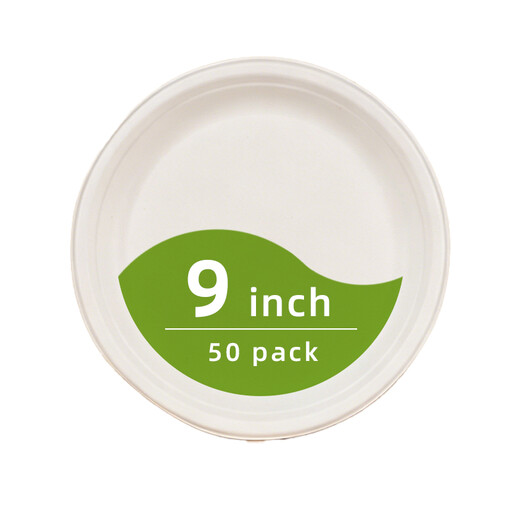
Why this product suits this profile: The 50-pack with a diameter of 23 cm is designed for birthdays, barbecues and private celebrations with several guests. According to the product description, it is suitable for hot and cold food.
The specific size and quantity make it easier to plan how many you need. The product description mentions sugarcane or bagasse and use for picnics, birthdays and barbecues.
23 cm diameter; 50 plates per pack; described as suitable for hot and cold food.
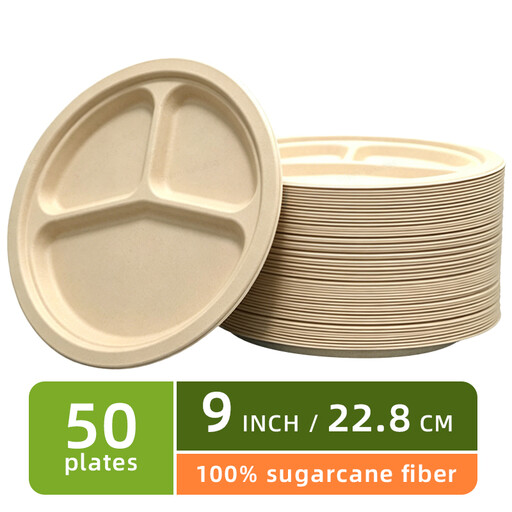
Why this product suits this profile: The disposable plates have 3 compartments for keeping portions separate, making them practical for buffets, family celebrations or serving meals with several components.
The compartments prevent different foods from being placed directly together. The product name also specifies 23 cm, 50 pieces and oil resistance.
Three compartments; 50-pack; described as being made from compostable bagasse and suitable for catering.
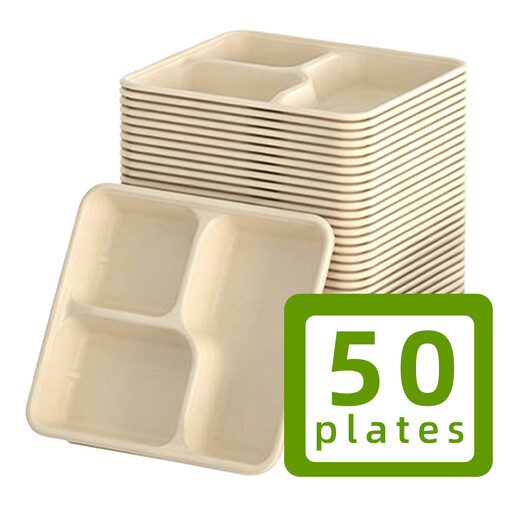
Why this product suits this profile: Measuring 21.6 x 23.7 cm, these three-compartment plates are suitable for catering, buffets, takeaway and meals with several components.
The exact dimensions help prevent confusion with smaller dessert plates. The compartments support separate serving of the main course, side dish and salad.
50 pieces; three compartments; described as being made from sugarcane fibres and intended for catering, buffets and takeaway.
We have put together a complete, regularly updated list of products that fully meet these strict selection criteria and the safety regulations applicable in the EU.
Many bagasse plates are marketed for hot and cold food. However, the information provided for the individual product is what matters. For soups, very runny sauces or particularly hot food, the plate should have a raised rim and clearly stated resistance to liquids.
Only if the manufacturer explicitly states that they are microwave-safe. This information is not available for every model listed here. Plates without a corresponding indication should therefore not be used for heating food in the microwave.
As disposable tableware, they are designed for a single meal. Their actual stability depends on the weight, temperature, moisture and fat content of the food. For longer use or repeated washing, reusable melamine or plastic plates are a different product category.