
Lieferung heute & morgen

Qualitätsgarantie

Willkommens-Angebote freischalten: KOSTENLOSE Lieferung | Bis zu 80 % RABATT | Kostenlose 30-Tage-JoyPlus-Testphase
App herunterladen
A mobile compressor cool box 12V 24V can offer far more flexibility on the road than a passive cool box with ice packs. However, it requires more careful selection: connections, ventilation, capacity and battery consumption all determine whether the portable fridge will fit reliably into your travel routine in a car, motorhome, boat or lorry.
Many poor purchases happen not because of cooling performance alone, but because of three typical marketing pitfalls:
Three types are relevant when choosing a product:
If you need to store food at a specific temperature for many hours or days, compressor technology is usually the more suitable category. For short car journeys, drinks and snacks, a small thermoelectric cool box can be perfectly adequate.
The external dimensions of a cool box tell you little about the usable interior space. So check:
A single cooling zone is fine for uniform temperatures. Two independently usable zones can be useful if you want to chill drinks while freezing food at the same time. With larger models, also consider weight, carrying handles and the footprint.
A range such as -20 °C to +20 °C describes the settings the unit can be adjusted to, not necessarily the temperature it can maintain in every situation. Look for:
A cool box must not be placed directly next to a heat source or in direct sunlight. Many units require a gap around the ventilation. Always follow the instructions in the user manual.
For mobile use, a 12V fridge and 24V fridge should not only have the right plug, but also be compatible with your vehicle. Lorries, some motorhomes and boats use 24V systems; cars mostly use 12V.
Useful features include:
Actual consumption depends on factors such as outside temperature, insulation, how full the box is and how often it is opened. Battery protection reduces the risk of draining your vehicle battery, but does not replace a suitable power supply or a separate leisure battery.
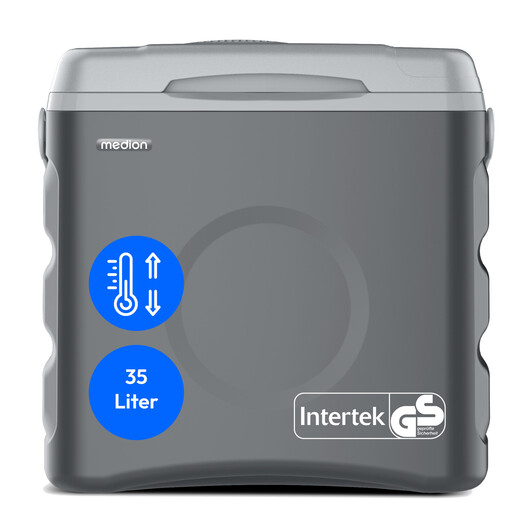
Why this product fits the profile: The 35-litre cool box is designed for day trips, car journeys and occasional camping, and offers both cooling and keep-warm functions.
The cooling technology and temperature range are clearly stated as thermoelectric and without a freezer compartment. This prevents confusion with a compressor cool box.
12V, 230V and 5V USB operation, plus 30 litres net capacity according to product specifications.

Why this product fits the profile: For motorhomes, caravans, boats or longer camping trips, this model offers separate storage compartments and 12/24V and 240V connections.
The product specifications state a temperature range of -20 °C to +20 °C, battery protection levels and ECO and MAX modes. This makes checking before purchase much easier.
Dual-zone layout, LCD touch panel, Bluetooth connectivity and a stated noise level of 40 dB.
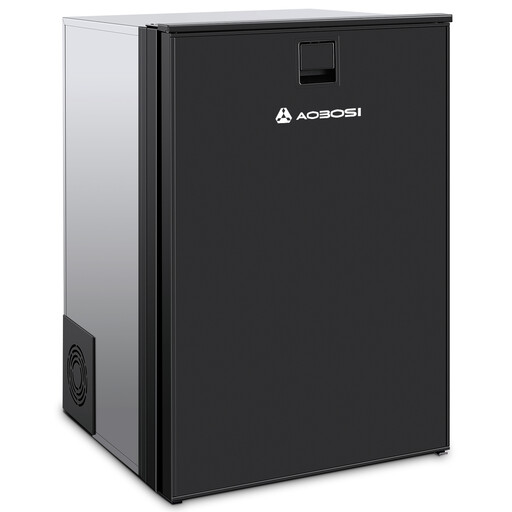
Why this product fits the profile: The large capacity is aimed at families, larger motorhomes, longer trips and users with extensive cooling needs.
The separate zones reduce the need to store different types of food in a single temperature range. Before buying, check the available space and load capacity.
110-litre capacity and dual-zone compressor cooling for camping, caravans, motorhomes and boats.
We have put together a full, regularly updated list of products that fully meet these strict selection criteria and the safety regulations in force in the EU.
Yes, provided the unit, cables and vehicle socket are designed for it. Check the input voltage specifications and activate battery protection. For longer stationary periods, a separate leisure battery or power station is often more sensible than using the starter battery.
The noise level depends on the model and operating mode. Product specifications often show values around 40 to 45 dB. Placing the unit on a level surface, ensuring adequate ventilation and a stable base can make operation more pleasant.
There is no one-size-fits-all answer. The key factors are power output, insulation, ambient temperature, running time and the selected mode. A compressor cool box can regulate temperature more precisely; a thermoelectric cool box is often simpler in design and better suited to shorter trips. So compare the stated performance data and the intended use.