
Lieferung heute & morgen

Qualitätsgarantie

Willkommens-Angebote freischalten: KOSTENLOSE Lieferung | Bis zu 80 % RABATT | Kostenlose 30-Tage-JoyPlus-Testphase
App herunterladen
Reliable cooling is essential when traveling, whether you're camping, in an RV, or on long truck journeys. A compressor cooler box promises consistent temperatures down to freezing levels, regardless of the outside temperature. However, the market is flooded with models making grandiose promises. Many buyers only realize after their purchase that the unit fails to meet their expectations. This guide will show you the critical features to look for to make an informed decision.
As a Joybuy Product Recommendation Officer, I analyze product data to provide you with objective, practical advice. My goal is to help you separate technical facts from marketing hype.
Before we dive into the important technical details, let's highlight the most common issues that lead to disappointment.
To avoid the pitfalls mentioned above, you should carefully examine three core technical areas. These determine the performance, reliability, and utility of your mobile cooling solution.
A flexible power supply is crucial. Look for models that can operate on both direct current (DC) and alternating current (AC). A 12V/230V cooler offers maximum flexibility: it can be used in a car, truck, or boat via the 12V/24V socket and at home or at a campsite with a 230V outlet.
Even more important is the 3-stage battery protection. This feature monitors your vehicle's battery voltage and automatically shuts off the cooler before the battery is drained to the point where the engine can no longer start. The three levels (often labeled H, M, L for High, Medium, Low) allow you to adjust it based on your battery's condition and capacity. This is an indispensable feature for anyone who wants to run the cooler unattended in their vehicle.
The compressor is the key differentiator from cheaper thermoelectric boxes. It functions like a conventional refrigerator, allowing it to reach temperatures well below freezing. A high-quality cooler with a freezer function should cover a temperature range of at least +10°C to -20°C.
This not only allows for cooling drinks but also for the safe transport of frozen goods over long distances. Models with a so-called "MAX" mode offer a rapid cooling function, while an "ECO" mode optimizes energy consumption for continuous operation—an important feature for a camping cooler or a truck cooler, which often run for days on end.
The specified usable volume (in liters) is a starting point, but the interior layout is just as important. Check the internal dimensions and see if tall bottles can be transported upright.
Thick, high-quality insulation (e.g., polyurethane foam) is crucial for efficiency. It ensures that the cold stays inside, meaning the compressor has to run less often, which reduces power consumption. Good insulation also keeps the contents cool for several hours even when the unit is off. For use in vehicles, a shock-resistant design (anti-shock) is also advantageous, ensuring reliable operation even on bumpy roads or at an angle (e.g., on a boat).
Here are some recommendations tailored to specific user profiles that meet the criteria mentioned above.
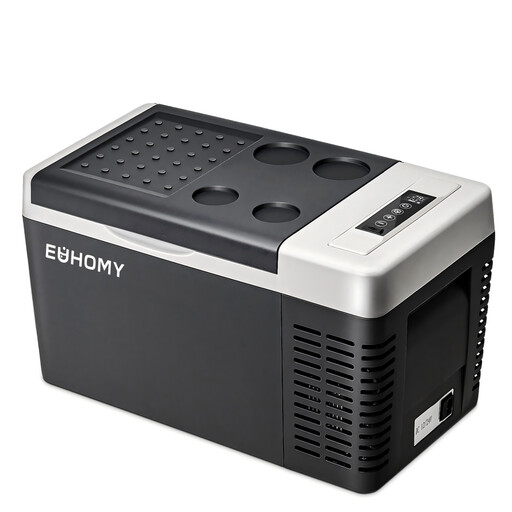
Why This Fits Their Persona: Ideal for those seeking a compact yet powerful solution for the trunk or passenger seat. Perfect for reliably cooling drinks and snacks for a day at the lake or for weekly grocery shopping.
Features a true compressor for temperatures down to -20°C (bypassing the inadequate cooling performance trap) and 3-stage battery protection (preventing a dead car battery).
Very compact design and low power consumption (45W according to the manufacturer). App control offers added convenience for remote monitoring.
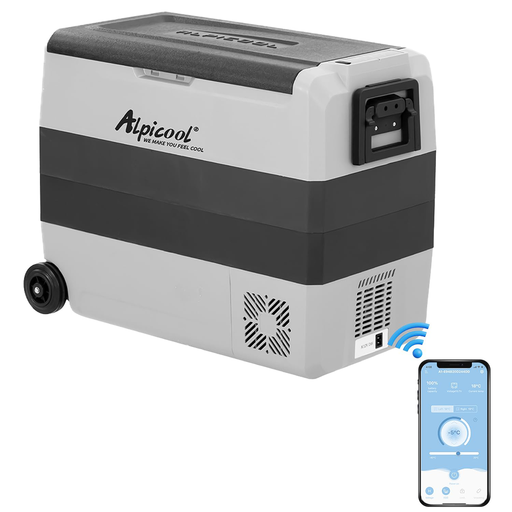
Why This Fits Their Persona: With 60 liters of space, this model offers enough room for a family's weekly groceries on a camping trip. The flexible zone division makes it the perfect all-in-one solution for longer journeys in an RV.
The removable divider allows it to be used as one large single zone or as two separate zones (cooling/freezing). This bypasses the problem of having to choose between a cooling or freezing function.
Large, flexible volume with optional dual-zone control. Sturdy wheels and a retractable handle make it easy to transport the fully loaded box from the vehicle to the campsite.

Why This Fits Their Persona: Designed for continuous use in a vehicle cabin. The combination of good capacity, quiet operation, and energy efficiency makes it a reliable companion for professional drivers on long hauls.
The ECO mode and quiet operation (<45 dB) directly address the needs of users who sleep in their vehicle. The reliable 3-stage battery protection is essential for professional use.
Focuses on energy efficiency and low noise levels. The universal power supply (12/24V DC & 100-240V AC) allows for use in trucks, cars, and at home.
We have compiled a complete, up-to-date list of products that fully meet these strict selection criteria and German safety regulations.
1. What exactly does 3-stage battery protection mean? The 3-stage battery protection is a safety circuit that protects your vehicle's battery from deep discharge. You can usually choose between three levels:
2. How much power does a compressor cooler box consume? Power consumption depends on the size, insulation, set temperature, and ambient temperature. When running, most models draw between 45 and 60 watts. However, since the compressor does not run continuously but only to maintain the temperature, the average consumption is significantly lower. An energy-efficient ECO mode can reduce consumption even further.
3. Can a compressor cooler also be used as a portable freezer? Yes, that is one of its main advantages. Unlike thermoelectric boxes, compressor models can actively cool and easily reach temperatures of -18°C to -20°C. This makes them excellent for use as a portable freezer for transporting ice or frozen food, even on hot days.