
Lieferung heute & morgen

Qualitätsgarantie

Willkommens-Angebote freischalten: KOSTENLOSE Lieferung | Bis zu 80 % RABATT | Kostenlose 30-Tage-JoyPlus-Testphase
App herunterladen
As a Joybuy Product Recommendation Officer, I analyse product data and customer feedback daily. A clear pattern has emerged: when choosing a compressor cooler, the same misunderstandings often lead to frustration and bad purchases. A road trip with lukewarm drinks or a dead car battery in the morning are avoidable annoyances.
This guide focuses on the critical, often-overlooked details. We'll uncover the three most common pitfalls that cost buyers money and show you what really matters when selecting a reliable model for your car, RV, or truck.
Marketing promises often sound tempting, but the devil is in the details. Pay attention to these three points to make an informed decision.
To avoid the pitfalls mentioned above, you should check three core technical aspects. These determine the real-world usability and reliability of your mobile cooling and freezing solution.
The market primarily offers two technologies: thermoelectric and compressor coolers.
A good camping refrigerator must be flexible and safe to operate.
Check two sets of measurements before buying:
Based on the criteria above, we have identified some models that are well-suited for specific usage scenarios.
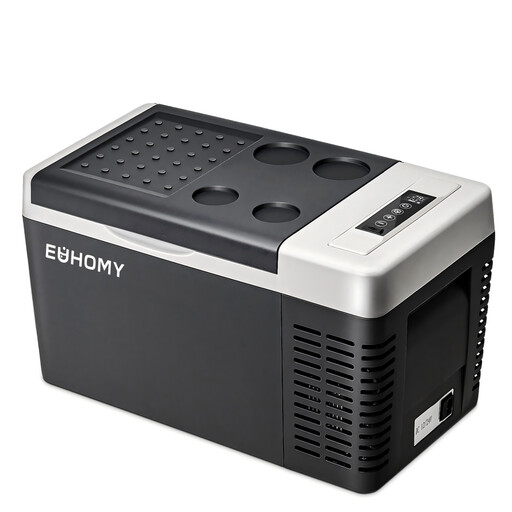
Why This Fits Their Persona: At 18 litres, this cooler is compact enough for a car's boot and ideal for day trips or short camping excursions. It offers true compressor performance for reliably chilled drinks and snacks without taking up much space.
The model features a 3-stage battery monitor, which minimises the risk of a dead car battery—a common problem with cheaper coolers.
Operates on 12/24V DC and 100-240V AC for flexible use in the car and at home. App control offers added convenience.
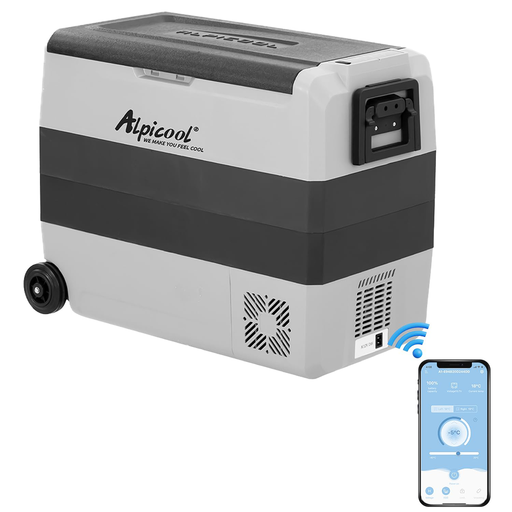
Why This Fits Their Persona: With a 60-litre capacity and wheels, this model is designed for families or extended trips in an RV. It offers enough space for several days' worth of food and drinks.
The removable divider allows you to create two separate temperature zones (cooling/freezing). This avoids the pitfall of an inflexible, large cooling space and maximises its utility.
Large, highly usable volume with dual-zone control. The sturdy wheels and retractable handle make transport significantly easier.

Why This Fits Their Persona: This 40-litre model offers a good compromise between capacity and compact dimensions for a truck cab. Its robust construction is designed for the demanding daily life on the road.
The ability to operate at a tilt of up to 40° ensures it works even on uneven roads or during heavy braking. The reliable battery monitor is essential for professional drivers.
High operational reliability due to tilt tolerance and 3-stage battery protection. The temperature memory function restores the last setting after a power interruption.
We have compiled a complete, up-to-date list of products that fully meet these strict selection criteria and safety standards.
Power consumption depends on the size, insulation, set temperature, and ambient temperature. A typical portable refrigerator with a compressor has a rated power of about 45-60 watts. However, during operation, the compressor doesn't run continuously; it only cycles on to maintain the temperature. On average, consumption is often around 10-20 watts per hour, meaning a 100 Ah battery won't be drained for many hours or even days, especially with the battery monitor active.
Yes, absolutely. Models that come with a 12V/230V adapter are ideal for this. You can use the cooler as an extra fridge for drinks at parties, as a temporary solution if your main refrigerator breaks down, or permanently in a workshop or garden shed.
This depends heavily on the quality of the insulation, the outside temperature, and how full the cooler is. A well-insulated and fully loaded cooler can keep chilled contents cool for several hours (e.g., 6-10 hours). Frozen items will stay frozen for even longer. However, to avoid breaking the cold chain, the power supply should be disconnected as infrequently as possible.