
Lieferung heute & morgen

Qualitätsgarantie

Willkommens-Angebote freischalten: KOSTENLOSE Lieferung | Bis zu 80 % RABATT | Kostenlose 30-Tage-JoyPlus-Testphase
App herunterladen
Reliable on-the-go cooling is essential for many, whether for camping, long road trips, or in a truck. But the market for portable coolers is crowded and confusing. Anyone looking for a compressor cooler often faces a flood of technical specs and marketing promises. The wrong choice doesn't just lead to lukewarm drinks; it can have expensive consequences.
This guide will help you identify the crucial features and avoid common purchasing pitfalls. We focus on the facts so you can make an informed decision.
Before you invest, you should be aware of the three most common problems that arise from ill-considered purchases:
To avoid these problems, you should check three core technical parameters. These determine the performance, safety, and efficiency of your portable cooling solution.
The technology is the most important differentiator.
A flexible power supply is crucial for mobile use.
The size and layout should match your intended use.
Here are a few models tailored to specific use cases that avoid the pitfalls mentioned above.
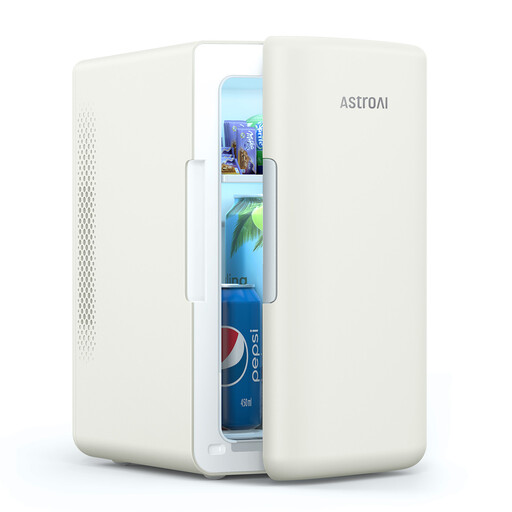
Why This Fits Their Persona: Ideal for commuters, students, or as a cosmetics fridge. Its compact footprint fits perfectly in an office, bedroom, or on the passenger seat. The dual power supply (AC/DC) allows for use at home and in the car.
This model is designed for a clear purpose: cooling drinks or cosmetics in moderate environments. It doesn't promise freezing capabilities and is appropriately sized as a thermoelectric solution for this specific use case.
Compact Design: With a 6-litre capacity, it's ideal for personal use.
Heating Function: Can also keep food warm, which increases its flexibility.
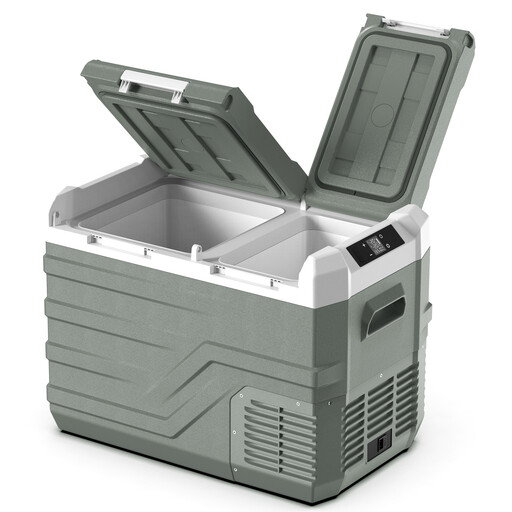
Why This Fits Their Persona: A solid all-rounder for weekend getaways and holiday trips. The compressor technology ensures reliable cooling down to -20°C, while the dual-zone function offers flexibility for different types of food.
Thanks to its compressor technology, this cooler's performance is independent of the ambient temperature. The integrated 3-stage battery guard reliably protects the vehicle battery from deep discharge.
Dual Zone with Separate Controls: Allows for simultaneous cooling and freezing.
Flexible Power Supply: Operates on 12/24V DC and 100-240V AC.

Why This Fits Their Persona: For users who demand maximum independence and performance. Ideal for off-grid camping, boat trips, or long expeditions. The option for an add-on battery makes the cooler completely self-sufficient and free from external power sources.
This unit completely solves the power supply problem. According to the manufacturer, the optional 298 Wh battery allows for up to 39 hours of off-grid operation. Its high-performance compressor cooling is designed for extreme conditions.
Optional Battery Operation: Offers maximum self-sufficiency.
Versatile Charging Options: Supports charging via AC, DC, solar, and USB-C.
Dual-Zone Cooling: Flexible use as a fridge and freezer.
We have compiled a comprehensive, up-to-date list of products that fully meet these strict selection criteria and relevant safety standards.
Modern compressor coolers are significantly quieter than older models. Most manufacturers specify a noise level of under 45 decibels (dB), which is comparable to a quiet conversation or a modern refrigerator. In ECO mode, many units operate even more quietly, so they generally won't disturb your sleep in an RV or tent.
Yes, without a proper protection feature, any electric cooler can drain a vehicle's battery. Therefore, it is essential to look for an integrated, multi-stage battery guard. This feature is standard on high-quality compressor coolers. You can set a cut-off threshold (e.g., 11.8 V) to ensure there is always enough power left to start the engine.
The right size depends on the number of people, the duration of the trip, and the available space in your vehicle.