
Lieferung heute & morgen

Qualitätsgarantie

Willkommens-Angebote freischalten: KOSTENLOSE Lieferung | Bis zu 80 % RABATT | Kostenlose 30-Tage-JoyPlus-Testphase
App herunterladen
Whether you're on a camping trip, a long road trip, or a professional truck driver, the desire for cold drinks and fresh food is a constant. A high-performance compressor cooler offers a reliable solution that goes far beyond the capabilities of simple cooler bags. However, the market is vast, and the technical differences can be difficult for non-experts to understand.
This guide is designed to bring clarity. We'll explain the most important features, such as cooling technology, power supply, and capacity, and present a selection of models to provide you with an informed basis for your purchase decision.
Choosing the right cooler depends heavily on your specific needs. Three criteria are particularly crucial.
The most common distinction for an electric cooler lies in its technology. While thermoelectric models are often lighter and more affordable, their cooling performance is highly dependent on the ambient temperature.
A compressor cooler, on the other hand, works on the same principle as your home refrigerator. A compressor pressurises a refrigerant, enabling powerful and consistent cooling performance, regardless of the outside temperature. This not only allows for the safe cooling of food but also freezing down to -20°C. This turns the cooler into a fully-fledged camping fridge or a cooler with a freezer function.
A portable cooler must be versatile. Look for models that offer multiple connection options. A 12V/230V cooler is the standard here. The 12V connection is for use in a car, while trucks often use a 24V connection. The 230V connection allows for operation from a standard household socket—perfect for pre-cooling at home or for use at a campsite.
Another important feature is an integrated battery protection system. This protects your vehicle's battery from deep discharge by automatically shutting off the cooler when the voltage drops below a critical level.
The required capacity depends on how many people you need to cater for and for how long. Capacity is measured in litres. For day trips, small coolers under 20 litres are often sufficient. For a family holiday or longer tours, models with 30 to 50 litres or more are a sensible choice.
Advanced models offer a dual-zone cooler function. The interior is divided into two separate compartments whose temperatures can be controlled independently. This allows you to, for example, chill drinks in one zone while simultaneously deep-freezing food in the other.
Based on the criteria above, we have compiled a selection of coolers that cater to a variety of needs.
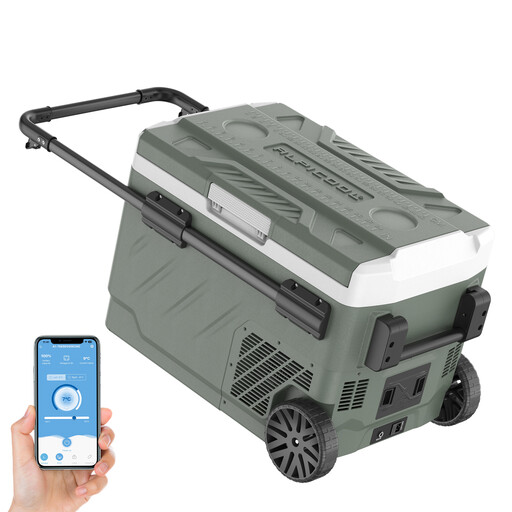
Why it stands out: This model combines a large capacity with modern technology and thoughtful details for mobile use. The dual-zone function and app control make it a highly versatile solution.
Pros:
Best for: Families and groups who need a large and flexible portable cooler with a freezer function for extended road trips or camping holidays.
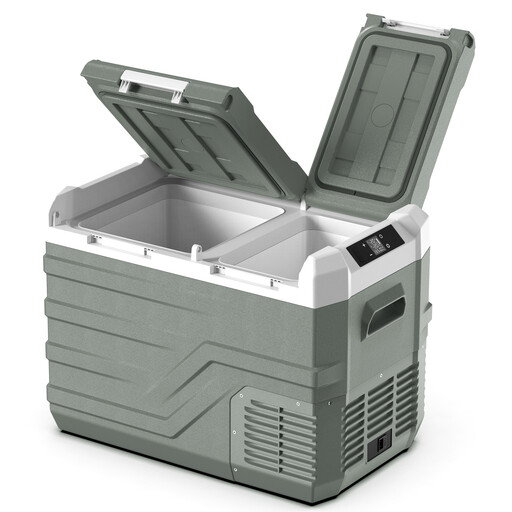
Why it stands out: The NLS45 offers the benefits of a dual-zone compressor cooler in a more compact package. Its standout feature is the two separate lids, which make accessing each zone easier and minimise cold loss.
Pros:
Best for: Couples, small families, or campervan owners looking for a space-saving yet powerful dual-zone cooler for their car fridge.
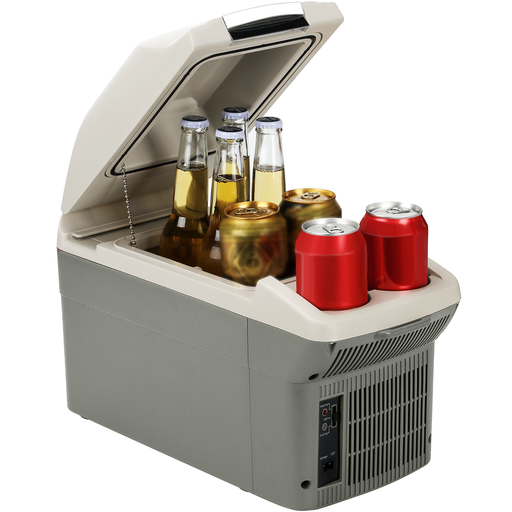
Why it stands out: This model is a thermoelectric cooler and represents a compact solution for daily use. Its strength lies not in freezing but in its portability and added warming function.
Pros:
Best for: Commuters transporting their lunch, for day trips, or as a compact car fridge for drinks and snacks where freezing capability is not required.
The models presented here already cover a wide spectrum of needs. If you haven't found the perfect solution for your specific use case, you can find other variants with different capacities and features in our range.
Discover more models in our electrical appliances and accessories category.
A compressor cooler uses a refrigerant and a compressor to actively generate cold, similar to a household refrigerator. It can reach temperatures down to freezing, regardless of the outside temperature. A thermoelectric cooler uses a Peltier element to cool and can only lower the internal temperature by a certain amount (e.g., 20°C) below the ambient temperature. It generally cannot freeze.
Power consumption depends on the size, insulation, set temperature, and ambient temperature. Modern devices like the featured Alpicool models have an ECO mode (approx. 45 watts) and a MAX mode (approx. 60 watts). An integrated, multi-stage battery protection system is crucial to prevent draining the 12V car cooler's battery.
Yes, that is one of the main strengths of this technology. A cooler with a freezer function based on a compressor can typically reach temperatures as low as -20°C. This is sufficient to safely freeze food or transport already frozen products over an extended period.