
Lieferung heute & morgen

Qualitätsgarantie

Willkommens-Angebote freischalten: KOSTENLOSE Lieferung | Bis zu 80 % RABATT | Kostenlose 30-Tage-JoyPlus-Testphase
App herunterladen
A reliable compressor cooler is the key to a perfect getaway for many—whether it's for camping, long-haul truck journeys, or a family road trip. But the market is flooded with models whose marketing promises often fall short in practice. The result: lukewarm drinks on hot days and food that spoils prematurely. As your Joybuy Product Recommendation Officer, I'll help you recognise the typical pitfalls and make an informed decision.
Before we dive into the important features, let's highlight the three most common problems that lead to buyer's remorse.
To avoid these traps, you should check three core parameters. These determine whether a portable cooler will truly meet your needs.
The crucial difference lies in the technology. A true compressor cooler works just like your home refrigerator: a refrigerant is compressed, providing active, high-performance cooling.
A flexible power supply is essential for mobile use. Look for models that offer versatility.
The right size and features depend on your individual needs.
Here are some models tailored to specific use cases that meet the criteria mentioned above.
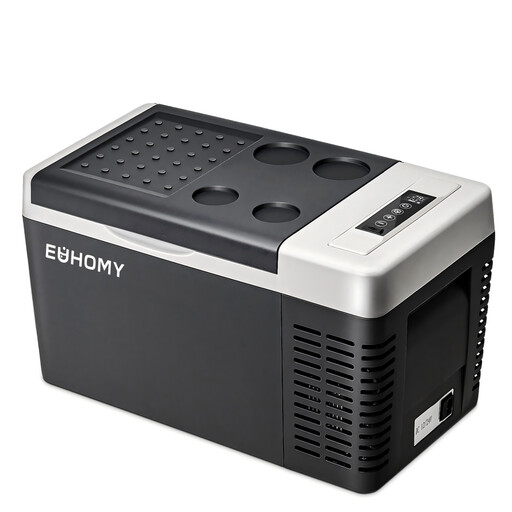
Why This Fits Their Persona: This compact model is perfect for use in a car, for day trips, or for a solo traveller on a short journey. It has a small footprint yet offers the full performance of a compressor refrigerator.
It bypasses the "thermoelectric trap" by offering true compressor technology in a small package. This ensures reliable cooling down to -20°C, regardless of the outside temperature.
According to the manufacturer, it offers rapid cooling (15 min from 10°C to 0°C), quiet operation at just 42 dB, and app control.
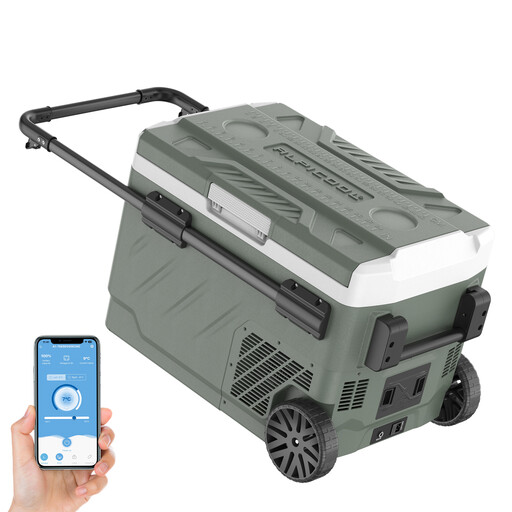
Why This Fits Their Persona: With 40 litres of space, this cooler can hold a family's weekly groceries. The wheels and telescoping handle make it easy to transport from the car to the campsite, while the dual-zone function offers maximum flexibility.
The dual-zone control solves the problem of needing to cool and freeze at the same time. You are no longer limited to a single temperature for the entire contents, which vastly increases its usability.
Two independently controlled temperature zones, app control, and convenient transport features like wheels and a telescoping handle.

Why This Fits Their Persona: The large 55-litre capacity is ideal for stocking up on long-haul trips. Its durable build and high energy efficiency are designed for continuous operation in trucks or RVs, where reliability and low power consumption are paramount.
This model addresses the "hidden power hog" trap. According to the manufacturer, it consumes only 0.18 kWh per day in ECO mode, minimising worries about a dead vehicle battery during extended stops.
Very high energy efficiency in ECO mode, large capacity, and flexible power options (12V/24V DC and 100-240V AC).
We have compiled a complete, up-to-date list of products that fully meet these strict selection criteria and comply with stringent safety standards.
Modern compressor coolers are equipped with a multi-stage battery monitor. You can set a cutoff threshold (e.g., low, medium, high). Once the vehicle battery's voltage reaches this level, the cooler automatically shuts off. This ensures there is always enough power left to start the engine.
Power consumption depends on several factors: the set temperature, ambient temperature, insulation, and how often the cooler is opened. During the active cooling phase, the power draw is typically between 45 and 60 watts. On average, however, a well-insulated unit consumes significantly less, as the compressor only runs when needed to maintain the temperature. Models with an ECO mode are particularly efficient.
A cooler with app control offers significant convenience. You can monitor and adjust the temperature remotely without having to open the lid, which saves energy. This feature proves especially useful when the cooler is stowed in the boot, under a bench seat in an RV, or in the sleeper cab of a truck.