
Lieferung heute & morgen

Qualitätsgarantie

Willkommens-Angebote freischalten: KOSTENLOSE Lieferung | Bis zu 80 % RABATT | Kostenlose 30-Tage-JoyPlus-Testphase
App herunterladen
Anyone who travels frequently knows the challenge: keeping food fresh and drinks cold is difficult without the right equipment. Whether on a family camping trip, long-haul truck routes, or in a van, reliable cooling is essential. A compressor cooler offers a powerful and flexible solution that far exceeds the capabilities of simple ice packs.
This article serves as a guide. We will introduce various models and their features to provide an objective basis for your decision. The goal is to objectively highlight the technical features and potential uses so you can find the right device for your needs.
The selection of models is vast. To make the right choice, you should consider several technical criteria that determine its practical use in everyday life.
The usable volume, specified in liters, is a key factor. Consider what you want to cool and for how many people.
In addition to volume, pay attention to the external dimensions to ensure the cooler fits in your vehicle, whether in the trunk, on the back seat, or in a truck's sleeper cab.
A modern electric cooler should be flexible in its use. Most models support multiple power sources:
Integrated battery protection is indispensable. This system monitors the vehicle battery's voltage and automatically shuts off the cooler before the battery is discharged too deeply. This prevents you from getting stranded with a dead battery. Models with an ECO mode further reduce energy consumption, which is particularly advantageous when running on a limited power source like a power station.
Compressor technology enables powerful cooling performance that is independent of the ambient temperature.
Here is a selection of units that cover different needs—from a spacious family model to a compact solution for the passenger seat.

Why it stands out: This model combines a large capacity with an efficient inverter compressor. Its flexible connection options and integrated battery protection make it a versatile companion for longer journeys.
Advantages:
Who it's for: Ideal for families, van life enthusiasts, and anyone who doesn't want to miss out on a well-stocked fridge during camping trips or road trips.
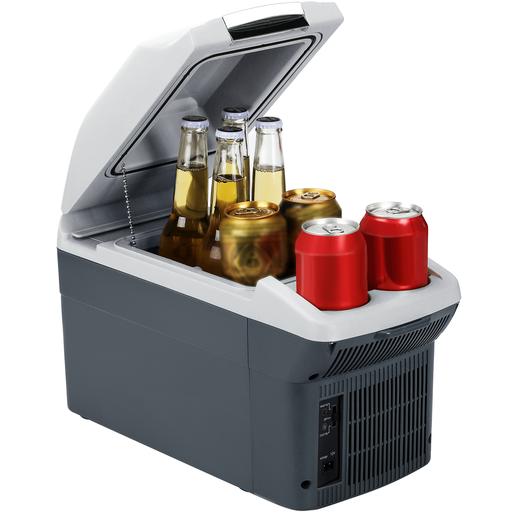
Why it stands out: The ICEROVER PN-09 is a compact thermoelectric cooler that can both cool and heat. Its design is specifically optimized for use inside a vehicle, including practical cup holders.
Advantages:
Who it's for: Perfect for commuters, field sales representatives, or for day trips where snacks and drinks need to remain within easy reach. It's a practical addition when a freezer function isn't required.
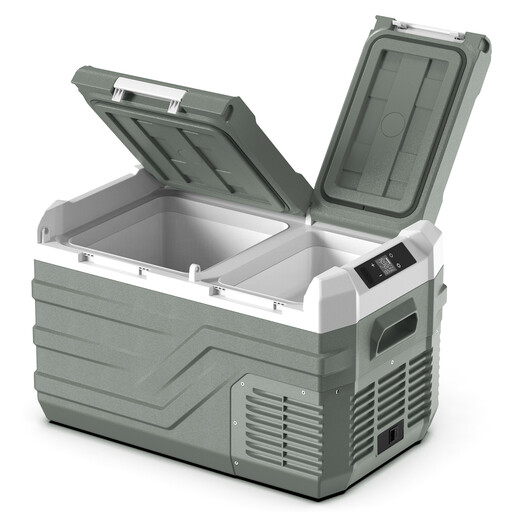
Why it stands out: The Alpicool NLS35 offers true Dual Zone technology in a compact form factor. Two separately controlled compartments allow for simultaneous cooling and freezing, making it extremely flexible.
Advantages:
Who it's for: An excellent choice for discerning campers, truck drivers, and boat owners who need a fully-fledged car refrigerator with a freezer function and appreciate the flexibility of two temperature zones.
If the right model for your specific needs wasn't included, you can find more solutions in our broader selection. Discover additional sizes and feature variations in the Electronic Travel Accessories category.
1. What is the difference between a compressor cooler and a thermoelectric cooler? A compressor cooler works like a household refrigerator using a refrigerant cycle. It can reach very low temperatures (including freezing) regardless of the ambient temperature and is energy-efficient. A thermoelectric cooler uses the Peltier effect, is lighter, and often more affordable. However, its cooling performance depends on the outside temperature (usually about 15-20°C below ambient), and it tends to consume more power during continuous operation.
2. How much power does a compressor cooler use? Power consumption depends on the size, insulation, ambient temperature, and set target temperature. A typical 40-liter model has a rated power of about 45-60 watts. However, since the compressor only runs to maintain the temperature (it cycles on and off), the average consumption is significantly lower. In ECO mode, efficiency is further optimized.
3. Can a compressor cooler also deep-freeze? Yes, most compressor coolers have a full-fledged freezer function. They can reach and maintain temperatures of -18°C or colder. This makes them ideal for safely transporting frozen goods on long trips or for making ice cubes.