
Lieferung heute & morgen

Qualitätsgarantie

Willkommens-Angebote freischalten: KOSTENLOSE Lieferung | Bis zu 80 % RABATT | Kostenlose 30-Tage-JoyPlus-Testphase
App herunterladen
Reliable cooling is essential when travelling, camping, or on long-haul truck journeys. A compressor cooler promises not only to keep food and drinks cool but also to deep-freeze them—regardless of the outside temperature. However, the market is flooded with models whose marketing claims often fall short in practice. Before you make a decision, it's important to know the typical pitfalls that can lead to disappointment and unnecessary expense.
Many buyers focus solely on the advertised volume or price, overlooking crucial technical flaws. Two of the most common problems are:
This guide will help you avoid these and other pitfalls, enabling you to make an informed decision that meets your needs.
To find a compressor cooler that reliably does its job, you should closely examine three core technical areas. These parameters determine performance, safety, and convenience in daily use.
A cooler's flexibility is evident in its connection options. A good model should be operable with both direct current (DC) and alternating current (AC).
The primary function of a compressor cooler is reliable cooling. Pay attention to the specified temperature range. Models that function as a portable freezer should cover a range of approximately +20°C to -20°C. This allows you not only to cool drinks but also to safely transport frozen goods.
The advertised capacity in litres can be misleading. Check the internal dimensions and layout. An awkwardly shaped interior or a large space taken up by the compressor unit can significantly reduce the usable volume.
For anyone sleeping in their vehicle, a quiet compressor cooler is crucial. An operating noise level of under 45 decibels (dB) is considered pleasantly quiet and generally does not disturb sleep.
Modern features can significantly enhance user convenience:
Based on the criteria mentioned, we have identified a few models that are particularly well-suited for different user profiles.
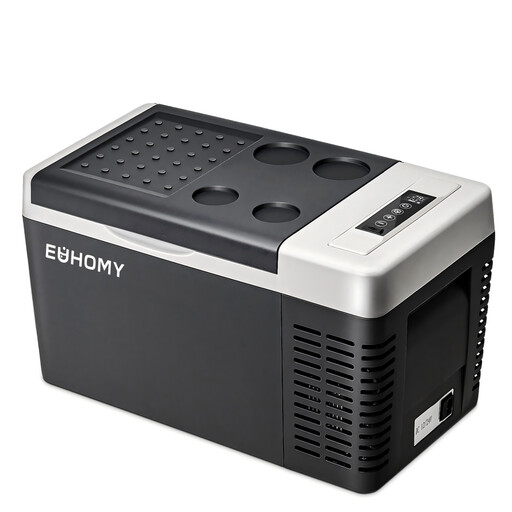
Why it's a great fit: At 18 litres, this cooler is compact enough for the car boot and offers sufficient space for day trips or weekend getaways. It's an economical choice for those seeking reliable cooling performance without a major investment.
The device sidesteps the "performance bluff" with an efficient compressor that, according to the manufacturer, cools from 10°C to 0°C in 15 minutes. At just 42 dB, it also avoids the "noise trap."
Offers app control and a 3-stage battery monitor—features not always standard in this price range. The magnetic lid ensures a tight seal and good insulation.

Why it's a great fit: Ideal for users living full-time in a camper van or undertaking long, off-grid journeys. Its robust construction, high efficiency, and flexible power options are designed for demanding, continuous use.
The dual-zone cooling allows for simultaneous chilling and freezing, which counters the "performance bluff." With an operating noise of just 38 dB, the unit is quieter than a library, making it perfect for a peaceful night's sleep.
The option for an add-on battery provides up to 39 hours of off-grid cooling. It's also compatible with solar panels, offering maximum self-sufficiency for adventurers.
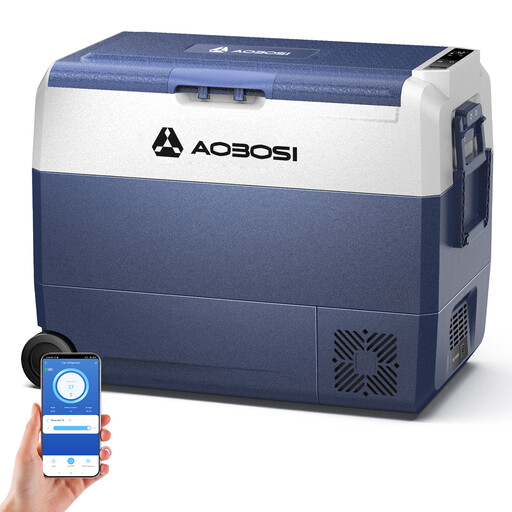
Why it's a great fit: With a 60-litre capacity, this electric cooler offers enough space for a week's worth of groceries or provisions for an entire family on a camping holiday. It's the solution for anyone who needs a lot of storage space.
Despite its large volume, a powerful compressor ensures reliable cooling down to -20°C, preventing performance drops even when fully loaded. The app control helps to manage energy consumption efficiently.
The large capacity is combined with modern convenience features like Wi-Fi control. This makes it easier to manage large quantities of food and drinks without constantly having to open the cooler.
We have compiled a complete, up-to-date list of products that fully meet these strict selection criteria and safety regulations.
The runtime depends on several factors: the car battery's capacity, the cooler's efficiency, the set temperature, the ambient temperature, and how often the cooler is opened. A modern, efficient 40-litre cooler consumes about 10-15 Ah per day in cooling mode (approx. 5°C). A healthy 80 Ah car battery could theoretically power the cooler for several days. However, the integrated battery monitor is crucial, as it shuts off the cooler before jeopardising the vehicle's ability to start.
The main difference lies in the cooling technology.
Regular maintenance ensures the longevity and hygiene of your cooler. Clean the interior after each use with a damp cloth and a mild cleaning agent. Ensure that the compressor's ventilation slots are always free of dust and obstructions to guarantee good air circulation. If the cooler is not used for an extended period, leave the lid slightly ajar to prevent odours and mould from forming.