For making book covers at the kitchen table, choose a computerised sewing machine by first considering the thickest seam you plan to sew, then how much control it offers over short seams. Adjustable speed and a needle up/down function can make sewing and turning corners easier. If you’ll be working with different layers of fabric, adjustable presser-foot pressure is another feature to compare, though it’s no guarantee that every combination of materials will feed smoothly. If you’ll be putting the machine away after sewing, also consider its weight, footprint and cover, and test your planned fabric layers on a scrap first.
Who makes book covers at the kitchen table?
Sewists working with several layers of fabric
If you’re working with outer fabric, lining and perhaps wadding, the key question is how well the machine sews through the thickest folded section. A sewing tutorial from the BERNINA Blog shows how to make book covers using fabric scraps and wadding.
Beginners sewing short seams
When making small cover pieces with lots of corners, easy-to-reach stitch selection and controllable speed can be important. Brother lists a needle up/down button on the Innov-is A16 for turning at corners; TÜV SÜD highlights ease of use as a factor for beginners to consider when buying.
Sewing without a dedicated sewing space
If you set up your machine on the kitchen table and put it away afterwards, factor in its weight, footprint and storage. These considerations matter even if you’re mainly buying the machine to make book covers.
What should you look for when buying?
When making book covers at the kitchen table, the most important things to consider depend on the sewing tasks and space constraints that matter most to you.
| Buying priority |
What to check when buying |
Who is this important to? |
| Feeding fabric over thick edges |
Compare details of presser-foot pressure and fabric feed; if possible, test-sew your own layers of material. |
If I’m sewing outer fabric, lining and perhaps wadding together at a thick edge, controlled fabric feed matters more to me than lots of programmes; around 36 % of consumers say fabric feed is their main priority. |
| Control around corners and on short seams |
Check the speed control, needle up/down function and how easy the controls are to reach. |
When making small cover pieces, I want to sew slowly and turn the fabric neatly at corners; around 29 % of consumers prioritise seam control. |
| Setting up and storage |
Measure the available table and storage space; compare the weight, dimensions and what’s included with the specific version. |
If I don’t have a dedicated sewing space, the machine needs to fit on my kitchen table and be easy to put away afterwards; around 21 % of consumers prioritise space and storage. |
| Decorative stitches and lettering |
Check whether you’ll actually need alphabets, stitch memory or decorative stitches for your projects. |
If I want to add lettering or decoration to book covers regularly, the right patterns matter more than keeping the machine as basic as possible; around 14 % of consumers put design features first. |
Buying and usage pitfalls
-
Assuming a high stitch count means it can sew thick seams
The number of stitch programmes won’t tell you whether the machine can feed lining, wadding and a folded edge evenly.
Compare details about fabric feed and settings, and, if possible, sew a test piece using the layers of material you plan to work with. Also check which needle types and systems are compatible with the specific machine.
-
Forgetting to allow for the extension table and cover
An extension table takes up extra space while you’re sewing and when you put the machine away. Covers can vary between models.
Measure the space available on your table and in storage, and check whether the extension table and cover are included with the exact model version.
-
Confusing a voluntary guarantee with your statutory rights
For a consumer purchase, your statutory rights are against the seller; a voluntary guarantee has its own terms and conditions.
Keep your proof of purchase and guarantee terms, and contact the seller if the goods are faulty. EU consumer information states that purchased goods are generally covered by a minimum two-year legal guarantee from the date you receive them.
A guide to relevant brands
Brother
The Innov-is A16 combines a straightforward selection of stitches with controls designed for short seams and changing direction.
- Brother lists 16 stitches, a speed control and a needle up/down button for the Innov-is A16.
- CHIP rated the tested model’s ease of use positively, but noted that its presser-foot pressure can’t be adjusted and it lacks a walking foot. This applies to the model tested, not to all Brother machines.
Janome
According to the manufacturer, the 230DC Limited Edition offers adjustable presser-foot pressure and speed control; remember to allow for the extension table when planning your space.
- Janome lists a weight of 5,6 kg, 30 sewing programmes and an extension table included with this version.
- The extension table needs extra space both when setting up and storing the machine. The manufacturer’s claims about quiet operation aren’t based on independent testing.
W6 Wertarbeit
According to the manufacturer, the computerised N 3300 Pro has adjustable speed control and adjustable presser-foot pressure.
- CHIP describes the tested model as producing neat seams and having a relatively compact design.
- For this model, CHIP notes that it lacks a walking foot, has a basic cover and doesn’t offer lettering stitch programmes. This assessment can’t automatically be applied to other W6 ranges.
bernette
According to the manufacturer, the bernette 38 is worth considering if you’ll actually use alphabets, decorative stitches or stored stitch combinations.
- The manufacturer lists adjustable presser-foot pressure, speed control, three alphabets and an extension table.
- The features alone don’t show how the machine will handle the thickest edge of your particular book cover.
Singer
The Quantum Stylist 9960 is an option if lettering and decorative stitching are regular parts of your sewing projects.
- The European Singer product page lists 600 built-in stitches and an extension table for the version described there.
- Singer distinguishes between 600 built-in stitches and 1.172 stitch applications. Check the exact version on offer: the number of applications doesn’t mean there are more built-in stitches or that the machine is suitable for thick seams.
Joybuy products for this project
This selection focuses on compact mini and household sewing machines for simple sewing tasks and flexible set-ups. If you’re specifically looking for a computerised machine, check the control type for the exact version. For book covers, it’s also worth test-sewing the thickest edge you plan to make.
 No image available
Mini household sewing machine, 12 stitch types, single and twin needle, 2 speeds
For simple sewing and home projects where a compact design and basic stitch types are the priority.
The product details list 12 stitch types, two speed settings, a single and twin needle, and a sewing kit.
Joybuy
 No image available
Mini sewing machine, 12 stitches, dual power, pink
For simple sewing tasks in a flexible workspace when you need a portable mini machine.
The product details list 12 stitch patterns, mains and battery power, an LED light, and forward and reverse sewing.
Joybuy
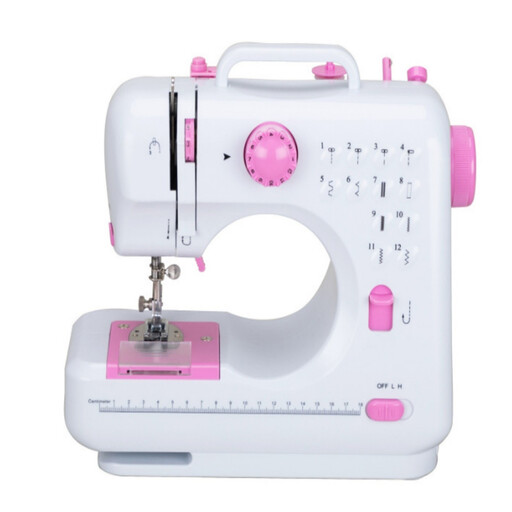 No image available
IAGREEA mini sewing machine, 12 stitches, dual power, pink
For simple sewing projects when you want a portable design and a carry handle for a flexible workspace.
The product details list 12 stitch patterns, two speed settings, an LED light and a carry handle.
Joybuy
 No image available
Electric sewing machine, 12 stitch programmes, 2 speeds, foot pedal and hand switch
For simple seams when you want the choice of using a foot pedal or hand switch.
The product description specifies up to six layers of lightweight denim and a maximum material thickness of 2,5 mm. Thicker folded seams are beyond this stated limit.
Joybuy
Frequently asked questions
Do I need hundreds of stitch programmes to make a simple book cover?
No. A straight stitch may be all you need for a simple book cover. A sewing tutorial from the BERNINA Blog uses a machine with a straight stitch; decorative stitches and lettering are optional ways to personalise your project. Start by checking your planned fabric layers and how easy the machine is to control on short seams.
Which needle should I use for a heavyweight outer fabric?
SCHMETZ recommends a Jeans needle from the 130/705 H-J system for heavyweight fabrics such as canvas and thick seams. Also check which needle system your particular machine accepts, and test the needle and fabric together on a scrap first.
What should I bear in mind when cleaning the machine or leaving it unattended?
The bernette 38 instruction manual says to unplug the machine before cleaning or maintenance, and to disconnect it from the mains when it’s not in use or is left unattended. Follow the instructions for your own model.
Is a voluntary manufacturer’s guarantee the same as your statutory rights?
No. For a consumer purchase, your statutory rights are a claim against the seller; a guarantee is an extra voluntary promise with its own terms. EU consumer information states that purchased goods are generally covered by a minimum two-year legal guarantee from the date you receive them.
What does CE mean on a new electric sewing machine?
CE marking is only required when the applicable harmonised EU rules specify it for that particular product. EU information on CE explains that the mark represents the manufacturer’s declaration that the product meets the applicable requirements; it isn’t an independent endorsement of sewing performance.


