What should you look for when buying?
For shoppers choosing a computerised sewing machine for table runners in a small craft room, the four main considerations covered here are space, stitch control, changing fabrics and decorative borders. Start by measuring the fully set-up workspace.
| Buying priority |
What to look for |
Who is it especially important for? |
| Space and fabric support |
Measure your work table with the machine in place, and check the dimensions and included accessories for an extension table. |
If I need the table clear again after sewing, I measure the space with the support fully set up. Around 31 % of shoppers say space requirements are their main concern when buying. |
| Long seams and corners |
Check for speed control and a needle stop; test a long seam and a corner with your fabric. |
For long, visible hems, I want to control the speed and pivot neatly at the corners. Around 31 % of shoppers put control over seams and corners first. |
| Different fabrics and layers |
Check whether the presser-foot pressure is adjustable, and sew a sample using your planned fabric and hem layers. |
If I change fabric types or hem layers, I want to be able to adjust the settings to suit my material. Around 23 % of shoppers prioritise different fabrics and layers. |
| Decorative stitches and memory |
Compare the patterns you want and check whether stitch length, stitch width and settings can be adjusted or saved. |
For borders I’ll sew more than once, I want suitable patterns without paying for features I won’t use. Around 15 % of shoppers say decorative stitches and repeatable settings are their main concern. |
Sewing machines at Joybuy
The following Joybuy products are compact or portable domestic sewing machines. If computerised stitch selection is a must-have, or you sew long table runners, check the controls and fabric support for each model before buying.
 No image available
Mini domestic sewing machine, 12 stitch types, single- and double-needle options
A compact option if you’re looking for a machine that’s easy to put away. For long table runners, check how the fabric will move across your work table.
12 stitch types; two speed settings; single- and double-needle options; sewing kit included.
View at Joybuy
 No image available
Portable mini sewing machine, 12 stitches, dual power, pink
A portable mini sewing machine for shoppers looking for a compact machine. Check that your workspace has room for the full length of fabric.
12 stitches; dual power; LED light; accessories listed as included.
View at Joybuy
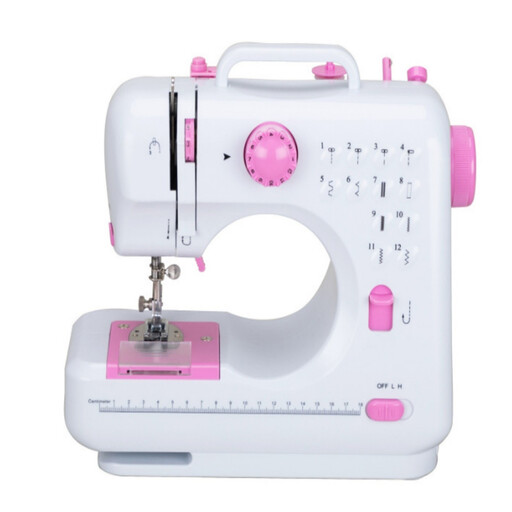 No image available
IAGREEA mini sewing machine, 12 stitches, dual power, pink
A compact, portable option for simple sewing projects at home. Before tackling long seams, check that the fabric moves easily and there’s enough room on your sewing table.
12 stitch patterns; dual power; LED light.
View at Joybuy
Frequently asked questions
Do I need a particularly large number of stitch programmes for a table runner?
No, not just because it’s long. First decide which utility and decorative stitches you want to use, then check the fabric support and how well you can control the sewing speed. Brother lists 16 stitches for the Innov-is A16 and Janome lists 30 for the 230DC Limited Edition. The numbers alone don’t compare seam quality or how well either machine will suit your space.
What should I check when setting up the machine and sewing samples?
Allow space beside the machine for the length of fabric and, if needed, an extension table. Use a bobbin that’s compatible with your machine and sew a sample using your planned fabric and hem layers. If you have problems with the thread, check the threading route and presser-foot position in your model’s manual.
Is the manufacturer’s guarantee the same as your statutory rights?
No. According to Your Europe, when you buy from a trader in the EU, you have a legal guarantee of at least two years from the date you receive the goods. An additional manufacturer’s guarantee is separate, so check its terms for the specific model.
What are the rules in Germany for labelling and disposing of an electric sewing machine?
According to information from the European Union, CE marking is required only when the relevant harmonised EU rules require it; it isn’t a general, independent quality test. As explained by the German Environment Agency, discarded electrical appliances in Germany must be disposed of separately from household waste.


