Teachers leading group discussions
If participants sit around a table and take turns speaking, the camera should be able to capture people in different seats. Owl Labs and Kandao describe 360° camera designs for this kind of setup.


Start by choosing a camera to suit your seating arrangement. For a group facing a screen, consider a front-facing video bar; for speakers taking turns around a table, a centrally positioned 360° camera may be a better fit. Then test voice pick-up from the seats you’ll actually use, check the connection options and review the camera’s field of view. A manufacturer’s stated microphone range doesn’t guarantee clear speech over the background noise of a shared flat. If you’ll mostly be teaching alone at your desk, a webcam may be suitable, but it won’t automatically capture a group conversation.
If participants sit around a table and take turns speaking, the camera should be able to capture people in different seats. Owl Labs and Kandao describe 360° camera designs for this kind of setup.
If the group sits in front of a shared screen, the camera’s horizontal field of view and how well it picks up voices from the seats you’ll actually use are key. Logitech and Jabra offer front-facing video bar designs for these setups.
If you’ll mostly be leading exercises on your own from a laptop, a webcam attached to the screen can keep the shared room in shot. However, this type of camera isn’t necessarily designed for group conversations.
First, check that voices are clear from the seats you plan to use and that the camera suits your seating arrangement. Then consider the field of view, privacy and how much effort the setup will take.
| What matters | What to check before buying | Who will particularly value this? |
|---|---|---|
| Clear voices | Test a call from every seat with typical flatshare background noise; check which microphone is used and how it handles echo. | If I want people sitting further away to hear words and changes of speaker clearly, voice pick-up from every seat is my priority. Around 36% of consumers put this first. |
| Speakers in shot | Sketch out the seating arrangement and work out whether you need a front-facing, wide-angle or 360° view. | If we’re sitting around a table, I want to keep speakers taking turns in shot, rather than showing only the side in front of the camera. Around 29% of consumers prioritise capturing the whole group in conversation. |
| Privacy in a shared flat | Check the boundaries of the frame at the planned camera position; keep people who aren’t taking part out of shot and out of the audio, and discuss recordings separately. | If I’m teaching in a shared room, I want control over which private areas and people are captured. Around 21% of consumers put protecting the shared space first. |
| Easy setup | Check computer and power connections, cable routing, setup requirements and whether you’ll need additional microphones. | If we share a laptop or screen, I want to be able to start teaching without the hassle of switching connections. Around 14% of consumers prioritise a straightforward setup. |
High image resolution tells you nothing about whether voices will be picked up clearly from the seats you plan to use.
Start by testing seating positions and audio in a trial lesson, then compare image detail.
If the built-in microphone isn’t good enough for everyone seated around the table, you may need additional audio equipment.
A front-facing camera with a 180° field of view won’t automatically show people behind it. That can matter if people are sitting on both sides of a table.
Before buying, use the actual seating positions to decide which directions need to be visible in shot.
Owl Labs says the Meeting Owl 3 requires an app for initial setup; an expansion microphone is sold separately.
For the specific model, check what’s included, whether an app is required, the power and USB connections, and the distances between seats around the table.
An additional expansion microphone means extra accessories to buy and more setup work.
A wide-angle view may also capture housemates or private belongings that aren’t part of the exercise.
Check the frame before each session and discuss recordings separately before capturing anyone else’s voice or image.
The MeetUp 2 is described as a front-facing USB video bar for small rooms and groups sitting in front of the camera.
The Meeting Owl 3 is designed for a group conversation around a centrally positioned camera.
The PanaCast 50 is a front-facing video bar designed for participants spread out to either side of the device.
The Meeting Pro is described as a 360° conference camera for a group seated around a table.
The PowerConf C300 is described as a webcam for use with a laptop or screen when most of the teaching is done by one person.
This selection includes webcams for screen-based teaching and a conference camera for small groups. For each camera, check that its field of view and stated microphone range suit the seats you plan to use.
 No image available
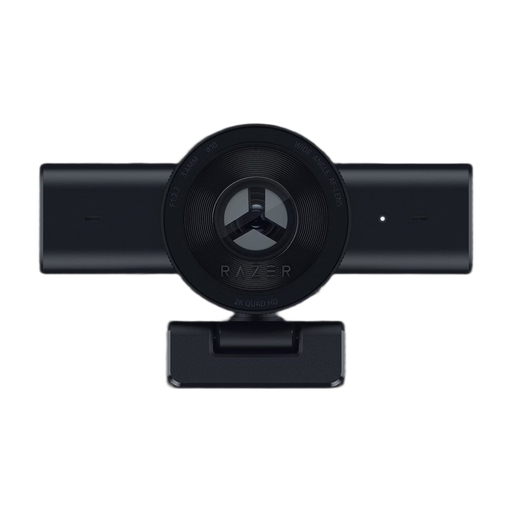
For screen-based teaching if you’re looking for a webcam with a wide field of view and a physical cover.
The description lists a 120° lens, an omnidirectional microphone and a physical camera cover.
Described as a USB plug-and-play webcam for PC and laptop.
 No image available
For video calls on your computer if you want Full HD video with a built-in microphone and privacy cover.
The description lists 1080p at 60 FPS, autofocus, a built-in microphone and a privacy cover.
 No image available
For video calls on a PC or laptop if a wide field of view and a lens cover are important to you.
The product specifications list 4K video, a 99° field of view, a built-in microphone with noise cancellation and a sliding lens cover.
Plug-and-play use with Windows and macOS is described.
 No image available
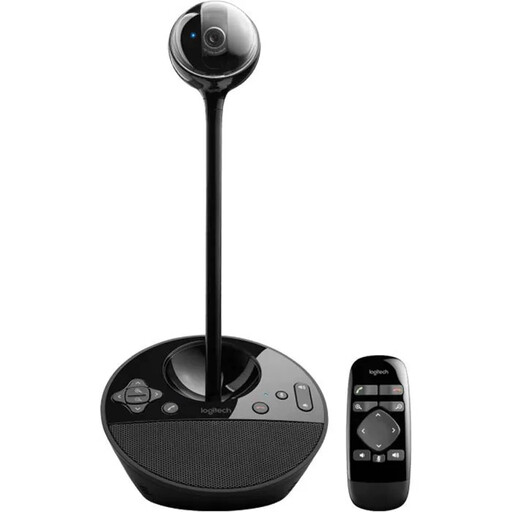
For a small group sitting in front of the camera if you’re looking for a conference camera with a built-in speaker and microphone.
The description lists a 78° field of view, a 180° pan function, and pan, tilt and zoom controls.
According to the product information, the full-duplex speakerphone has a microphone range of 2,40 m. Make sure the seats you plan to use are within range.
A USB-A connection and remote control for the camera are listed.
 No image available
For teaching on a laptop or desktop if you need a screen mount and a microphone for video calls.
The description lists QHD at 2560 × 1440 at 30 fps, plus a microphone with noise reduction.
A clip mount for laptop and desktop screens is listed.
Plan the actual seating positions and test a call with speakers taking turns and typical background noise. Manufacturer specifications, such as the 5,5 m audio radius for the Meeting Owl 3 or a range of up to 7 m for the MeetUp 2, describe device performance; they don’t tell you how clearly people will hear words in your shared flat.
It depends on the model. According to its datasheet, the Meeting Owl 3 sends video and audio to a host computer via USB-C and requires an app for initial setup. Kandao describes the Meeting Pro as supporting both USB connection to a computer and standalone use with an HDMI screen and power supply.
Before each session, check your selected camera, microphone and speaker inputs, as well as the field of view. Owl Labs lists an app for setup and settings for the Meeting Owl 3; Logitech says updates for the MeetUp 2 can be managed through Logitech Sync. Agree who will take care of these tasks in your shared flat.
For consumer purchases in Germany, statutory rights relating to a fault are generally claims against the seller; a guarantee is an additional, voluntary promise subject to its own terms. For distance purchases, you generally have a 14-day right to cancel after receiving the goods. Check the specific contract and any applicable legal exceptions.
Don’t assume that recording is automatically part of a live lesson. For video conferences organised by an organisation, the German Data Protection Conference emphasises that the organiser must check there is a legal basis for recording. If consent is to be the legal basis, the Federal Commissioner for Data Protection and Freedom of Information says it must be unambiguous and freely given. Which data protection obligations apply in a particular case depends, among other things, on whether the teaching is purely private or organised or work-related. Discuss recording other people’s voices and images with them in advance.