People speaking together
If you’re taking part as a pair or with other people around the same table, seating distance, speaking at the same time and an easy-to-spot mute indicator are important things to consider.


If several people are following an online talk around the same table and want to speak up, a conference speakerphone with an easy-to-reach mute button and the right connection could be a good choice. If you’re listening on your own in a busy shared house, a headset may be more suitable: a speakerphone plays the talk out loud in the room, so taking part isn’t automatically private. For a permanent laptop setup, a USB model may fit the bill; if you switch between devices, check the exact USB or Bluetooth connection.
If you’re taking part as a pair or with other people around the same table, seating distance, speaking at the same time and an easy-to-spot mute indicator are important things to consider.
If you want to follow the talk without disturbing others with playback or picking up household noise, you should also consider a headset or audio equipment you already own.
If you use a laptop or mobile phone depending on the event, or move to a different spot, check which connections the specific model supports with your device.
First, think about whether several people will be speaking or whether you’ll be listening on your own. Then you can check the microphone and mute functions, as well as how the speakerphone connects to your device.
| What matters | What to check before buying | Who should consider it? |
|---|---|---|
| Speaking clearly as a group | Compare the microphone arrangement, stated range, full-duplex support and mute indicator for the exact model; then test it at the table where you plan to use it. | If several of us will be asking questions, the speakerphone should pick up our seats and voices. Around 31% of consumers put speaking together first. |
| Consideration and privacy | Check that the mute button is easy to reach and the status indicator is clear; consider whether a headset would be better suited to how you’ll use it. | If I want to minimise disruption to others in the shared house and control how much background noise is picked up, the way audio is played back matters. Around 31% of consumers prioritise consideration and privacy. |
| Connection and setup | Check which device you’ll use for the talk and which USB ports are available; confirm the USB or Bluetooth connection for the exact model and what’s included in the box. | If I switch between a laptop and mobile phone, I want to know how the device connects to both. Around 23% of consumers put connection and setup first. |
| Moving around and battery power | Check the connection method and the manufacturer’s stated talk time; charge the device before the talk and test the connection. | If I change seats or want to take part without being tethered to a cable, freedom to move and a charged battery matter. Around 15% of consumers prioritise moving around and battery power. |
A tabletop speakerphone still plays the talk out loud in the room. An advertised microphone filter doesn’t prove that your housemates’ voices will be reliably excluded.
If you want to take part on your own and as privately as possible, consider a headset or audio equipment you already own first. If you’re using a tabletop model, test both its mute button and the microphone status in the conferencing app before the talk.
The connection to a mobile phone may differ from the connection to a PC. What’s included in the box can also vary by version.
Check the exact device and connection you want against the model variant, and make sure any adapter you need is included.
Some versions may not include an adapter you need, so you may have to buy one separately.
A general model name such as “Jabra Speak 510” doesn’t automatically identify the full model number, features or contents of a specific version.
Compare the full model number and technical details on the product page with the device you want, rather than assuming a ranking label tells you exactly which version it is.
The Speak range includes wired and portable versions for different connection needs.
The Sync range includes versions with different connection options for PCs and mobile phones.
The OfficeCore M3 is described as a portable conference speakerphone with several connection options and microphones for a group around a table.
The PowerConf S3 is described as a USB-C and Bluetooth model for use in different locations.
The SP92 is described as supporting USB and Bluetooth connections, as well as full-duplex audio.
This selection includes conference speakerphones for speaking together around a table, as well as a wired model for a permanent computer setup. If you switch between devices, check that the connection on each model works with your laptop or mobile phone.
 No image available
If several people want to speak around the table, the stated number of microphones and pickup range are useful points to check.
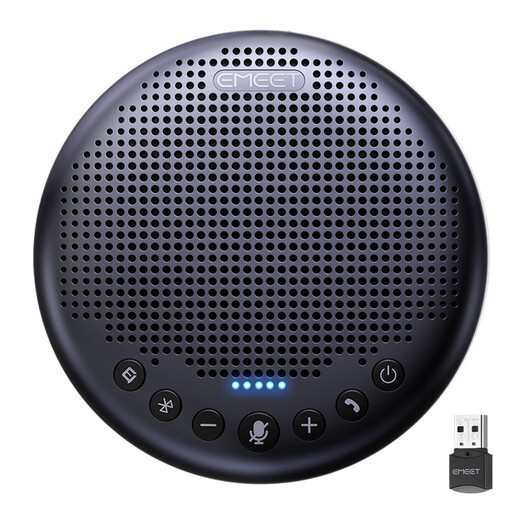
The product details list 8 microphones, one speaker and a pickup range of 16.4 feet. Bluetooth, a touchscreen and a built-in battery are also listed; automatic echo cancellation and noise cancellation are given as features.
 No image available
If several people will be speaking from different sides of the table, the stated microphone arrangement and connection options are important points to consider.
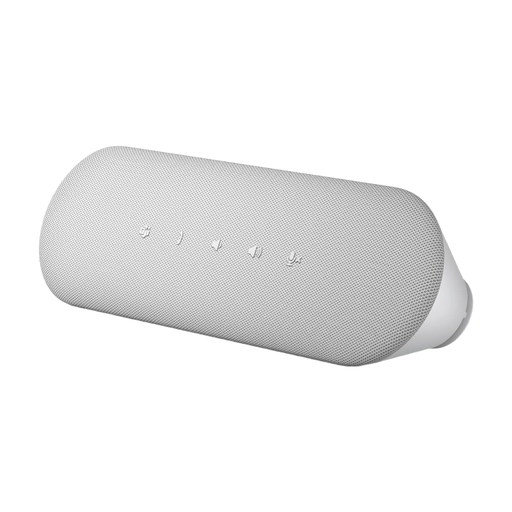
The product details list 8 microphones, 360° voice pickup, USB-C and Bluetooth. Touch controls for muting and volume, as well as up to 10 hours of talk time, are also listed; the battery life is a manufacturer’s figure.
 No image available
If you’re joining from a computer at a permanent desk, this model, described as a desktop speakerphone, is a wired option.
The product details list USB-A and USB-C, full-duplex audio, echo cancellation, stereo speakers and a Teams button. No wireless connection is listed.
Connect it using the connection intended for the exact model, select the speaker and microphone in the conferencing app, then test the volume and mute function before you start. For example, HP says the Poly Sync 20 is activated for the first time by connecting its USB cable to a power source.
No. A Bluetooth listing alone doesn’t mean that every model will connect wirelessly to a laptop. Jabra lists Bluetooth for a mobile phone or tablet and USB for a computer with the Speak2 55; HP lists USB for a PC with the Poly Sync 20 and an additional PC adapter for the Sync 20+. Check the model, version and what’s included in the box.
Only if you want to take part without a constant power supply. The battery life figures published by Jabra for the Speak 510 and by EMEET for the M3 are manufacturer estimates. Charge a battery-powered device before the talk, and don’t rely on a maximum figure alone.
For a typical online purchase by a consumer, the EU Your Europe portal explains that you generally have a 14-day right to cancel, starting from the day the goods are delivered; exceptions and return postage costs may apply. Your Europe also states that faulty goods are covered by a legal guarantee of at least two years. This guarantee is not the same as a voluntary manufacturer’s warranty.
Don’t start recording just because the conferencing app has a record button. The Data Protection Conference treats recordings and voices from the home environment as data protection matters. Check the purpose and the permissions or consent required for the specific event; buying a speakerphone doesn’t give you permission to record.